
Mini Greenhouse Indoor Guide: VPD, Airflow & Light
A practical mini greenhouse indoor guide: why vapor pressure deficit is worth reading alongside humidity, how light and heat shift VPD, how circulation differs from air exchange, and how to match a cabinet climate to your plants.
Priya Patel · Published 2026-01-08 · 29 min read

Key Takeaways
- Read VPD alongside humidity, not instead of it. VPD is calculated from RH and temperature, so it captures the air's drying pressure better than a bare percentage. Roughly 0.8–1.2 kPa is a common starting point for many tropical foliage plants, not a universal optimum. The right target depends on the species.
- Very humid air can slow some plants. Near-saturated air with very low VPD reduces the vapor-pressure gradient and can cut transpiration, which may limit calcium delivery to young tissue in some species. Deformed new leaves have many possible causes such as root health, nutrition, and pests, so diagnose rather than assume.
- Light adds heat, and heat shifts VPD. Full-spectrum white is a practical choice. If a cabinet cools at night and surfaces drop below the dew point, condensation can raise disease risk. Timing ventilation or gentle heat can help, but the right settings depend on your measurements.
- Circulation is not the same as air exchange. Internal mixing does not add fresh CO2. Only exchanging air with the room or enrichment does. Whether a small fan helps and how often to vent depend on the cabinet, so measure rather than follow a fixed timer.
- Match the box to the plants. Different ecological groups want different conditions, so avoid forcing very different species into one climate. Treat any published VPD range as a starting point to verify with a sensor.
Beyond the Humidity Number
Glass-walled cabinets can grow high-humidity tropical plants indoors, but they are not set-and-forget systems. Many hobbyists find them hard to keep healthy over the long term.
These setups are often marketed as set-and-forget solutions, yet simply raising humidity is rarely enough on its own.
In a closed cabinet, environmental control has an outsized effect on plant health, though genetics, root-zone conditions, nutrition, pests, and sanitation all matter too.
Getting good results usually means moving from basic gardening habits toward more deliberate climate management.
High humidity can be helpful, but combined with poor airflow and leaf wetness it can raise disease risk.
For rare or sensitive species, it helps to look past marketing claims and focus on the variables, humidity, temperature, light, and airflow, that actually shape growth.
I map temperature and gentle airflow on the empty shelves before filling the greenhouse. Lightweight indicators and temporary sensors reveal a dead upper corner or direct fan jet that plants would hide.
Once the pots occupy the shelves, I repeat the map because foliage and containers rewrite the flow path. The difference tells me whether I need another fan or simply a better arrangement.
I record a two-minute temperature and humidity average, then open the greenhouse for five minutes at the same point in each light cycle. After closing it, I log once a minute until five readings stay within 0.5 °C and three relative-humidity percentage points of that average. The fixed interval and tolerances make recovery comparable as foliage fills the greenhouse, exposing reduced circulation or excess moisture load before visible disease appears.
The Physics of Water – Vapor Pressure Deficit (VPD)
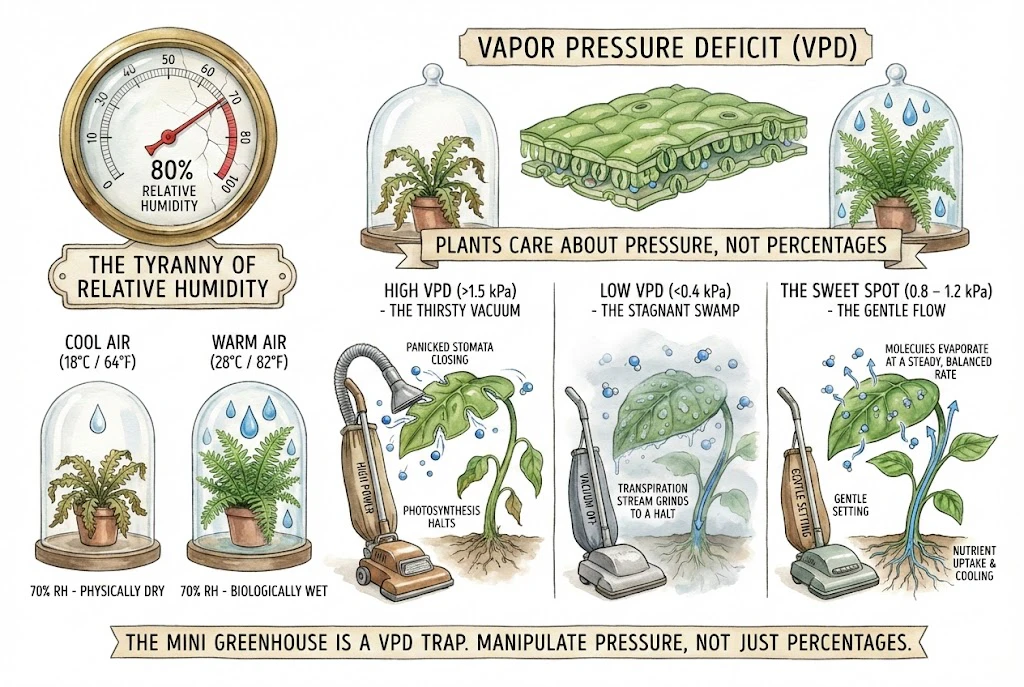
Why Relative Humidity Alone Can Mislead
The relative-humidity percentage on a cheap hygrometer is easy to misread on its own, because the same number means different things at different temperatures.
Hobbyists often chase a target like 80% humidity, believing it mimics the rainforest floor.
But what a plant actually experiences is the air's drying pressure, which depends on temperature as well as RH.
Relative Humidity (RH) is exactly that (relative). It measures how close the air is to saturation at a specific temperature.
Warm air can hold more water vapor than cold air, so its saturation vapor pressure is higher.
Because of that, 70% RH at 28 °C (82 °F) actually imposes a stronger drying demand than 70% RH at 18 °C (64 °F). The air VPD is about 1.13 kPa versus about 0.62 kPa.
The biological effect on the plant in these two cases differs, even though the RH reading is identical.
That is why it helps to read VPD together with RH rather than watching the percentage alone.
RH is still a measurement you need (VPD is calculated from it) but VPD captures the drying pressure directly.
Vapor Pressure Deficit (VPD) is the difference between how much moisture the air could hold at saturation and how much it currently holds.
It is measured in kilopascals (kPa).
One rough analogy is to picture VPD as the pull of the surrounding air. It is not a literal vacuum or suction (the underlying driver is the difference in vapor pressure) but the image helps.
At high VPD, the evaporative gradient is large and transpiration demand rises.
If the water supply and stomatal conductance can keep up, the plant transpires freely, if demand outpaces supply, water status falls.
Under severe water deficit, stomata can close and photosynthesis can decline, but this depends on soil moisture, conductance, and the species, so it is not a fixed threshold.
At very low VPD, the gradient is small and the air is close to saturation.
Net evaporation from the leaves falls, though it rarely reaches exactly zero unless VPD is truly zero.
The transpiration stream slows, which can reduce the mass flow of some nutrients, but root pressure and residual flow still move water.
This low-VPD state is common in over-sealed terrariums, and it is distinct from a waterlogged substrate (an irrigation and drainage issue, not an air-humidity one).
At a moderate, intermediate VPD, water evaporates at a steady, manageable rate that supports transpiration.
The right target varies with species, light, and root water status.
The point is that an enclosed cabinet changes this pressure differential. Watching RH alone can leave you either too dry or too humid without realizing it, so it helps to track VPD (and leaf temperature) as well.
The Mechanics of Transpiration
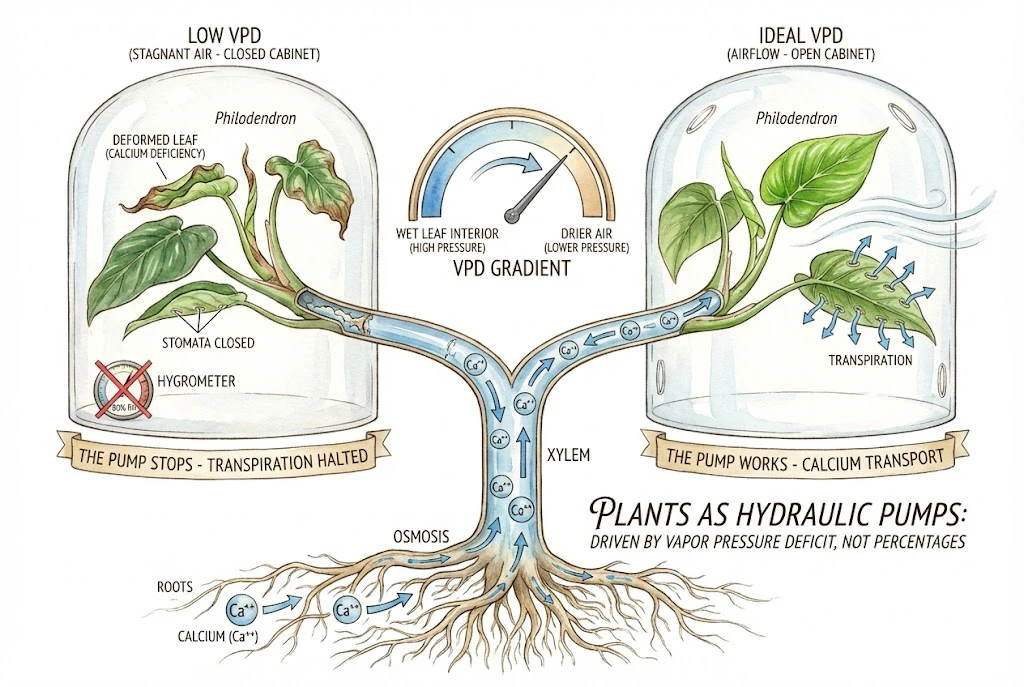
Why transpiration matters
A useful (if simplified) picture is that water moves through the plant like a pump, though active transport, osmotic gradients, root pressure, and stomatal regulation are all part of the real story.
Water enters the roots, moves up through the xylem, and largely exits through the stomata.
Much of this transpiration pull is passive and solar-driven, but the plant still spends energy on ion transport and stomatal control, so it is not truly free.
A common approximation treats the leaf interior as near-saturated, so the gradient to the drier outside air drives water loss (alongside boundary-layer resistance and stomatal conductance).
If VPD is very low, transpiration can slow substantially.
Because young tissue depends heavily on the transpiration stream for its calcium supply, that slowdown can reduce calcium delivery to new leaves.
Calcium is largely phloem-immobile. Once deposited in older tissue it is not readily remobilized to build new growth.
(This is a property of how calcium is loaded and bound, not simply its being a heavy element.)
So one reason a Philodendron may unfurl a deformed, brown-tipped, or stuck leaf is a calcium shortfall linked to low transpiration.
But that is not the only cause. Pests, root rot, nutrition, salt, and mechanical friction can all produce similar symptoms, so confirm with a look at the roots and growing conditions before blaming low VPD alone.
Calcium in Plants
Research Insight – When Humidity Runs Very High
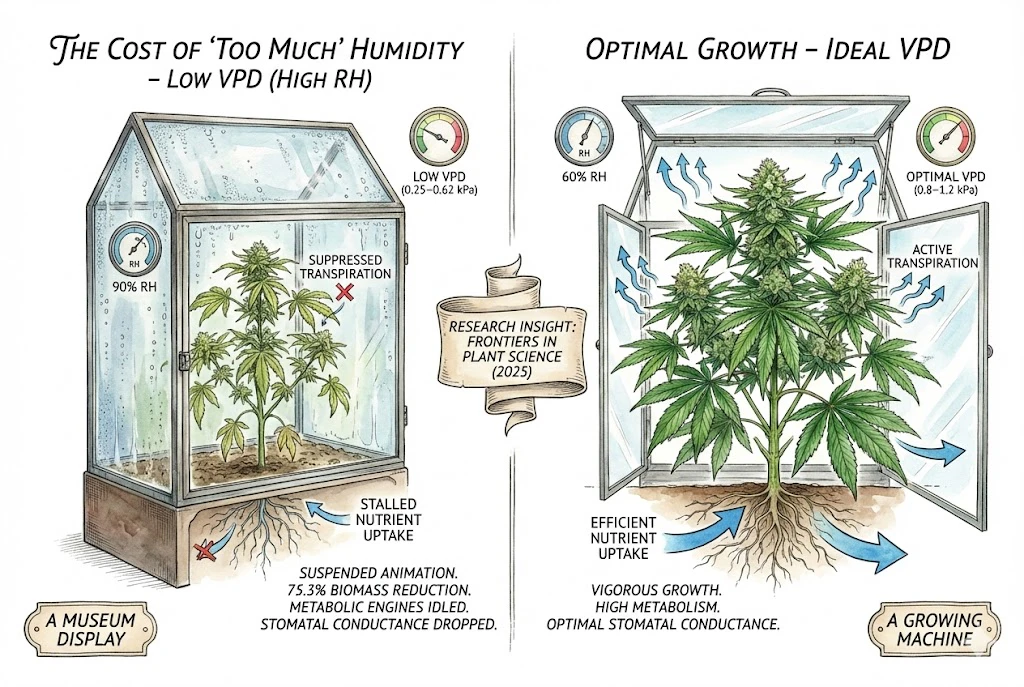
Some research pushes back on the idea that more humidity is always better.
A 2025 study on Cannabis sativa compared plants grown in a very high-humidity chamber against a lower-humidity chamber during flowering.
In that trial, the high-humidity plants had far less combined flower and leaf dry mass. It fell by roughly three quarters, from 48 g to about 11.5 g.
So the direction of the biomass difference is large. But this came from a single clone in two extreme chamber conditions, and the setup had important confounds. The low-humidity chamber was left slightly open while the high-humidity chamber was sealed with an added water container, so ventilation, CO2, and root-zone oxygen also differed between them.
Just as important, that study did not measure stomatal conductance, photosynthesis, nutrient uptake, or metabolic activity, so claims that those specifically dropped or stalled go beyond what it reported.
For a cabinet grower, the practical takeaway is narrower than a headline. Sealing a box to very high humidity can, under some conditions, suppress growth, but how much depends on species, temperature, light, CO2, ventilation, and the root zone, none of which a single trial settles.
The Counterpoint – Mild Stress and Plant Quality
Biology is rarely one-directional, and drier air is not simply bad.
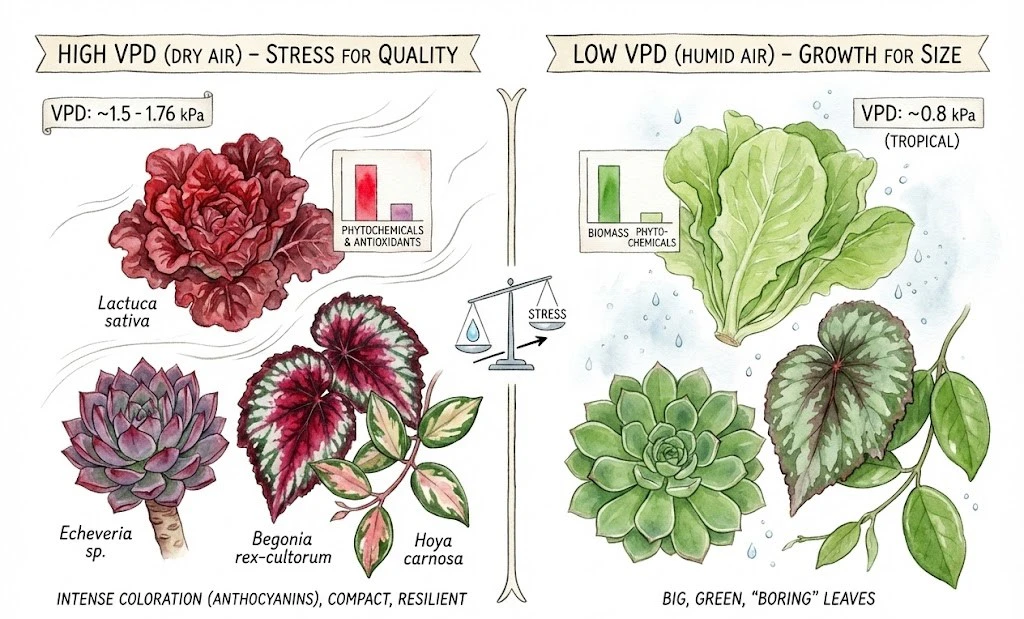
A study on lettuce (Lactuca sativa) compared a higher VPD of 1.76 kPa against a lower 0.69 kPa.
In that trial, the lower VPD produced more biomass, while the higher VPD increased the concentration of certain phytochemicals, particularly in red-leaf cultivars.
One proposed explanation is that a stronger drying demand triggers protective compounds, though the study did not directly prove every mechanism.
Whether this transfers to houseplants is untested. These are lettuce cultivars. There is no direct evidence that succulents, Begonias, or Hoyas become more compact, colorful, or resilient at a given VPD, and very dry air can also cause damage.
So treat run it drier for color as an unverified idea to experiment with cautiously on your own plants, not an established rule.
VPD fluctuation and lettuce physiology
Calculating the Invisible
To manage this, calculate VPD from real readings rather than guessing.
Saturation vapor pressure (SVP) climbs sharply with temperature, and VPD is simply the gap between that saturation value and what the air actually holds at your measured humidity.
Calculate VPD from real readings
At the same relative humidity, warmer air has a higher VPD.
Leaf Temperature and Leaf-to-Air VPD
An easy factor to overlook is that the VPD acting on gas exchange is the one at the leaf surface, which depends on leaf temperature, not just air temperature.
Under bright LEDs in a glass cabinet, a leaf can be warmer than the air (how much depends on spectrum, distance, airflow, and transpiration).
Conversely, when transpiration is vigorous, evaporative cooling can leave the leaf cooler than the air (though not always).
Here is a worked example (a hypothetical, not a measured cabinet). Suppose the LEDs run close and the leaf sits at 28 °C while the air is 25 °C at 60% RH.
The air VPD is about 1.26 kPa.
The leaf-to-air VPD works out to roughly 1.9 kPa (noticeably higher, which for many species leans toward a stronger drying demand).
Now suppose the air is stagnant, the leaf temperature matches the air at 25 °C, and RH is 85%.
The VPD is about 0.47 kPa. Persistently high RH like this can raise disease risk if surfaces reach the dew point, but that depends on host, pathogen, and wetness, not the VPD number alone.
An infrared thermometer (temp gun) helps you check leaf temperature directly. Keep in mind emissivity, spot size, and reflective backgrounds affect the reading.
A combined hygrometer and thermometer in the cabinet is an inexpensive way to track the humidity and temperature that set air VPD.
TempPro TP49 Hygrometer
TempPro TP49 Hygrometer is a useful low-cost baseline meter with about ±0.5 °C accuracy, roughly ±2% RH between 30–80% RH, and a refresh of about 10 seconds.
It reads air only, not leaf surface, has no logging or control output, and is not waterproof. Pair it with a temp gun and place it thoughtfully rather than treating one reading as the whole picture.
Light – The Energy Source in a Glass Box
Making Sense of Grow-Light Spectrum
Lighting is the second major variable in a mini greenhouse, and it drives both growth and heat.
The market is full of cheap grow lights with confusing marketing, and their quality varies widely.
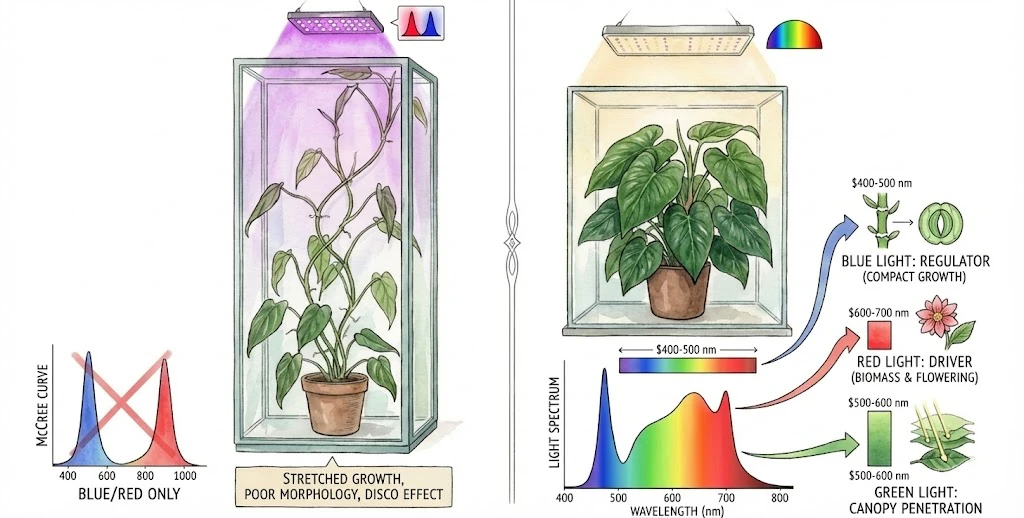
For years, many products used blurple (blue/red) spectra, drawing on the McCree action spectrum for leaf-level absorption.
That classic curve is a useful starting point, but it describes leaf-level response and does not by itself dictate a whole-canopy fixture recipe.
Blurple light also makes it harder to see your plants and spot pests, which is a practical downside for a display cabinet (a separate point from whether the plants themselves grow well under it).
In a confined space, plant shape (morphology) matters alongside growth rate, though total light, temperature, spacing, nutrition, and genotype all shape it too.
Spectrum can influence morphology, so it is worth understanding the rough roles of the main wavebands.
Blue Light
It tends to suppress stem elongation and is involved in stomatal responses in many species, though the size of the effect depends on the background spectrum, dose, and species.
A spectrum with adequate blue can help keep growth compact, but no single ratio is right for every plant.
If a plant stretches badly, that usually reflects low overall light (DLI), a high far-red share, lamp distance, and genetics as much as a blue shortage.
Red Light
It is a major driver of photosynthesis and, in some plants, flowering. In red-rich, blue-poor conditions, some species stretch more.
Green Light
It is often described as wasted, but that is an oversimplification. Green is absorbed less strongly by the upper leaf layer and can penetrate deeper into a canopy, so shaded lower leaves may use it.
How much it contributes varies by species and canopy structure.
A Note on Laser-Diode Research
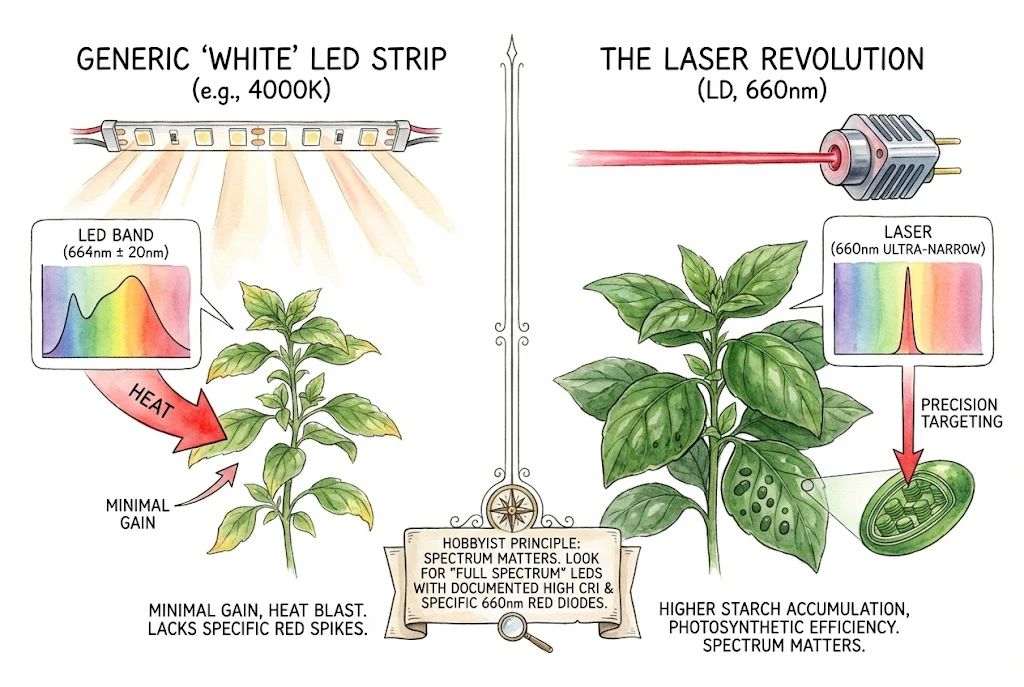
One line of research explores laser diodes (LDs) as a light source. Interesting, though a laser diode is itself a semiconductor emitter, so this is a niche comparison rather than a move away from LEDs.
A 2025 study compared a 660 nm laser diode (very narrow, roughly 1.6 nm wide) against a 664 nm red LED (roughly 18 nm wide) at the same PPFD, using continuous red light.
In tobacco, the LD treatment showed about a 19% higher net photosynthesis and about 18% more starch.
Not every species or metric improved. Some lettuce measures showed no significant difference, and LD plants showed some shade-like traits such as elongated petioles.
Importantly, the study did not compare against ordinary white LEDs, and it did not test whole-fixture energy efficiency, eye safety, heat, flowering, or long-term houseplant quality.
So it is not evidence that lasers beat white LEDs for a cabinet.
You cannot buy a laser grow bulb for this anyway. The practical takeaway is simply that spectrum matters.
A generic 4000 K white LED is not just a heater. White phosphor LEDs emit broad red as well, which contributes to photosynthesis.
Fixtures do differ in quality, so it is reasonable to look for a documented spectrum and adequate output.
What matters most in practice is usable light on the plants, PPFD/DLI, efficacy, and uniformity, along with heat and the plant's response, rather than any single spectral feature.
Full-spectrum white is a sensible default because it renders leaf color and pests clearly.
Barrina T5 Grow Lights
Barrina T5 Grow Lights are a budget full-spectrum shelf light in an 8-pack of 2 ft, 10 W bars, about 80 W total.
They are a reasonable starter option, but check the actual PPFD and distance for your plants. A specific high-CRI or 660 nm spike and any wet-cabinet suitability are not confirmed for them.
The Thermal Consequence of Light
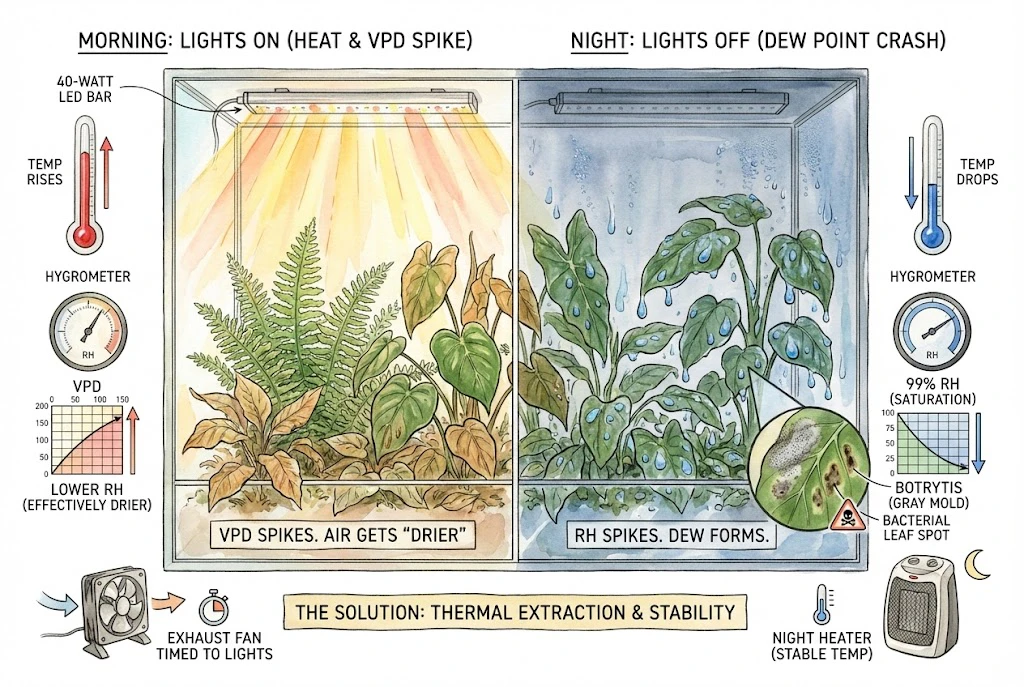
In a mini greenhouse, the electrical power going into the lights ends up as heat inside the enclosure, and that heat feeds back into VPD.
An LED fixture in a sealed IKEA-style cabinet adds heat and can raise the internal temperature.
(The Barrina bars above are about 10 W each, so the total depends on how many you run.)
How much the temperature rises depends on the cabinet volume, leakage, ambient room temperature, airflow, and driver placement, so treat the pattern below as directional rather than exact.
- Morning. Lights turn on, temperature rises, and saturation vapor pressure rises. If the absolute moisture stays constant, VPD increases and the air is effectively drier. (If a humidifier is adding moisture, that changes the picture.)
- Night. Lights turn off and the temperature falls. RH can rise, and if a surface drops below the dew point, condensation can form on leaves. The exact RH depends on the cabinet, so 99% is not a given.
This night-time humidity rise matters because prolonged leaf wetness can raise the risk of diseases such as Botrytis (gray mold) and bacterial leaf spot, though whether disease actually develops depends on the pathogen being present and other conditions.
The fix is not less light but managing heat and moisture. A timed exhaust fan, or gentle controlled heat at night, can help keep temperature and humidity stable.
If you use a heat source, choose one with a thermostat and proper guarding, clearance, and electrical rating, and weigh the trade-off of over-drying the air.
Airflow Dynamics Inside the Cabinet
Gentle, Even Airflow
A small fan is not automatically useless.
Even a little USB fan can create useful airflow in a small enclosure. What matters is the fan's output, placement, and whether foliage blocks the flow, not just its size.
If in doubt, check the airflow reaches the plants rather than assuming it does or does not.
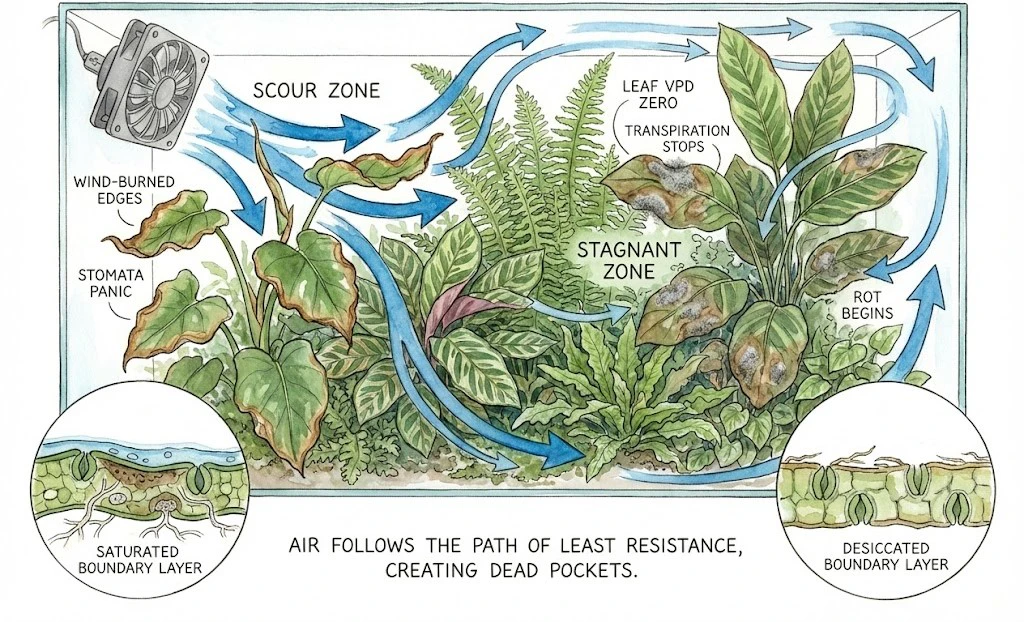
Airflow in a cluttered cabinet is genuinely complex.
Air tends to move along the path of least resistance, often around dense foliage rather than through it.
Studies using computational fluid dynamics (CFD) show that greenhouses and dense canopies can develop uneven flow and low-velocity pockets.
Within those sheltered pockets, the humidity in a leaf's boundary layer can rise, which lowers local VPD and can reduce transpiration there, but the boundary layer rarely reaches exactly zero VPD, and this does not automatically cause rot.
Directly in front of a fan, by contrast, air velocity is high and the boundary layer is thinner (not stripped away entirely, since some surface resistance remains).
Under a strong, constant jet, some leaves may close stomata in response to high evaporative demand, and sensitive foliage can show mechanical or desiccation stress.
So the practical aim is gentle, even mixing (enough to keep air moving without blasting a constant jet at the leaves).
Center rot and edge damage can happen, but they also have other causes (irrigation, pathogens, heat, salt) worth ruling out.
Circulation Versus Air Exchange
Circulation is not air exchange
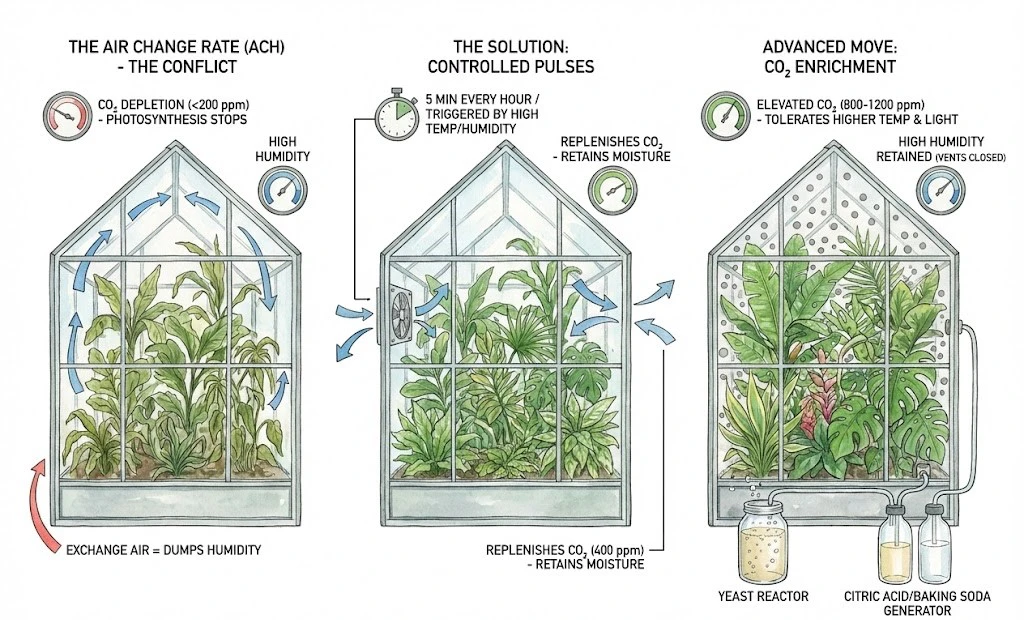
A circulation fan mixes the air inside the box but does not add fresh CO2.
Replenishing CO2 requires exchanging air with the room (or actively enriching it). This is one of the most useful ideas in cabinet growing.
In a bright, sealed cabinet, actively growing plants consume CO2.
Levels can fall toward CO2-limiting concentrations (a chamber near 200 ppm has been reported) but how fast, and how far, depends on the volume, leaf area, light, and leakage.
(Note that outdoor and indoor air is usually around 420–430 ppm today, not exactly 400.) Only a CO2 sensor log tells you what is actually happening in your box.
Low CO2 does limit photosynthesis, and it can drop substantially, but there is no universal switch where all plants stop at exactly 200 ppm (the compensation point varies with species, temperature, and light).
The catch is that venting to bring in CO2 also lets humidity escape, which is the central trade-off in a humid cabinet.
A reasonable approach is controlled venting rather than constant strong exhaust. An exhaust fan on a timer, or triggered by a temperature or humidity setpoint.
A figure like 5 minutes per hour is only an example (the right duty cycle depends on fan flow, cabinet volume, leakage, and your CO2/RH/temperature logs, so tune it to measurements rather than a fixed number).
In some cases continuous ventilation is actually needed.
On DIY CO2 enrichment. Yeast reactors and citric-acid/baking-soda generators produce an unsteady output and carry real risks (spills, contamination, pressure, and over-concentration).
It is not safe to run one with the vents closed and no CO2 monitor, especially in an occupied room.
If you want CO2 enrichment, use a proper monitor and controls, and do not seal the box around an uncontrolled source.
Elevated CO2 (roughly 800–1200 ppm) can improve growth in some crops given enough light and nutrients, but it does not automatically raise heat tolerance or benefit every species.
The Soil – The Cabinet Microbiome
The Terrarium Effect on Microbes
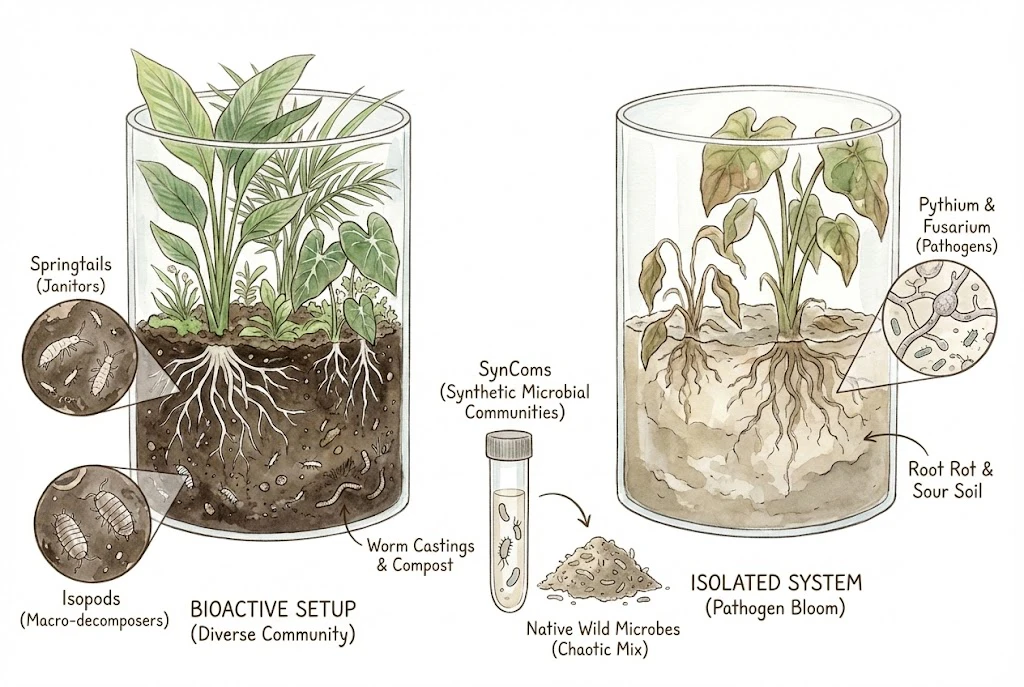
A cabinet or terrarium substrate can be loosely compared to a small, somewhat isolated microbial community.
In nature, soil microbiomes are vast and connected to a much larger pool.
A glass box is more isolated, though not fully closed, since watering, air, and new plants keep introducing microbes.
Ideas from island biogeography can be applied by analogy, and small communities can show more drift, but soil holds an enormous number of microbes and receives repeated inputs, so the analogy has limits.
If a pathogen such as Pythium or Fusarium is introduced (via a dirty pot or infected cutting) and conditions favor it, it can spread.
Wet, poorly drained substrate raises that risk, but that comes mainly from irrigation and drainage, not directly from low air VPD.
A sour or swampy smell can be a sign of anaerobic decomposition and waterlogging, so it is worth checking substrate moisture, drainage, and root health.
Smell alone does not confirm a specific pathogen, and mushy roots point to a problem to diagnose rather than a foregone conclusion.
Synthetic Communities and Native Soil
Researchers study SynComs (synthetic microbial communities), defined blends of microbes, partly to find traits that let beneficial microbes persist.
A 2025 study grew a six-strain Pseudomonas consortium alongside a native soil microbiome, separated by a transwell that still allowed chemical exchange.
The native community reduced the consortium's overall growth and one strain's viability.
That is a lab interaction study, though. It did not compare potting mixes, bottled inoculant field performance, or compost, and its aim was to identify persistence traits, not to declare that native soil always defeats added microbes.
The practical lesson is modest. A bottled beneficial bacteria product will not reliably fix a poor substrate on its own, and results depend on the strain, host, and soil.
Microbial diversity can contribute to resilience and some pathogen suppression, so a healthy, living substrate is a reasonable goal.
But diversity alone does not guarantee benefit or safety. Worm castings and compost add microbes and nutrients but can also introduce pathogens, fungus gnats, salts, and variable maturity, so choose quality inputs.
Diverse communities still experience disease.
In a bioactive terrarium, cleanup organisms like springtails and isopods can help by eating detritus and some mold.
They are useful in many setups but not mandatory in every cabinet (whether they fit depends on your plants, substrate, moisture, any animals present, and escape and population control).
Where you do not use them, sanitation, pruning, good drainage, and airflow do similar work.
Building the Cabinet – A Practical Guide
With the theory covered, here is a practical layout.
Treat it as a starting point, and prioritize electrical and fire safety (wet enclosures and mains electricity demand care).
Based on the physics and biology above, the goal is a functional cabinet, not just an attractive one.
The Shell – Insulation and Sealing
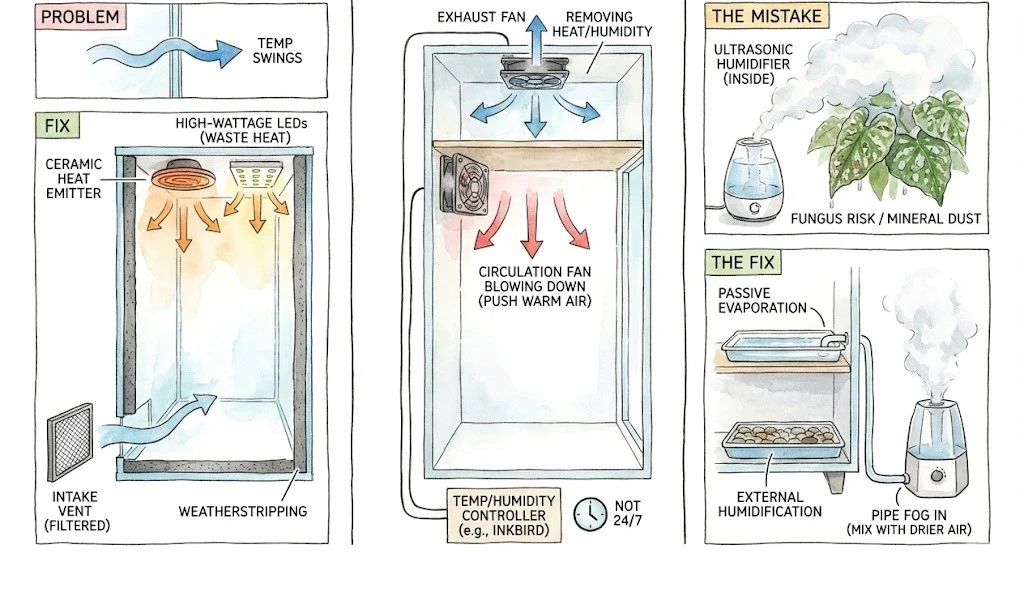
Single-pane glass insulates poorly, so its temperature tends to follow the room.
Room temperature swings can carry into the cabinet, though plants, lights, and water mass add some thermal lag.
In a cold room, you may not be able to rely on room temperature to keep tropical targets, so compare options. Warm the room, add cabinet heat, or choose species suited to cooler conditions.
If supplemental heat is needed, size it to a measured target.
A heat mat is inefficient for warming air but useful for root-zone warmth, so match the tool to the job.
A low-wattage ceramic heat emitter or LED waste heat can raise air temperature, but a ceramic emitter has a hot surface. It needs a thermostat, a guard, adequate clearance, and appropriate humidity and electrical ratings to be used safely.
Foam or weather-strip tape can reduce leakage in IKEA-style cabinets. Check for off-gassing and that the door still seals and opens.
Leave a designated intake vent so you control where air enters and can add a mesh filter. A fine mesh can reduce some thrips and mite ingress but will not fully block the smallest mites or pests carried in on plants, and it needs cleaning as it adds resistance.
The Lungs – Active Ventilation Logic
A common minimum is two fan roles. Use one for circulation and internal mixing, and another for exhaust that removes heat and humidity.
How many fans you actually need depends on cabinet volume, canopy density, and heat load.
Mounting a circulation fan high and blowing downward can help mix warmer air toward the lower cabinet, but aim the flow so it does not blast directly on leaves. Check root-zone temperature with a substrate sensor.
An exhaust fan near the top can remove the warmest, most humid air. Depending on where the intake sits, watch for short-circuit flow.
There is no universal rule to never run fans continuously. A common pattern is continuous gentle circulation plus closed-loop (setpoint-triggered) exhaust, decided from your condensation, CO2, and heat data.
A temperature/humidity controller can improve stability. Note that the fan below shares a single manual speed control across both of its fans, and does not include a built-in humidity trigger.
AC Infinity Multifan S7
AC Infinity Multifan S7 is a quiet, low-power dual-120 mm fan that produces about 104 CFM total at 19 dBA and 2.9 W, which suits general cooling.
Its rated operating humidity is 35–85% and it is not waterproof, so keep it out of direct mist and very humid air. Both fans share one speed control, so it cannot easily run one fan as continuous circulation and the other as independently timed exhaust.
For truly independent circulation and exhaust, plan on separate, individually controlled fans.
Humidification
An ultrasonic humidifier placed inside the cabinet can over-saturate surfaces (causing wet leaves (a fungal risk) and mineral dust if you use hard water).
This is not inevitable. Controlling the output, using distilled water, and positioning it with good air mixing all reduce the problem.
Whatever device you use, confirm it is rated for a wet, humid environment.
Two lower-risk alternatives are passive evaporation (an open reservoir) and external humidification.
If you use a fogger, one option is to pipe it in from outside so the fog mixes with drier cabinet air before reaching the leaves. Keep the duct clean, manage condensate, and check that leaves are not staying wet.
Grouping Plants by Climate Needs
A humidity-loving Calathea and a desert cactus want very different conditions, so it is hard to serve both well in one box.
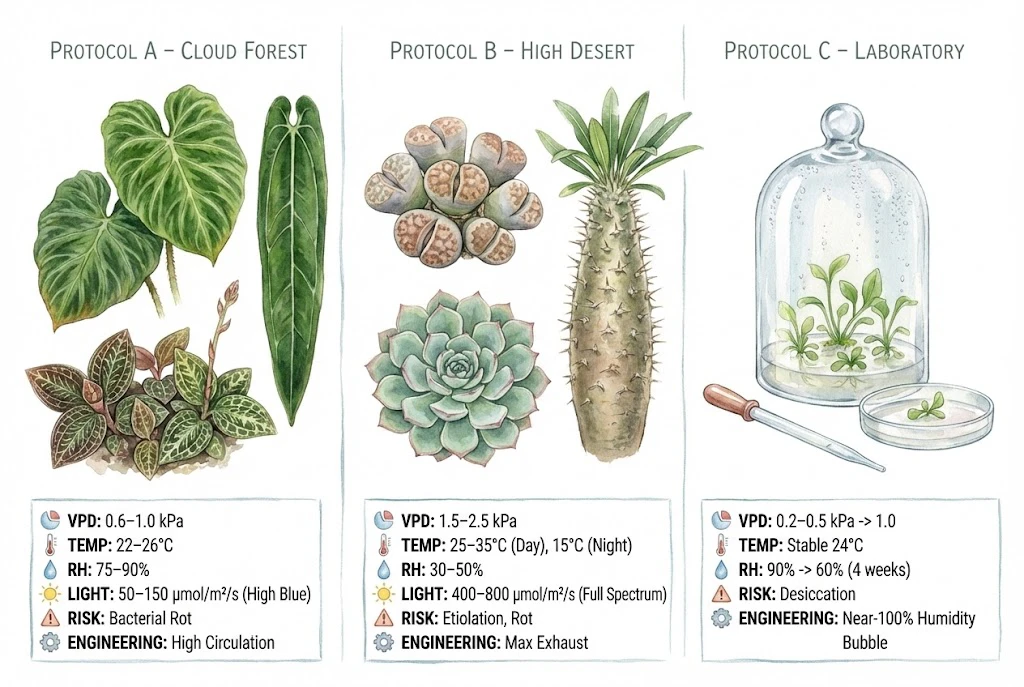
Even within these broad common-name groups, species and habitats vary a lot, so treat the numbers below as rough starting points to refine per plant.
Importantly, the temperature/RH pairs listed do not always yield the stated VPD range. They are illustrative, and you should confirm VPD from your own readings.
Group A – Humid Tropical (Aroids, Ferns, Orchids)
Example plants
Philodendron verrucosum, Anthurium warocqueanum, and jewel orchids.
Starting VPD
Roughly 0.6–1.0 kPa. Verify with a sensor because 22–26 °C at 75–90% RH spans a wider VPD than this.
Temperature
About 22–26 °C.
Relative humidity
About 75–90%. Running near 90% long-term needs condensation and disease management.
Lighting
Low-to-moderate, very roughly 50–150 µmol/m²/s, with a spectrum that supports compact growth. Adjust to the species.
Main risk
Warm, wet, stagnant conditions can favor rot. The specific disease varies.
Setup
Use gentle, even airflow so leaves move a little. Avoid leaving water on leaves overnight.
Group B – Dry-Adapted (Succulents, Caudiciforms)
Example plants
Lithops, Echeveria, and Pachypodium.
Starting VPD
Roughly 1.5–2.5 kPa. The temperature and RH below can push well above this. For example, 35 °C at 30% RH is near 3.9 kPa, a severe drying demand, so verify.
Temperature
About 25–35 °C by day, with cooler nights around 15–20 °C depending on species and season.
Relative humidity
About 30–50%.
Lighting
High for sun-loving species, very roughly 400–800 µmol/m²/s, with full spectrum. Acclimate gradually, and treat any UV cautiously given eye and skin safety and species tolerance.
Main risk
Etiolation from too little light and rot from excess moisture are different causes to address separately.
Setup
Use good ventilation to shed heat and moisture, tuned to measurements rather than simply run at maximum.
Here the cabinet mainly keeps intense light in and pets out, rather than trapping humidity.
Group C – Tissue-Culture Acclimation
Example plants
Freshly deflasked plantlets.
VPD
Start very low and raise it gradually as an example schedule. Verify against readings. At 24 °C, easing RH from 90% to 60% works out to roughly 0.3 to 1.2 kPa.
Temperature
A stable temperature around 24 °C suits many plantlets, adjusted for species and rooting stage.
Relative humidity
Easing from about 90% down toward 60% over roughly four weeks is one hardening-off example, not a universal schedule.
Main risks
Desiccation, contamination, root dysfunction, and transplant shock.
Setup
Use high humidity early on, but manage hygiene, gentle gas exchange, and condensation rather than relying on truly stagnant air.
Deflasked plantlets have a poorly developed waxy cuticle and stomata that often close inefficiently, which is exactly why they lose water so easily.
They can dry out quickly at normal VPD.
A near-saturated enclosure, vented gradually over weeks, gives them time to harden off (adjust the pace to how the plantlets actually respond).
Troubleshooting the Glass Box
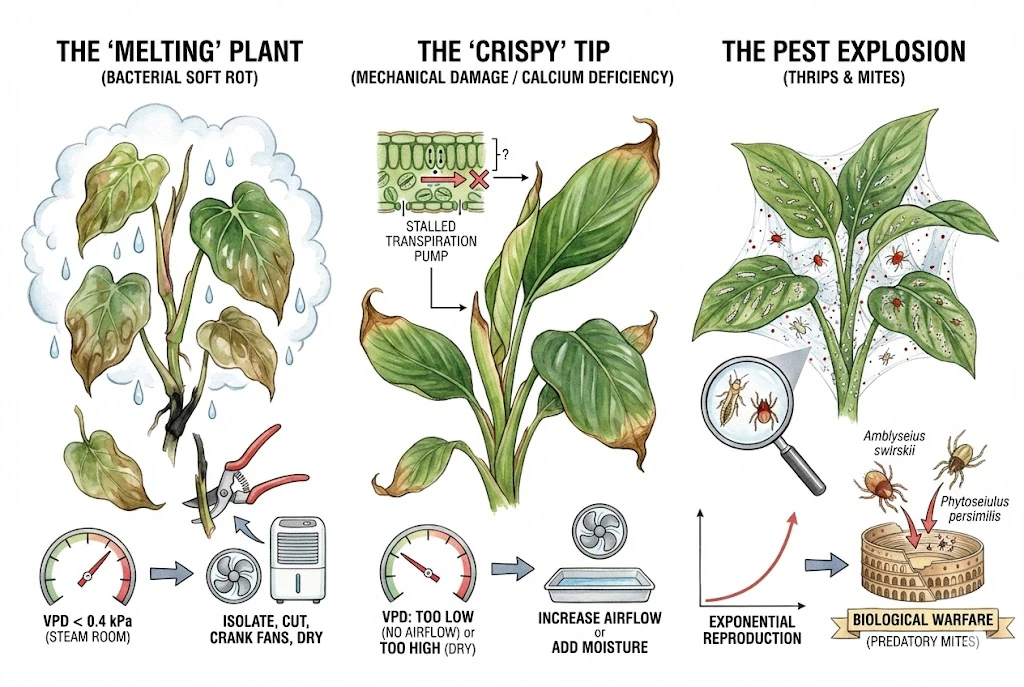
The Melting Plant
Leaves turn translucent and mushy and fall off. Stems may blacken. Record the tissue texture, lesion margins, any odor, and the state of the roots.
This can be a bacterial soft rot. The older name Erwinia is often used, but soft rot also involves genera like Pectobacterium and Dickeya, and similar collapse can come from oomycetes, fungi, or abiotic injury, so identify rather than assume.
Warm, wet conditions with low VPD and free water on tissue can favor some of these diseases, but the trigger for condensation is a surface dropping below the dew point, not a VPD number by itself.
First response
Isolate the plant, and if a section is clearly rotten, remove it with a clean, disinfected tool and dispose of it.
Improving airflow and letting wounds dry can help, but avoid a harsh constant blast, and know that this does not guarantee a cure. If it spreads, discard the plant.
Stuck or Crispy New Leaves
New leaves get stuck in the sheath, or leaf tips turn brown and crunchy.
Possible causes include low humidity, calcium-related disorders, salt or heat damage, mechanical friction, and root stress. A single texture does not pin down the cause.
Notably, stuck or deformed growth can occur in high-humidity cabinets too.
Very low airflow can raise boundary-layer resistance and localized wetness, and can reduce transpiration, which may limit calcium delivery to the tip in some cases.
Check VPD along with the roots, watering, and feeding. If conditions are very humid, adding gentle airflow can help support transpiration, though already-damaged tissue will not recover.
If the air is very dry (high VPD), add moisture, and look at root water supply and salts as well.
Pest Outbreaks
You might see tiny larvae or fine webbing. Don't assume the species from that alone (thrips larvae, spider-mite stages, and their damage look different, so identify pests under magnification before treating).
An enclosure with few natural enemies and favorable conditions can let a pest population build quickly.
Predatory mites can help as part of an IPM program. Amblyseius swirskii targets thrips and whitefly, while Phytoseiulus persimilis primarily targets two-spotted spider mites.
Match the predator to the identified pest, and check temperature, RH, release rate, and any prior pesticide use.
Horticultural oil does not automatically suffocate plants. It is used in greenhouses when applied according to the label and kept away from very high humidity, heat, and sensitive species. Do not combine it with predators without checking compatibility.
Conclusion – Managing the Cabinet Actively
A closed cabinet rewards active management. It calls for more attention than a windowsill plant, but the payoff is a more stable environment for demanding species.
Reading VPD (with leaf temperature and a sensor you trust) is more informative than guessing from humidity alone, while remembering that sensor accuracy and species targets carry their own uncertainty.
Choosing an appropriate spectrum and enough total light helps keep growth compact, though total DLI, far-red, and temperature matter too.
Managing airflow and a healthy substrate supports disease prevention, though good ecology does not by itself guarantee a pathogen-free box.
Where possible, favor measurements and reputable research over marketing, and be honest about what any single study does and does not show.
Calculate your VPD from real readings, and tune airflow from what you observe.
Aim to recreate the conditions your plants need, verify with sensors, and adjust over time. That steady, evidence-led approach is what makes a cabinet work.
Data Tables and Reference Charts
Table 1 – Starting VPD Targets by Group
These are rough starting points, not exact protocols. The listed temperature and RH ranges span a wider VPD than the starting VPD column, so verify VPD from your own readings for the actual conditions you run.
| Group | Starting VPD | RH | Temp |
|---|---|---|---|
| Humid tropical (aroids, ferns, orchids) | ~0.6-1.0 kPa | 75-90% | 22-26°C |
| Dry-adapted (succulents, caudex) | ~1.5-2.5 kPa | 30-50% | 25-35°C day |
| Tissue-culture acclimation (deflasked plantlets) | start low, easing toward ~1.0 | 90% to 60% over ~4 weeks | stable ~24°C |
Table 2 – Symptoms and Things to Check
Use this as a quick checklist, not a diagnosis. Most of these symptoms have more than one possible cause, so confirm by inspecting the roots, pests, watering, and conditions before acting.
| Observation | Possible condition | What may be happening | What to check / try |
|---|---|---|---|
| Condensation on glass | Very high RH / low VPD | A surface has cooled below the dew point. | Raise temperature or vent. Also check for cold spots. |
| Soil stays wet for weeks | Low evaporative demand and/or drainage issue | Little evaporation, possibly poor drainage or over-watering. | Check drainage and watering. Add gentle airflow. |
| Leaves curling up/in | Possibly high VPD | Stomata may be closing under high drying demand. | Check leaf temperature and water supply. Raise humidity or lower temp if very dry. |
| Leaf edges brown/crunchy | Possibly high VPD, or salt/heat | Desiccation, wind stress, or salt/heat damage. | Check fan placement, root-zone salts, and watering. |
| Mushy, translucent, melting leaves | Warm, wet conditions favoring soft rot | Bacterial or other soft rot (identify before treating). | Isolate, remove rotten tissue with a clean tool, improve airflow gently. |
| Leggy stretching | Usually a light issue, not VPD | Low total light (DLI), high far-red, or lamp distance. | Increase light / add blue or full-spectrum white. |
| Pest outbreak | Few natural enemies, favorable conditions | Population building unchecked. | Identify the pest under magnification, then choose IPM (e.g. Matched predatory mites). |
Affiliate Disclosure
This article contains Amazon affiliate links. As an Amazon Associate I earn from qualifying purchases. If you use these links, the site may earn a commission at no extra cost to you. Product availability, price, and specifications can change. Check the current listing before buying.