
Can a Closed Terrarium Survive in Low Light?
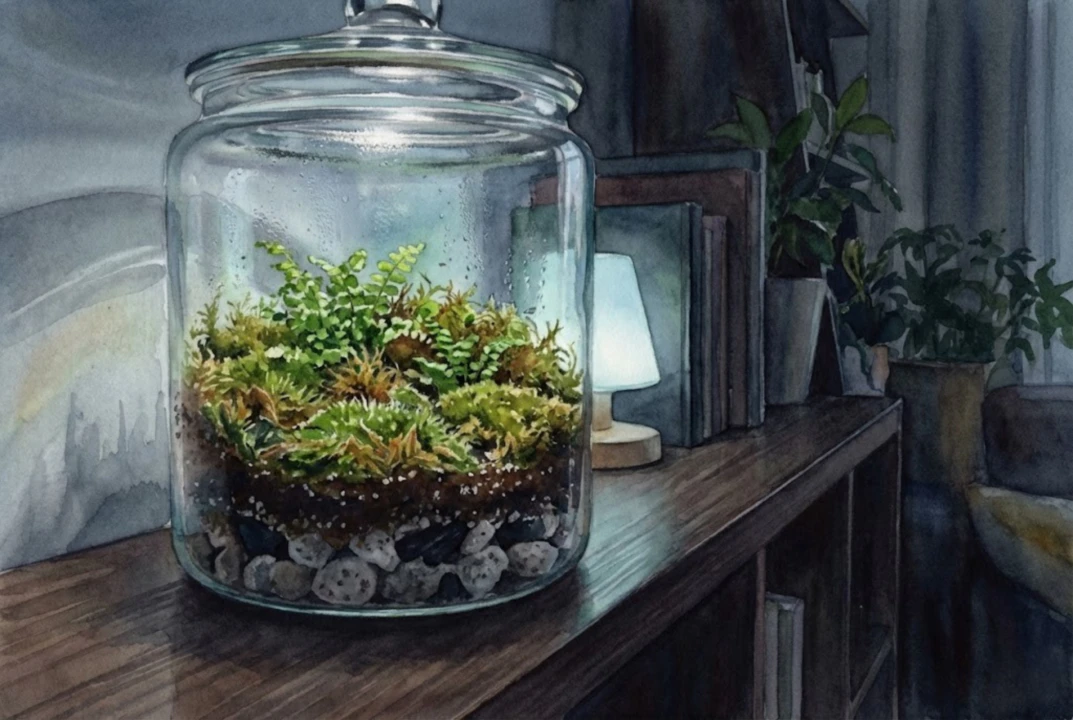
Can a closed terrarium survive in low light? It depends on how dim low light really is. Plants still need enough usable light to keep a positive carbon balance, so scope your expectations, water by observation, choose shade-tolerant plants, and manage mold at the source.
Priya Patel · Published 2026-02-24 · 9 min read
Key Takeaways
- Define low light before judging the setup because a closed terrarium can persist in a dimmer spot only while enough usable light remains for plants to keep a positive carbon balance.
- Water by observation because lower light slows growth and water use, making overwatering more likely than underwatering in a sealed vessel.
- Use a porous substrate and careful moisture control because a gravel or pumice base cannot drain a jar and charcoal cannot cure excess water or disease.
- Choose shade-tolerant plants with realistic expectations because mosses and small ferns still photosynthesize and need more than deep darkness.
- Manage mold at its source by correcting moisture and removing dead debris, then use springtails as a supporting cleanup crew rather than as a cure.
Start With the Light Dose
Low Light Is a Measurable Dose
Can a closed terrarium survive in a dimly lit room? It depends on how dim the room actually is.
I measure PPFD every two hours from first useful daylight until dusk and record when direct sun, room lights, or a nearby grow light reaches the terrarium. I repeat the sequence on one clear and one overcast day after each seasonal daylight change. Two-hour spacing catches a moving sun patch without turning one bright noon reading into a daily dose.
I repeat the clear-and-overcast pair after nearby plants grow enough to shade the vessel. I move it only when the light history and new growth agree, not because one phone photo makes the room look dim.
Judge Light by Source and Duration
What looks like low light to the eye is not the same as the light dose a plant receives. Consider the light source, its distance from a window, the photoperiod, the season, and the shade tolerance of the specific plants.
Many terrarium plants do best with several hours of bright, indirect light. The RHS recommends a grow light where a suitable window is not available.
Deep Shade Is Not Darkness Tolerance
If usable light remains sufficient, a closed terrarium can persist in a dimmer spot, but it needs more careful construction and maintenance.
In genuinely deep shade, shade-tolerant is not the same as darkness-tolerant, and plants can slowly decline as photosynthesis fails to cover respiration.
How do low-light closed terrariums function?
Low Light Slows Growth and Gas Exchange
Lower light generally slows growth and gas exchange, and reduces photosynthesis. How much depends on the plant, the light level, and how the plant is acclimated, so treat the direction as reliable but the magnitude as case-by-case.
The Water Cycle Continues in a Sealed Jar
Many vascular plants also transpire less as stomata close under low light, though this varies with humidity, temperature, and vapor-pressure deficit. That does not mean the sealed jar’s water cycle stops.
Evaporation and condensation inside the vessel are driven by wet surfaces and temperature differences between the glass and the interior, as long as those exist, moisture keeps moving even when the plants transpire little.
Water More Slowly in Low Light
Because plants in dimmer light often use water more slowly, overwatering is easier. Rather than a fixed amount, water by observation. Start damp rather than soaking, then let condensation on the glass, substrate moisture, and the plants’ appearance tell you whether to add more or vent.
Persistent saturation can lead to root problems, but that is a moisture and substrate issue, not an automatic consequence of dim light.
How should you think about drainage and substrate layers?
Choose Layers for Air Space, Not Drainage
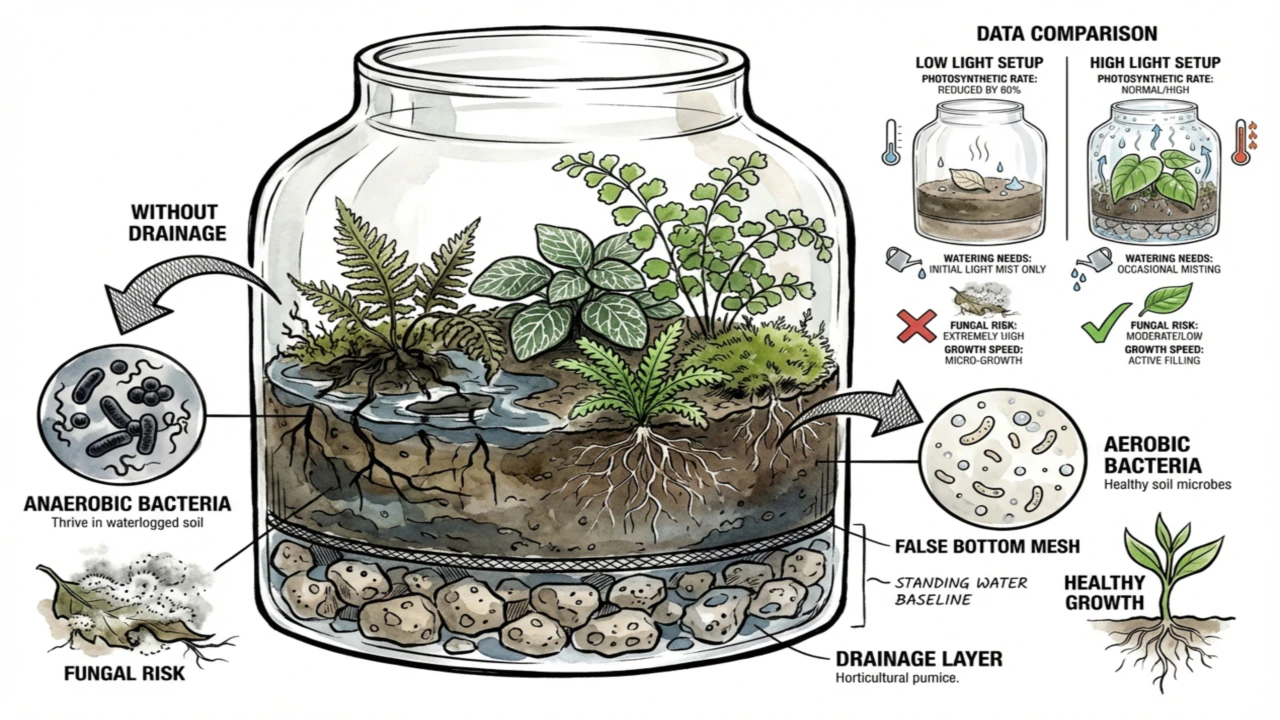
| Feature | Lower Light | Brighter Light |
|---|---|---|
| Photosynthesis & growth | Tends to slow (varies by plant and light level) | Higher, if not so bright it overheats the jar |
| Watering | Often less, but judge by condensation and substrate | Judge by condensation and substrate |
| Main risks | Overwatering, slow decline if light is too low | Overheating and tissue stress under direct sun |
| Fill-in speed | Slower | Faster |
Saturation Reduces Root Oxygen
When substrate stays saturated, its air-filled pores fill with water, which limits oxygen diffusion and root respiration and can lead to root problems.
What causes that is persistent saturation, compaction, and poor gas exchange, not darkness itself. Low light matters only indirectly, by slowing water use so a substrate stays wet longer.
A Rock Layer Does Not Drain a Jar
A jar has no drain hole, so a bottom layer of gravel or pumice does not remove water from the vessel the way drainage does in a pot.
In fact, both Penn State and University of Minnesota Extension note that a rock layer can create a perched water table just above it, and that some growers now skip the layer entirely.
Porous Media and Moisture Control Protect Roots
What actually protects roots is a porous, well-aerated substrate plus careful moisture control so the vessel never stays waterlogged.
Tinyroots Horticultural Pumice
Tinyroots Horticultural Pumice fits when you need to make the planting mix more open and airy. It cannot drain a sealed jar by itself, so use less water and avoid building a permanently saturated layer beneath the roots.
Mosser Lee Horticultural Charcoal
Mosser Lee charcoal is an optional structural addition. It can help with texture and odor, but it is not activated carbon and will not correct overwatering, low oxygen, or diseased tissue.
Mechanisms of Waterlogging Tolerance in Plants
What are the best plants for this environment?
Are mosses a good choice for lower light?
Moss Tolerance Varies by Species
Many mosses are shade-tolerant and can do well in a humid terrarium, and for a dimmer setup they are often a reasonable choice.
Whether a particular moss does better than a companion vascular plant depends on the species, moisture, substrate, temperature, and starting coverage, so treat the idea that moss always wins as a tendency rather than a rule.
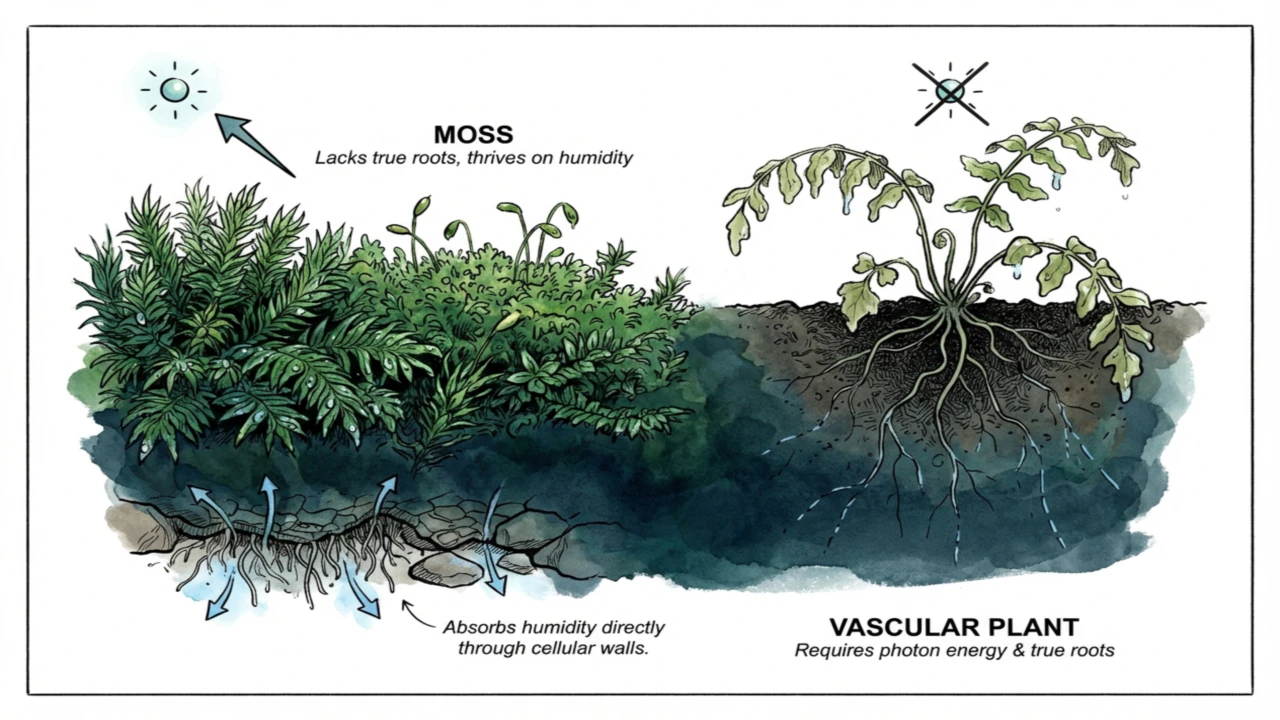
Mosses Absorb Water at the Surface
Mosses have no true roots. Instead they have rhizoids for anchoring and take up water across their leaf and stem surfaces rather than through a root system.
Because of this, they can draw on the film of moisture and high humidity inside a closed jar. How much liquid water versus vapor a moss needs, and how well it tolerates drying, differs by species, so ambient humidity alone is not always enough.
Mosses Still Need Usable Light
Mosses are still photosynthetic plants, so they do need adequate light to maintain a positive carbon balance over time.
They tolerate low light well, but they are not darkness-tolerant.
Desiccation Tolerance and Water Relations in Bryophytes
How much shade can terrarium ferns actually take?
Thin Fronds Do Not Prove Deep-Shade Tolerance
Small ferns can suit a humid terrarium, and their thin fronds do use diffuse, scattered light.
That said, thin fronds are a general form, not a measured deep-shade advantage for any one cultivar, so avoid reading it as proof a fern will thrive in a dark corner.
Lemon Button Needs Usable Light
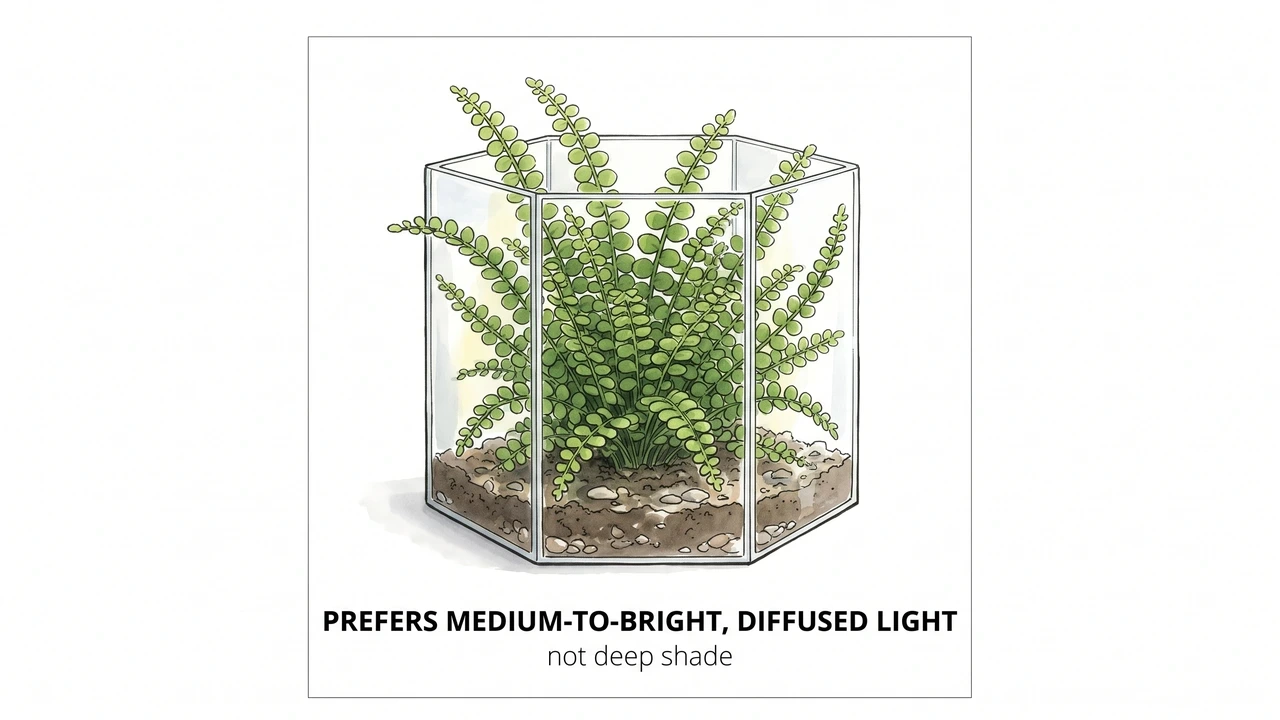
The Lemon Button fern (Nephrolepis cordifolia ‘Duffii’) is a reasonable candidate because it stays compact and likes humidity.
But University of Connecticut Extension lists it for diffused, medium-to-bright light and high humidity, not deep shade, so it needs usable light to do well.
Check Mature Size and Airflow
A room corner is often far from a window, where usable light drops off quickly. The RHS notes such spots may need a grow light.
Before committing to a fern, also consider its mature size and root space because the species can grow larger than a small jar allows over time, plus airflow and occasional trimming.
Troubleshooting Mold and Rot
How do I stop white mold from taking over?
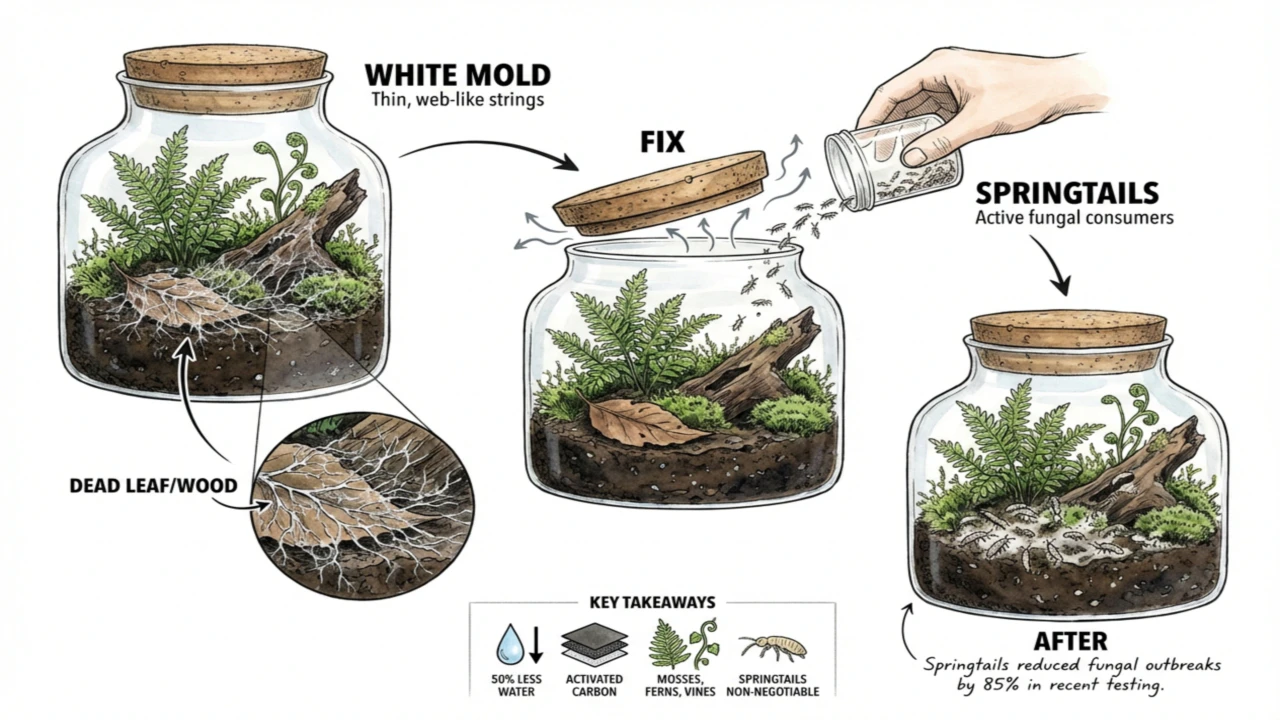
Josh’s Frogs Springtail Culture
Springtails (Collembola), such as those in a Josh’s Frogs springtail culture, graze on fungi, algae, and decaying matter, so they can help keep a terrarium tidy. They are a supporting cleanup crew, not a cure. Whether they keep a given mold in check depends on their population, species, moisture, and available food, and they do not treat infected plant tissue.
What to Look For
Thin, white, web-like growth on dead leaves or wood often points to saprophytic fungal mycelium.
Appearance alone does not confirm the organism, though. Root hairs, mineral crusts, or pest webbing can look similar, so check where it is and whether nearby tissue is soft or discolored.
How to Respond, in Order
Remove Debris and Inspect Tissue
Remove the affected dead debris and check roots and stems for softness or lesions.
Correct Moisture Before Adding a Cleanup Crew
Correct the moisture that feeds it by letting the substrate dry back and venting briefly if condensation is heavy, while watching that mosses and ferns do not dry out.
Isolate Suspect Plants
If a plant shows soft roots, stem lesions, or wilting, isolate it and evaluate for disease.
Use Springtails as Follow-Up Support
Once conditions are corrected, a springtail culture can help as ongoing support.
Why This Order
Most terrarium mold grows on excess moisture and dead organic matter, so removing the source and correcting moisture addresses the cause.
Venting and springtails help, but not every fungus depends on stagnant humid air, and air exchange alone will not remove infected debris or fix a waterlogged substrate.
Manage a Live Culture After Delivery
This live culture fits an established, moist terrarium with food and habitat for the population to settle in. It is not right when you need an immediate mold cure. Check the seller’s current live-arrival and shipping terms, then give the culture suitable moisture and time to establish.
Folsomia candida and Trichoderma Against Fusarium oxysporum (in vitro)
Affiliate Disclosure
This article contains Amazon affiliate links. As an Amazon Associate I earn from qualifying purchases. If you use these links, the site may earn a commission at no extra cost to you. Product availability, price, and specifications can change. Check the current listing before buying.