
Cauliflower Fertilizer Guide: Nitrogen, Boron, and Big Yields
A practical, test-driven look at cauliflower nutrition: how nitrogen timing, phosphorus and potassium, and boron and molybdenum relate to hollow stem, whiptail, and yield, with the evidence and its limits.
Samuel Reed · Published 2026-01-09 · 31 min read
Summary
Cauliflower demand rises steeply once the plant moves from establishment into rapid leaf and frame growth, so it usually pays to hold back some nitrogen for that phase rather than front-loading everything at planting.
The exact timing depends on cultivar maturity group, transplant age, temperature, and planting date, so treat any days-after-transplanting window as a rough guide, not a calendar rule.
Nitrogen strongly influences yield, but recovery of applied N is often incomplete. Controlled Release Fertilizers (CRF) or polymer-coated urea can reduce leaching and better match supply to demand when the product's release duration is matched to the crop length. They are one option among several, not automatically the best choice.
Boron and molybdenum matter for cauliflower quality, but hollow stem and whiptail have several possible causes.
Confirm a deficiency with a soil or tissue test and follow product-label rates before applying either nutrient, because boron in particular has a narrow margin between deficiency and toxicity.
Key Takeaways
- Match nitrogen supply to the crop's growth curve. Early uptake is relatively slow and speeds up once the plant has 4–6 leaves and begins rapid frame growth. Extension data for transplanted cauliflower show a large share of nitrogen is taken up during that rapid phase, so weighting applications toward it rather than front-loading helps limit waste. Exact rates and days vary by site and cultivar.
- Test for boron or molybdenum deficiency before treating. Boron supports cell-wall integrity and molybdenum is a cofactor for nitrate reductase, but hollow stem, whiptail, and related symptoms have multiple causes. Confirm with a soil or tissue test and use label rates. Boron especially can cause toxicity if over-applied.
- Consider controlled-release nitrogen only when its release period matches the crop. Controlled Release Fertilizers (CRF) or Polymer Coated Urea (PCU) can lower leaching losses when the release duration matches crop length. In cited cauliflower trials the yield advantage over well-timed conventional nitrogen was small and not always statistically significant, so weigh the price premium against the expected response.
- Diagnose symptoms before prescribing a nutrient. Buttoning, whiptail, and hollow stem are useful signals, but each can arise from several factors (temperature, transplant age, spacing, water, pests, and nutrition). Use cut-stem and leaf observations plus a soil or tissue test rather than assuming a single cause.
- Use integrated nutrient management as a site-tested option, not a universal recipe. In some site-specific trials, combining mineral fertilizer with organic amendments such as manure outperformed either alone, partly through effects on cation exchange capacity (CEC) and soil structure. Results depend heavily on the soil, the manure's analysis, and the rates used.
Introduction
Cauliflower is a member of the Brassica family (Brassica oleracea) and is widely regarded as one of the more demanding cole crops for consistent quality.
Compared with cabbage or broccoli, cauliflower quality tends to be more sensitive to temperature and nutrition, so it benefits from careful environmental and nutritional management.
Poor nitrogen timing can contribute to buttoning, boron shortage can be involved in hollow stem, and low soil pH can limit molybdenum availability and contribute to leaf deformation, but each of these disorders has more than one possible cause, so diagnosis should come before treatment.
Match Nutrients to Growth Stage
Cauliflower needs modest nutrition while it establishes, then more as it builds leaves and a curd. Local weather, cultivar, soil supply, and irrigation change the schedule.
Apply nutrients to measured crop demand instead of following a fixed calendar or pushing extra fertilizer early.
When Demand Speeds Up
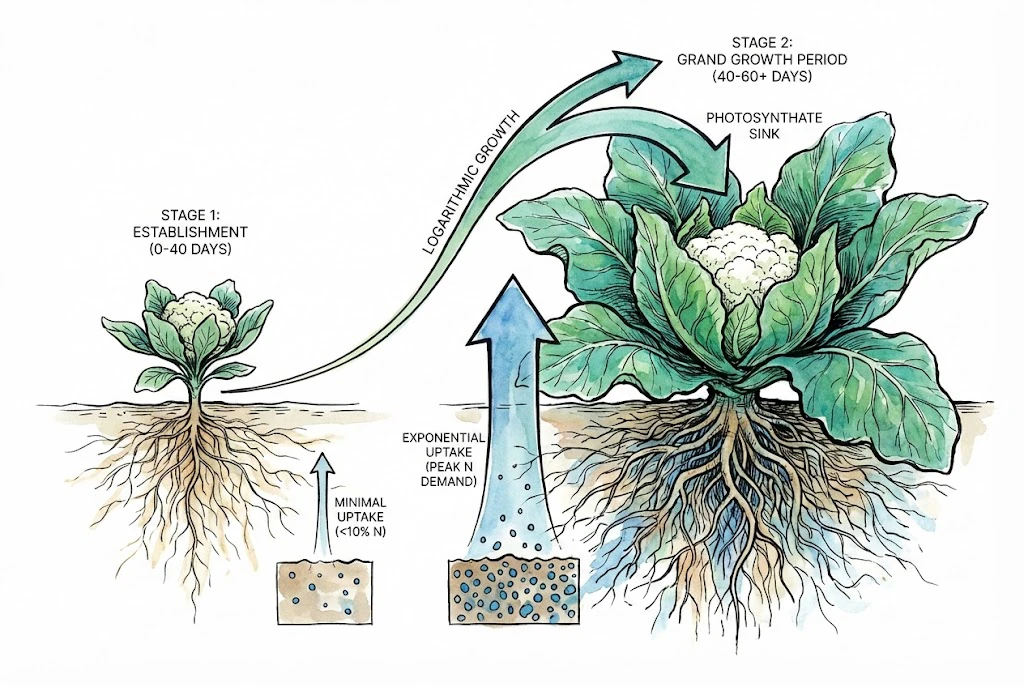
Biomass accumulation and nitrogen uptake in cauliflower generally follow an S-shaped (sigmoidal) pattern, though the exact timing and slope vary by site and cultivar.
For the first several weeks after transplanting, growth is relatively slow as the plant establishes its root system.
The length of this establishment phase depends on temperature and transplant condition.
Nitrogen demand is comparatively low during this phase, though transplants still need a modest starter supply and low soil nitrate can limit early growth.
Extension data for transplanted cauliflower (Pacific Northwest) indicate that roughly the first 40–50 days accumulate on the order of 25% of season biomass and about 50 lb N/acre. The frequently cited less than 10% figure describes broccoli biomass, not cauliflower, so it should not be applied here as a seasonal-nitrogen figure.
Uptake speeds up once the plant reaches roughly 4–6 leaves and begins building its leaf frame. The exact window (often cited around 40–60 days after transplanting) is not a fixed calendar date and shifts with cultivar and conditions.
The plant develops a large leaf framework to support the developing curd.
Reported peak nitrogen uptake during the rapid phase varies with the source and conditions (on the order of about 3 lb N/acre/day in the Pacific Northwest data, while California guidance notes peaks that can exceed 10 lb N/acre/day) so any single per-day figure should be tied to specific conditions.
If nitrogen (or another nutrient, water, or a favorable temperature) is limiting during this phase, leaf area can be reduced.
Because the curd relies on the photosynthates produced by the leaves, a poorly developed frame tends to limit final curd size.
Severe, prolonged early stress can permanently limit yield potential, though how much can be recovered depends on the stress's severity, duration, and how much of the season remains.
Remember the Leaves and Residues
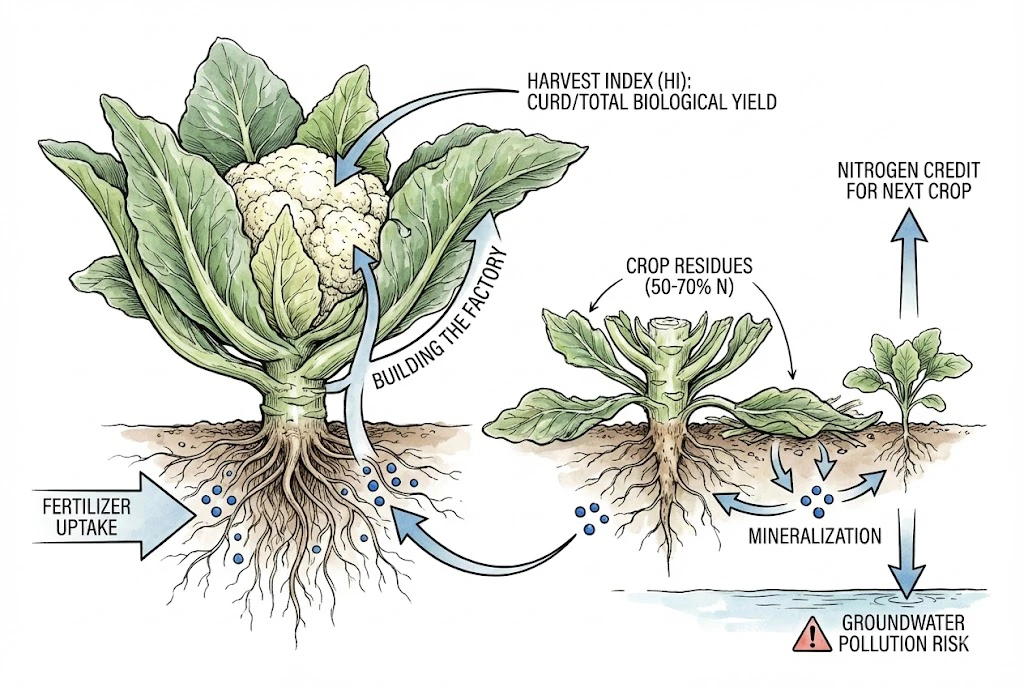
The Harvest Index (HI) is the ratio of marketable curd yield to total aboveground biomass. For comparisons, it helps to state whether fresh or dry weight is used.
The plant must develop a large vegetative structure to produce the marketable curd.
A large share of the nitrogen taken up stays in the crop residues (leaves and stems) after harvest.
For high-yielding Central Coast fields, CDFA-cited data put residue nitrogen at roughly 175–230 lb N/acre, or about 60–80% of aboveground nitrogen.
What Residues Change
First, much of the applied nitrogen supports the vegetative framework rather than the curd itself, though the exact partition between soil nitrogen, residue, and curd varies.
Second, because substantial nitrogen remains in the field within these residues, mineralization can supply part of the next crop's nitrogen, but this is not an automatic credit.
How much becomes available depends on when residues break down and on temperature, moisture, immobilization, leaching, and the next crop's rooting, so the contribution should be estimated rather than assumed.
Ignoring this residual nitrogen can increase nitrate leaching in intensive vegetable rotations.
Place Nutrients Where Roots Can Use Them
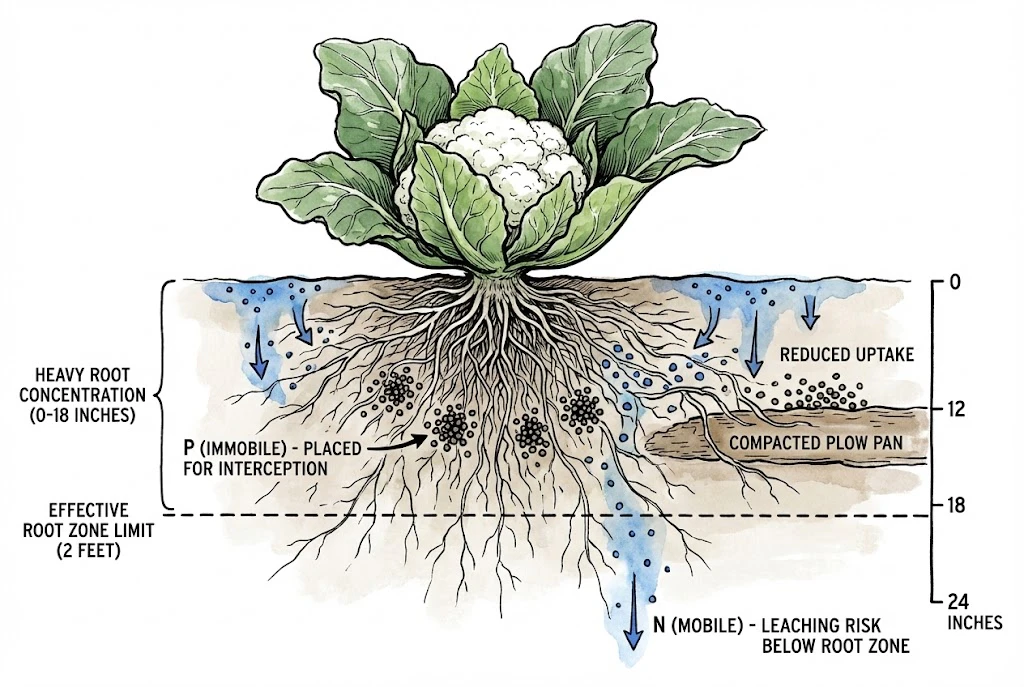
Most cauliflower roots are concentrated in the top foot of soil (roughly the upper 12 inches), consistent with CDFA guidance.
Where no restrictive layer is present, roots can extend to about 3–4 feet later in the season.
Root distribution is one factor in effective fertilizer placement, though a single fixed root-zone diagram cannot capture every field.
Phosphorus is relatively immobile in soil, so placing it where roots proliferate improves access. Incorporation, chemistry, and moisture also matter.
Nitrogen (as nitrate) moves with soil water. It can be surface-applied, but if it moves below the active root zone it becomes harder to recover.
Because roots can reach 3–4 feet, nitrate a foot or two down is not automatically unavailable. Capillary movement and deeper rooting can still bring some into reach.
Uptake efficiency depends on the overlap of root density and nutrient concentration, together with availability, mass flow and diffusion, and root activity.
Soil compaction can reduce rooting and limit fertilizer response even at high rates. Where it is suspected, check bulk density, penetration, moisture, and the actual roots rather than assuming.
Manage Nitrogen Carefully
Nitrogen strongly influences the vegetative expansion that supports the curd, though temperature, cultivar, phosphorus, potassium, boron, molybdenum, water, and pests all contribute to final yield.
Nitrogen is also one of the harder nutrients to manage, because different nitrogen forms are subject to leaching, gaseous loss, and microbial transformation along distinct pathways.
What Nitrogen Needs to Work
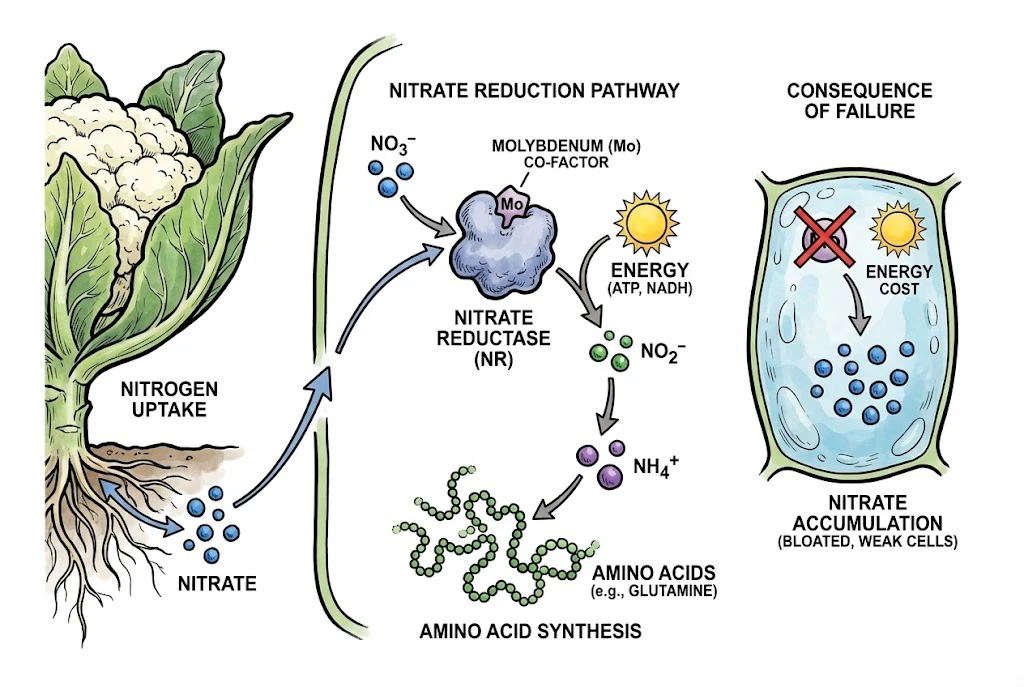
Cauliflower can take up nitrate and ammonium. Molybdenum is one of the nutrients involved in nitrate use, which is why a confirmed molybdenum deficiency can matter. It does not follow that every pale plant needs molybdenum or that one cloudy period explains a disorder.
Confirm a suspected nutrient problem with soil or tissue testing before adding a micronutrient or extra nitrogen.
Environmental Nitrogen Losses
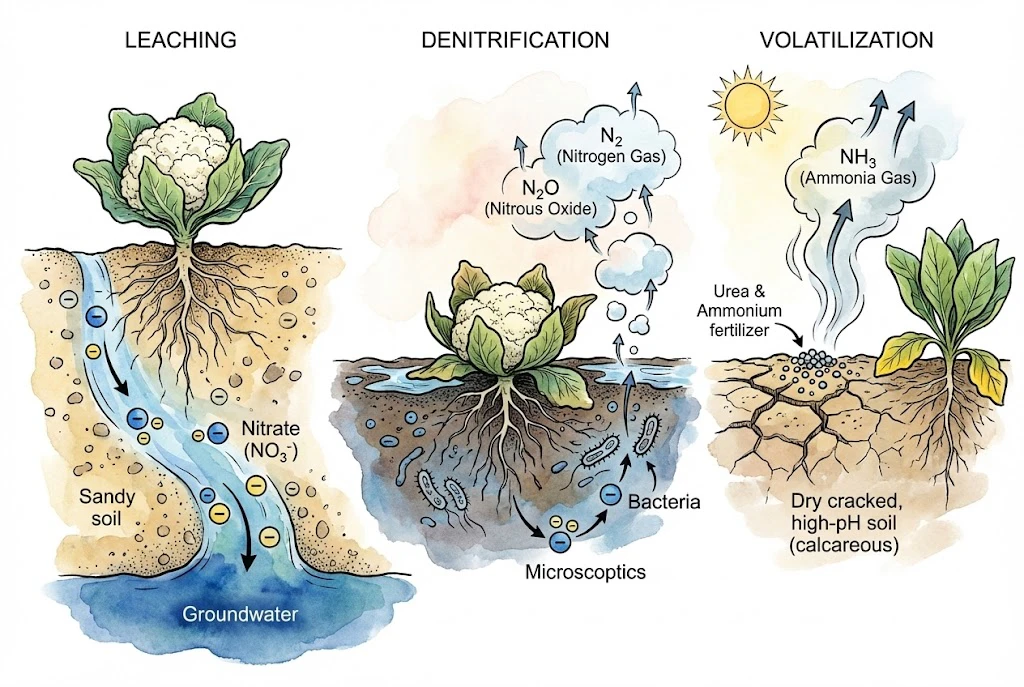
Recovery of applied nitrogen is often incomplete, with the remainder lost through several pathways.
Reported recovery figures (for example, ranges around 40–60%) vary widely with rate, residual soil nitrogen, irrigation-water nitrogen, timing, method, weather, and how residues are accounted for, so they should not be read as a fixed efficiency for cauliflower.
Leaching
Nitrate is a negatively charged anion, and in many soils the exchange sites are also negatively charged, so the soil does not readily retain it. (Variable-charge and anion-retaining soils are exceptions.)
It moves with water, and in sandy soils or under heavy irrigation nitrate can move below the root zone quickly (how fast depends on water flux, soil texture, rooting, and where the nitrate sits in the profile).
Denitrification
In saturated, anaerobic soil conditions, bacteria reduce nitrate to nitrogen gases, including nitric oxide (NO), nitrous oxide (N2O), and nitrogen gas (N2).
The process needs available carbon, warm temperatures, and nitrate.
Denitrification often begins after roughly 24–48 hours of saturation, but that lag does not guarantee a large loss within 48 hours.
In warm soils, extension estimates put loss on the order of a few percent of nitrate-nitrogen per day, so the total depends on the nitrate fraction, temperature, and how long the soil stays saturated.
Volatilization
Urea or ammonium-based fertilizers left on the soil surface can convert to ammonia gas, particularly in high-pH calcareous soils and warm temperatures.
Moisture, the timing of incorporation or rainfall, wind, surface residue, and urease inhibitors all affect how much is lost.
Controlled Release Fertilizers (CRF) and Polymer Coated Urea
Controlled Release Fertilizers (CRF), including Polymer Coated Urea (PCU), are one option for reducing nitrogen loss.
Whether they pay off depends on the product, the crop, and the price premium.
Mechanism of Action
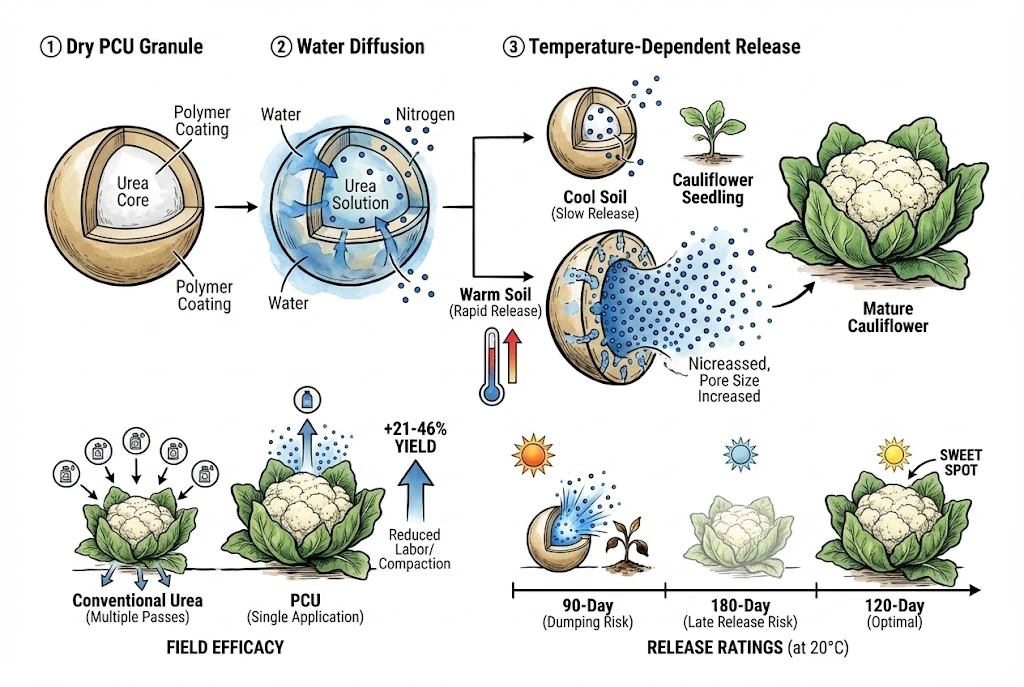
While standard urea dissolves quickly on contact with moisture, PCU is encapsulated in a semi-permeable polymer membrane.
Release is driven by several factors together (the polymer chemistry, the coating's thickness and integrity, and soil temperature and moisture).
Temperature is important, but release is not governed by temperature alone, and the rating basis differs by product label.
- Water diffuses through the coating and dissolves the internal urea.
- Higher soil temperature tends to increase the diffusion and release rate.
- Dissolved nitrogen diffuses out along the concentration gradient into the soil.
Because both release and crop growth tend to speed up in warmer soil, the two can roughly track each other, but the release curve does not automatically match a given crop's nitrogen uptake.
In cool weather, both growth and nitrogen release tend to be slow. As temperatures rise, release speeds up.
Winter cauliflower demand and temperature do not always rise together, so crop stage and weather can diverge.
When the product and crop are well matched, this can reduce the soluble nitrate available for leaching.
With a product mismatch or coating failure, that benefit is not guaranteed.
Field Efficacy and Yield Data
Controlled-release nitrogen has been tested in Arizona and California. In the cited cauliflower work, the response was modest and, importantly, not always statistically significant.
Yield Increases
In the Ellison et al. (2013) conference paper often cited for this crop, the cauliflower source effect was not significant at p = .05. Polymer-coated ESN averaged about 9% above sidedress UAN-32 as a non-significant trend.
The larger figures in that abstract, roughly 27%, 64%, and 13%, refer to watermelon, carrot, and spinach, not cauliflower, so a 9–27% in cauliflower claim mixes crops.
Nepalese field trials (Pandit et al., 2022. 81 trials) reported that PCU, sulfur-coated urea, and urea briquettes yielded about 21%, 21%, and 24% more than conventional urea, and about 44%, 43%, and 46% more than farmer practice.
So the 21–46% versus conventional urea range conflates two different comparators. The PCU used was a 90-day product applied at a lower nitrogen rate (about 100 vs 150 kg N/ha for conventional urea).
Reduced Application Frequency
A single pre-plant CRF application can reduce field passes, which may lower fuel, labor, and compaction.
It does not eliminate them in every case. If the release curve and crop length do not match, supplemental nitrogen or a rescue pass may still be needed.
Release Ratings
PCU products are labeled by release duration (e.g., 90-day, 120-day) at a reference temperature (commonly about 20°C).
The reference temperature and test method vary by product and do not equal field days.
The key principle is to match the release duration to the crop length.
High temperatures in early fall plantings can release nitrogen faster. Whether this dumps nitrogen and injures seedlings depends on the coating, rate, and salt placement.
Conversely, a 180-day product may release too slowly for a short winter crop, but this should be checked against crop length and release testing rather than assumed.
Product choice should follow the crop's length. Notably, the linked Yuma trial illustrates the risk of over-long products for this crop. The cauliflower crop was about 110 days, and a 120-day release continued past the crop and may not be suitable, with an approximately 90-day ESN preferred for fall Yuma.
In other words, that trial does not support 120-day PCU as an all-purpose optimum for winter cauliflower. Match the product to the actual crop duration and soil temperature.
Table 1 (Qualitative comparison of nitrogen strategies in cauliflower)
The table below is a qualitative, relative comparison of general tendencies, not measured values for cauliflower.
The specific NUE and yield percentages that previously appeared here were not supported by the cited trials (which showed a small, often non-significant cauliflower response) and have been removed.
Actual efficiency and yield depend on rate, timing, method, soil, and weather, and leaching risk with CRF is not simply low if the coating and crop length are mismatched.
| Fertilizer Strategy | Nitrogen-use tendency | Leaching consideration | Labor / passes | Notes |
|---|---|---|---|---|
| Conventional Urea (Pre-plant) | Lower if applied all at once | Higher after an early flush | Fewer passes | Loss risk if timing does not match uptake |
| Split Applications (Sidedress) | Can improve with good timing | Moderate | More passes | Depends on matching applications to demand |
| Polymer Coated Urea (CRF) | Can improve when release matches crop length | Lower if well matched. Higher if mismatched | Fewer passes | Higher product cost. Weigh against expected response |
| Manure/Compost Only | Variable, slow release | Generally lower | More handling | Supply may not match crop demand |
EXPLORING CONTROLLED RELEASE NITROGEN FERTILIZERS FOR VEGETABLE AND MELON CROP PRODUCTION IN CALIFORNIA AND ARIZONA
Phosphorus and Potassium (The Structural and Regulatory Elements)
Phosphorus (P) and potassium (K) support energy transfer, rooting, and water relations in the crop.
Phosphorus (The Energy Carrier)
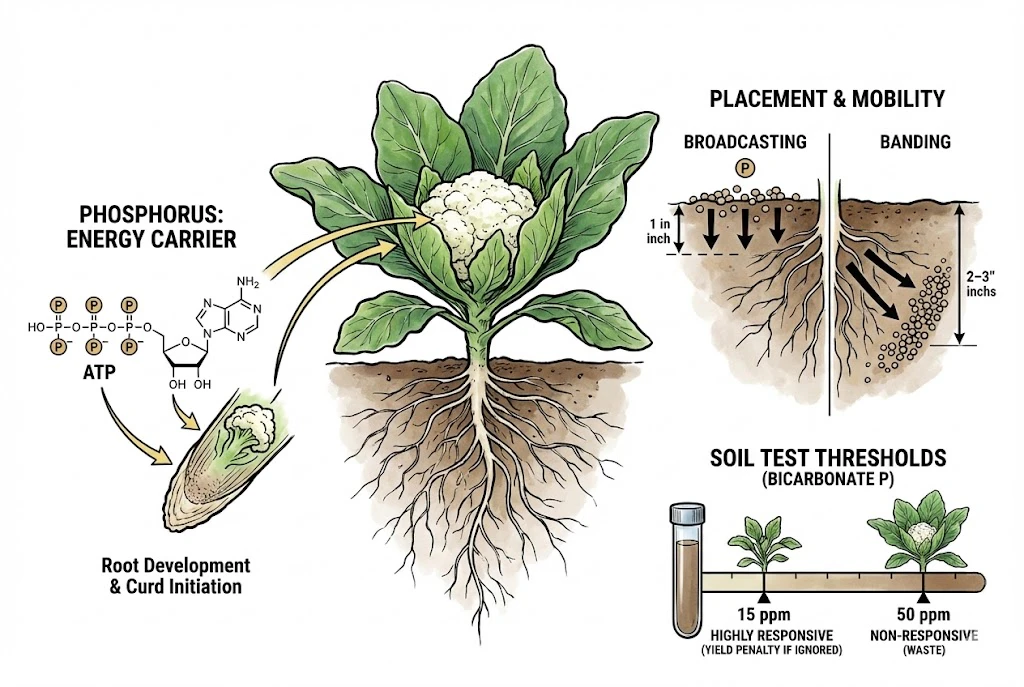
Phosphorus is a fundamental component of ATP (Adenosine Triphosphate), the primary energy carrier in cells.
In cauliflower, P is necessary for root development and the transition to the reproductive stage during curd initiation.
Mobility Issues
Phosphorus is functionally immobile in the soil and binds tightly to soil particles.
If phosphorus is broadcast on the surface without incorporation, it tends to stay in the upper soil layer, which can limit access by deeper roots. Incorporation, irrigation, and existing shallow roots still make some of it available.
Banding vs. Broadcasting
Placing P in the root zone can help on low-testing, cool soils. It is not universally superior. On higher-testing soils with broadcast-incorporated phosphorus, and in at least one low-P study, band and broadcast yields did not differ significantly.
Where banding is used, CDFA guidance places phosphorus about 2–3 inches to the side and 3–4 inches deep, offset from the seed to avoid salt injury. Keep combined fertilizer salt near the seed within safe limits.
Soil Test Thresholds
Using the California Olsen (bicarbonate) test, CDFA guidance indicates that above about 50 ppm a phosphorus response is unlikely, and below 50 ppm a response is possible.
These thresholds are tied to that extraction method, region, and sampling depth, and do not translate to Bray, Mehlich, or other tests.
The guidance does not define a below 15 ppm = highly responsive threshold, and yield does not necessarily fall at low readings, so treat very low readings as more likely to respond rather than as a guaranteed loss.
UC Davis (Geisseler Lab) and CDFA/FREP publish California fertilization guidelines for cauliflower, which cover the Olsen P and ammonium-acetate K thresholds referenced here.
Potassium (The Water Regulator)
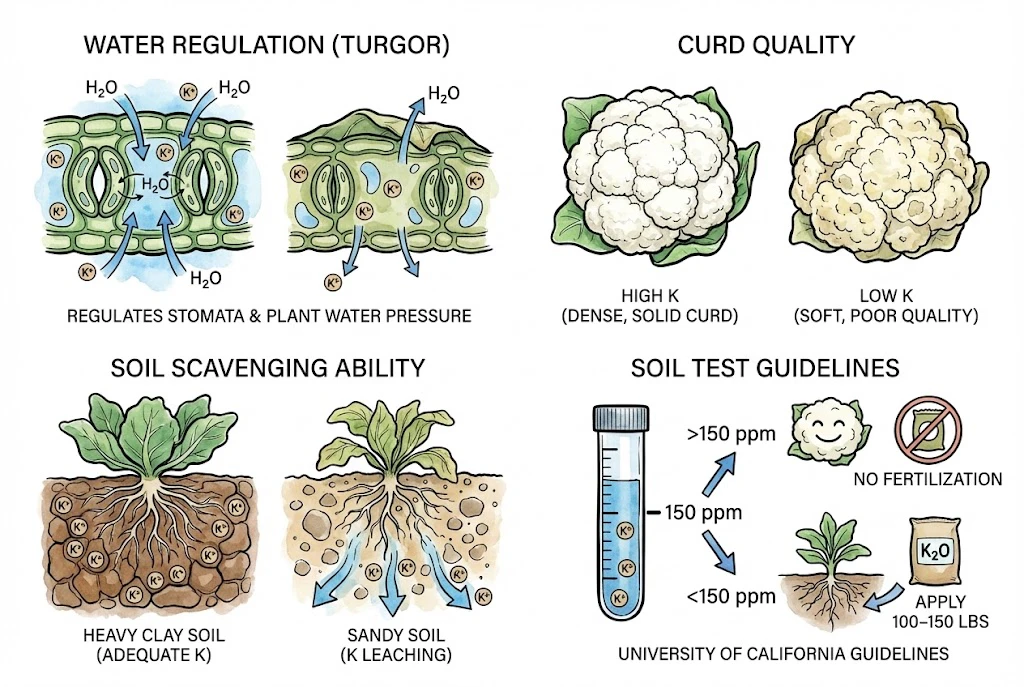
Potassium helps regulate stomatal conductance and maintain cellular turgor pressure.
Quality Factor
Severe potassium deficiency can reduce tissue quality, and soft curds with poor shipping characteristics are sometimes attributed to low potassium.
However, soft curd also reflects cultivar, maturity, disease, and water, so potassium should not be diagnosed on its own. The link between adequate K and firm curd is not backed here by a specific trial or effect size.
Scavenging Ability
Cauliflower takes up a large amount of potassium overall, and on some soils it shows little yield response to added potassium.
Sufficiency, though, depends on measured exchangeable potassium, mineralogy, CEC, competing cations, crop removal, and irrigation, not on soil texture alone.
Some clay soils are high in exchangeable potassium and some are not. Very sandy soils can lose more potassium, but this should be confirmed by a soil test.
Using the California ammonium-acetate test, a response is likely below about 100 ppm, possible at 100–150 ppm, and unlikely above 150 ppm. These categories apply to that extraction and region.
Rather than a flat 100–150 lb K2O/acre below 150 ppm, base the rate on the soil-test category and on crop removal.
CDFA's replacement estimate for harvested removal is roughly 70–90 lb K2O/acre, with more only where the soil tests very low.
The Micronutrient Critical Path (Boron and Molybdenum)
Boron (B) and molybdenum (Mo) are worth managing in cauliflower, but the goal is to correct confirmed shortages rather than to supplement routinely.
Cauliflower can be sensitive to boron and molybdenum shortages relative to some crops, though the sufficiency ranges vary and should be checked against a soil or tissue test.
Boron (The Cellular Component)
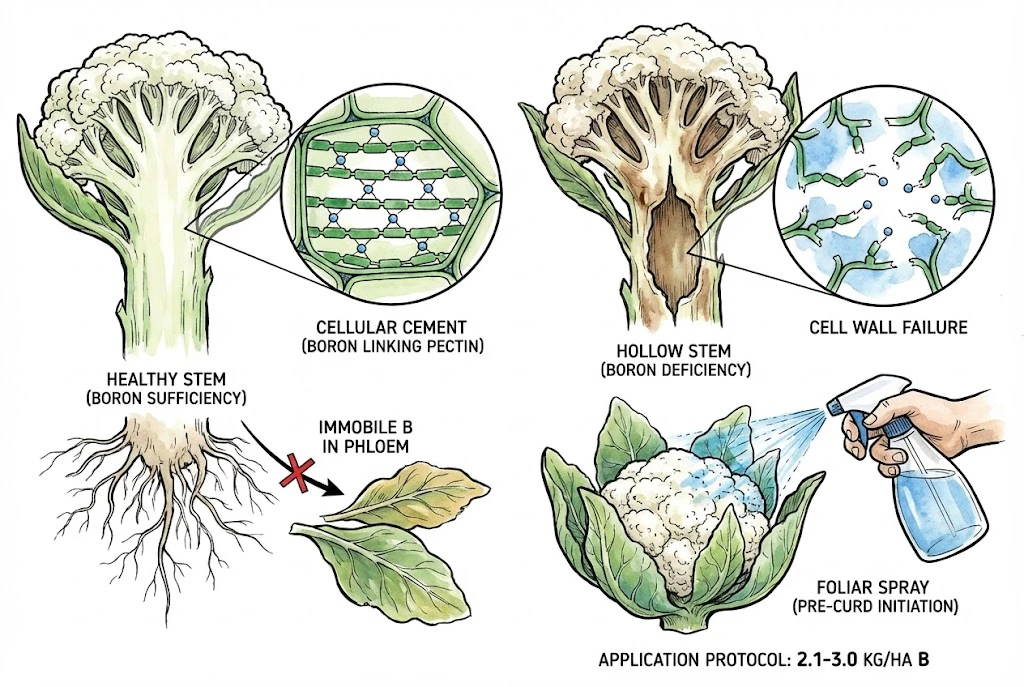
Boron is a structural component of the cell wall, where it facilitates the cross-linking of pectin molecules (specifically Rhamnogalacturonan-II) to provide stability.
Hollow Stem and Boron
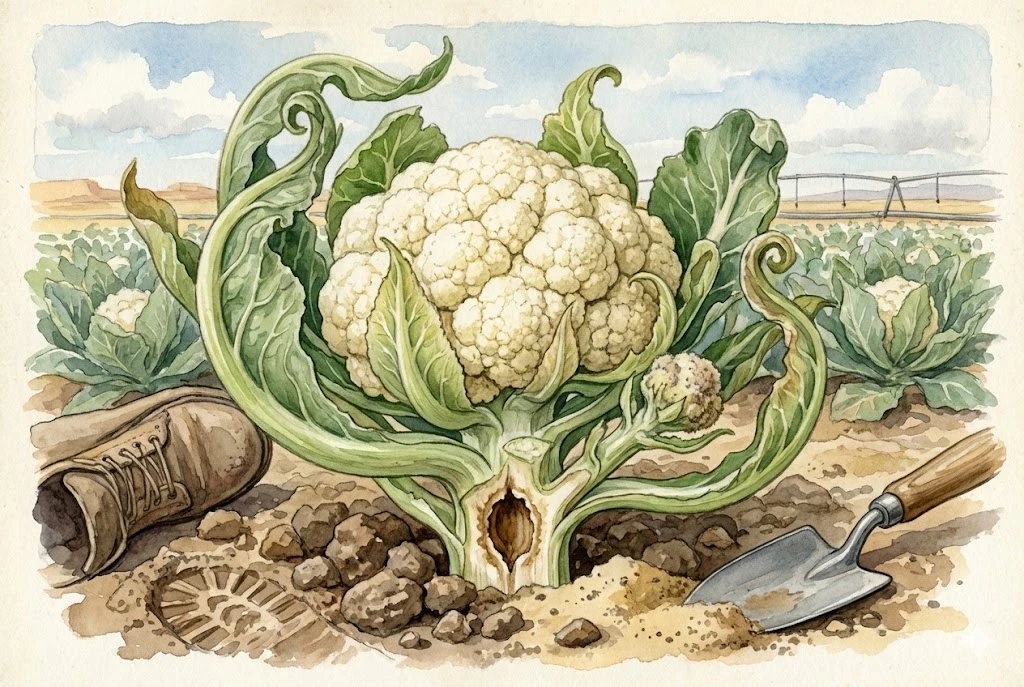
Hollow stem is a cavity in the stem that has several associated causes. UC IPM links it to rapid growth, high temperature, high nitrogen, large stem diameter, and wide spacing. A darkened cavity is one indicator that boron may be involved.
Boron does contribute to new-tissue and cell-wall integrity, and a shortage can worsen the disorder, but hollow stem is not the same as boron deficiency. It can appear under rapid growth with adequate boron.
Diagnose it by cutting stems and looking for cavity darkening, alongside a soil or tissue test, rather than assuming boron.
Damaged or hollow tissue can later develop secondary bacterial soft rot, though not every cavity progresses to rot.
Mobility Limitation
Boron has low phloem mobility in many crops and tends to accumulate in mature, transpiring tissue via the xylem. The details vary among species, so roots to older leaves is a simplification.
Boron-deficiency symptoms, such as browning of stems or curd tissue, can appear in young, developing tissue even when older leaves look healthy.
Healthy older leaves alone do not rule out (or confirm) a boron problem in the curd.
Application Protocol
Boron can be applied to soil or as a foliar spray, depending on the situation. Neither is a fixed rule regardless of product, soil, deficiency, or timing.
A pre-curd foliar boron spray can improve tissue availability, but it does not guarantee it (that depends on confirming the deficiency and on label concentration, coverage, weather, and staying within the toxicity margin).
Because boron has a narrow margin between deficiency and toxicity, base any rate on a soil or tissue test and the product label (stated as elemental boron), rather than on a single published figure.
A 2.2 kg B/ha result reported from a specific Chitwan boron-by-variety field trial reflects that soil, application, and mid-season variety. It is not a universal foliar rate or a guaranteed way to maximize curd density.
Managing Pests in Gardens. Vegetables. Environmental Disorders. Hollow stem of cole crops. UC IPM
Molybdenum (The Enzyme Key)
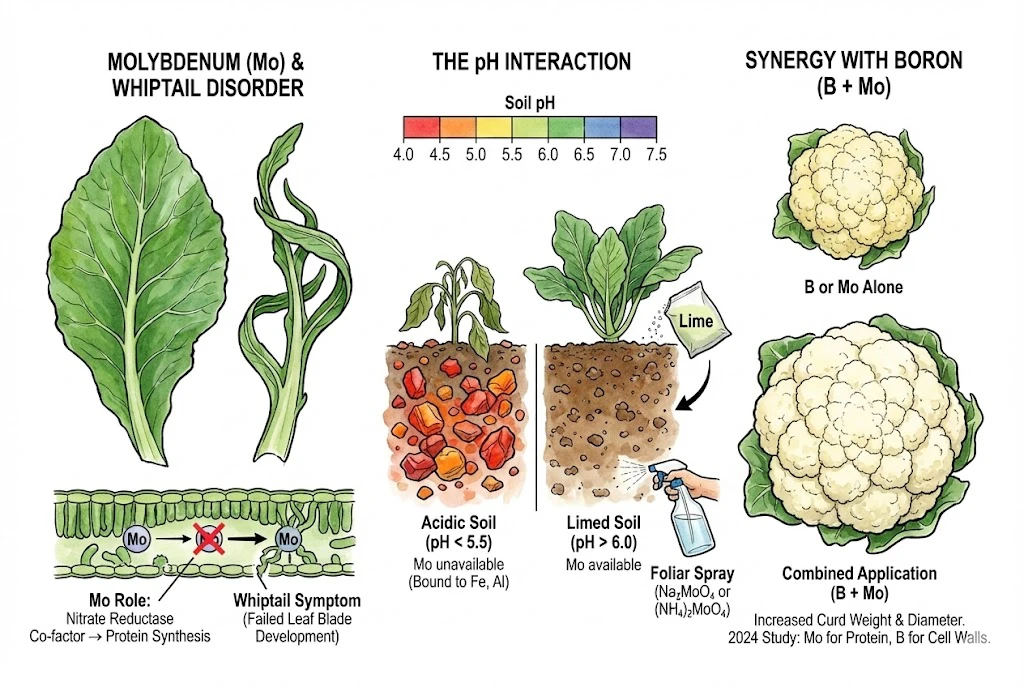
Molybdenum is an essential cofactor for the nitrate reductase enzyme.
Whiptail Disorder
Molybdenum deficiency can impair nitrate assimilation and protein status. The classic symptom is whiptail, in which the leaf blade develops poorly, leaving a deformed, strap-like midrib.
The exact way cells fail to differentiate is not fully established in cauliflower, so treat whiptail as a strong visual indicator to confirm, not a proven single mechanism.
Severe whiptail can prevent a marketable curd. Visual signs should be confirmed with a soil or tissue test and soil pH.
The pH Interaction
Molybdate availability generally rises as soil pH increases.
In acidic soils, iron and aluminum oxides can adsorb molybdenum and lower its availability.
This is a gradual effect rather than a sharp cutoff, so a value like pH 5.5 does not make molybdenum entirely unavailable.
On acidic, lime-responsive soils, liming can improve molybdenum availability. Base lime on a buffer-pH or lime-requirement test rather than aiming for a single pH number, since liming also affects calcium, magnesium, and other nutrients.
A foliar spray of sodium or ammonium molybdate can be used for correction, but only with a confirmed diagnosis and the elemental molybdenum rate, food-crop label, water volume, and burn risk worked out first.
Boron and Molybdenum Together
A 2024 trial (Kumar et al.) compared farmers' practice, boron at 100 ppm, and boron 50 + molybdenum 50 ppm, applied at 10-day intervals.
The boron-plus-molybdenum treatment gave higher curd weight than boron alone or farmers' practice.
Because the study had no molybdenum-only treatment, a true boron×molybdenum interaction (synergy) cannot be separated from the effect of adding a second nutrient, and the result reflects that site and spray schedule.
Mechanistically, molybdenum supports nitrate assimilation and boron supports cell-wall structure, but those parallel roles alone do not prove a synergistic yield effect.
Table 2. Symptom guide for cauliflower disorders (confirm before treating)
These symptoms overlap with each other and with pest, disease, and weather stress, so use the table to narrow possibilities, then confirm with a soil or tissue test and any product label before applying a nutrient.
| Symptom Name | Visual Description | Possible Causes | What to Check / Do |
|---|---|---|---|
| Whiptail | Leaf blades fail to form. Midribs are twisted, strap-like, and deformed. | Often molybdenum deficiency (impaired nitrate reduction), frequently associated with low pH. | Test soil/tissue and pH. Address pH on lime-responsive soils per a lime-requirement test. Correct confirmed molybdenum deficiency with a labeled molybdate at the stated rate. |
| Hollow Stem | Vertical cavity in the stalk. A dark (brown/black) cavity suggests boron involvement. | Rapid growth, high temperature, high nitrogen, large stems, and wide spacing. Boron shortage can contribute. | Cut stems to check for cavity darkening. Moderate nitrogen and growth rate. Correct boron only if a test confirms a shortage, using label rates. |
| Browning of curd tissue | Curd surface turns brown or rusty. Florets may look water-soaked. | Can reflect boron deficiency, but also disease and other stress. | Confirm with a tissue test. If boron is confirmed low, treat at label rate. Severe browning is often past saving for market. |
| Blindness | Terminal bud dies. Plant forms a rosette of leaves with no head. | Multiple causes. Cold or frost, insect feeding, mechanical or root damage, moisture stress, and sometimes localized calcium/boron shortage in the meristem. | Usually not correctable once the bud is lost. Cull affected plants and address the underlying cause for the rest of the field. |
Integrated Nutrient Management (INM) and Organic Amendments
In practice, mineral and organic nutrients both act as plant-available ions once released, but the two systems differ in certification, nutrient-release timing, and pathogen, salt, and environmental tradeoffs, so the distinction is not merely academic.
Integrated Nutrient Management (INM), which combines the two, is a widely studied approach. How well it performs against single sources depends on the site.
Combining Organics and Synthetics
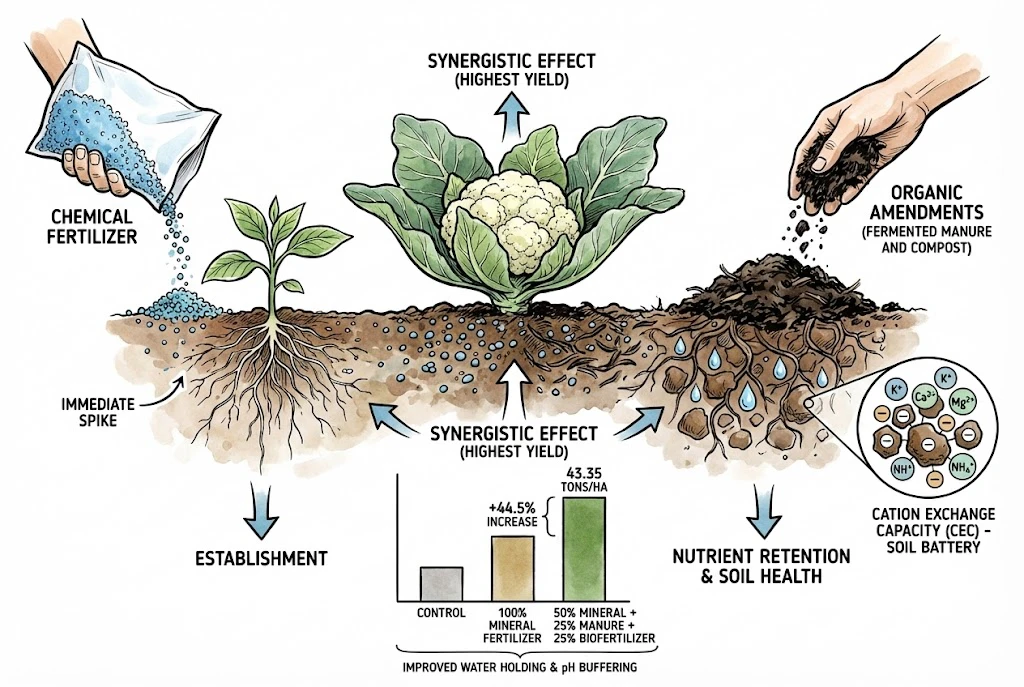
In some site-specific trials, combining organic amendments with inorganic fertilizers outperformed either alone.
Whether this holds generally depends on the soil's deficiency status, whether nutrient rates are equalized, the controls used, and multi-year replication.
The Proposed Mechanism
Soluble mineral fertilizers supply nutrients quickly during establishment, while organic amendments can improve soil properties such as cation exchange capacity (CEC), not every source follows this exact timeline.
CEC is the soil's capacity to retain and exchange cations.
Organic matter provides negatively charged sites that hold positively charged ions such as ammonium, potassium, calcium, and magnesium (nitrate, being an anion, is not retained this way).
How much added manure changes CEC depends on the soil and rate.
Trial Results
In a 2024–25 Syrian trial on nutrient-deficient calcareous soil (cultivar Casper, 13 treatments × 3 reps, 8 m² plots, with an EM-1 soil drench), the best treatment (about 50% mineral + 25% fermented cow manure + 25% biofertilizer) reached roughly 43.35 t/ha, about 44.5% above the unfertilized control and above 100% mineral fertilizer.
The authors suggest improved moisture retention and pH buffering as reasons, but because the trial compared predefined packages rather than a mineral×manure×microbe factorial, those mechanisms were not measured separately. The authors themselves note the single-season, single-site limitation.
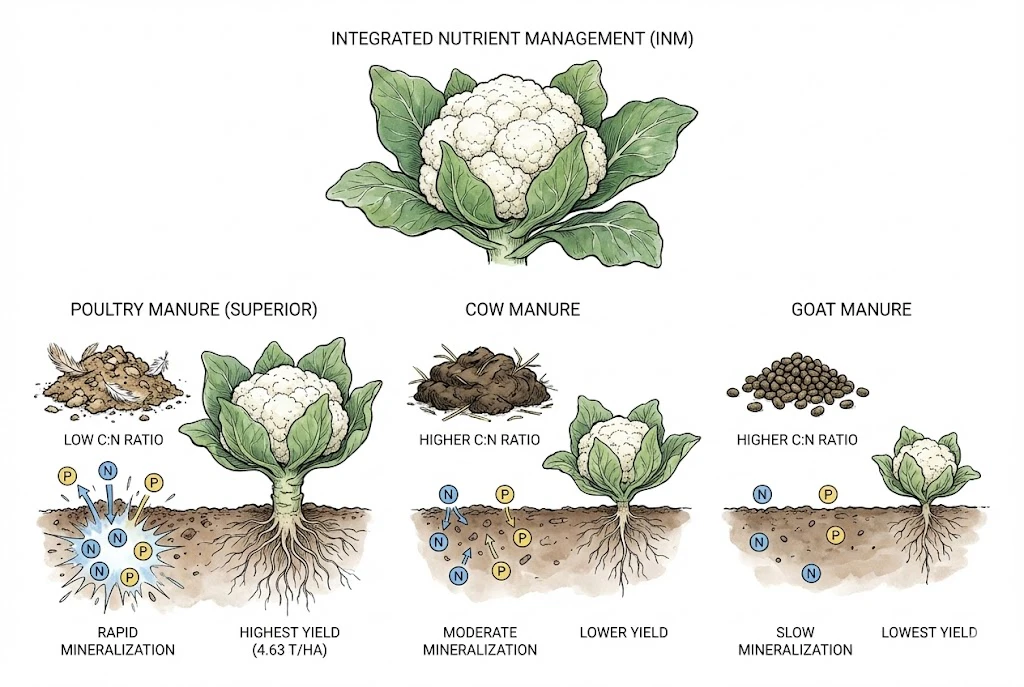
Poultry vs. Ruminant Manure
Nutrient content varies widely between manure sources, and even within a source it depends on feed, bedding, storage, and composting (an important limitation).
In the cited Chitwan (Nepal) trial, poultry manure gave the highest curd and yield indicators of the organic treatments on that sandy-loam site. This does not establish a universal ranking of manure species.
Each manure was applied at a different tonnage to meet the same recommended nutrient rates.
Mineralization Rate
Poultry manure often has a lower carbon-to-nitrogen (C. N) ratio than cow manure and can mineralize and release nitrogen more quickly, though the actual analysis and composting can reverse this, and higher-nitrogen manures carry salt and ammonia risk.
Matching release timing to crop demand is the goal, but there is no measurement showing that poultry-manure mineralization automatically matches the cauliflower demand curve.
Yield Data
In that trial (Chitwan sandy loam, initial pH about 5.79, low P/K, cultivar Kathmandu Local, two seasons, three reps), poultry manure showed higher curd weight and diameter than the other organic treatments.
Available soil phosphorus was also higher under poultry manure. Higher phosphorus is not always beneficial. It should be read against the low starting phosphorus and the risk of build-up or runoff.
Frontiers | Organic fertilizers and their efficacy on soil characteristics, growth and yield of cauliflower (Brassica oleraceae var. Botrytis) in sandy loam soil of Nepal
Biofertilizers and Rhizosphere Engineering
Microbial inoculants are an active research area within INM. developing here means the science is still maturing, not that broad efficacy is established.
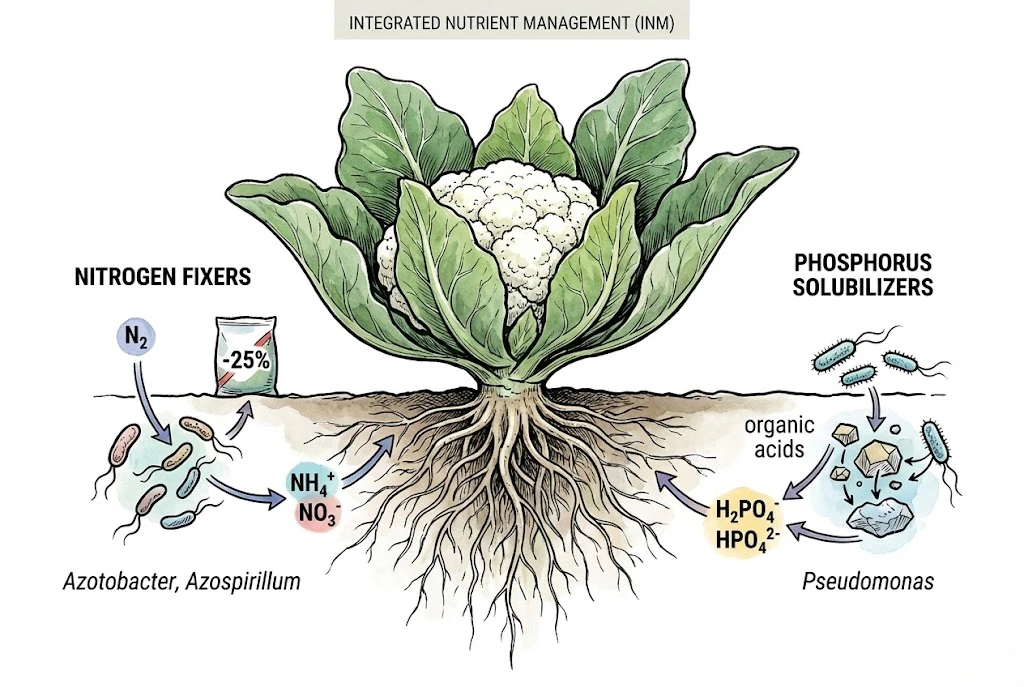
Nitrogen Fixers
Azotobacter and Azospirillum can carry out free-living or associative nitrogen fixation in the root zone, though not every strain supplies agronomically meaningful nitrogen.
Some strains and conditions have allowed reduced synthetic nitrogen without a yield penalty in research.
Turning that into a recommendation requires a specific product, rate, degree of nitrogen reduction, soil and cultivar, and replicated trials, so it is not yet an actionable rule.
Phosphorus Solubilizers
Some Pseudomonas strains can promote mineral-phosphorus solubilization, for example by releasing organic acids.
Strain, substrate, survival, and the plant's uptake response all need separate verification.
This can be useful in calcareous or high-pH soils where calcium-phosphate reactions lower phosphorus availability, but only where the inoculant's efficacy has actually been confirmed.
Biostimulants Are Not a Fertility Plan
Biostimulant results vary by the exact product, rate, crop, and conditions. Some single trials report a benefit and others do not. Current evidence does not support treating seaweed extracts, inoculants, or amino-acid products as a substitute for soil testing, irrigation management, or adequate nutrition.
Use a biostimulant only as an optional, label-approved supplement after the crop’s basic nutrient and water needs are already met.
Physiological Disorders (A Diagnostic Guide)
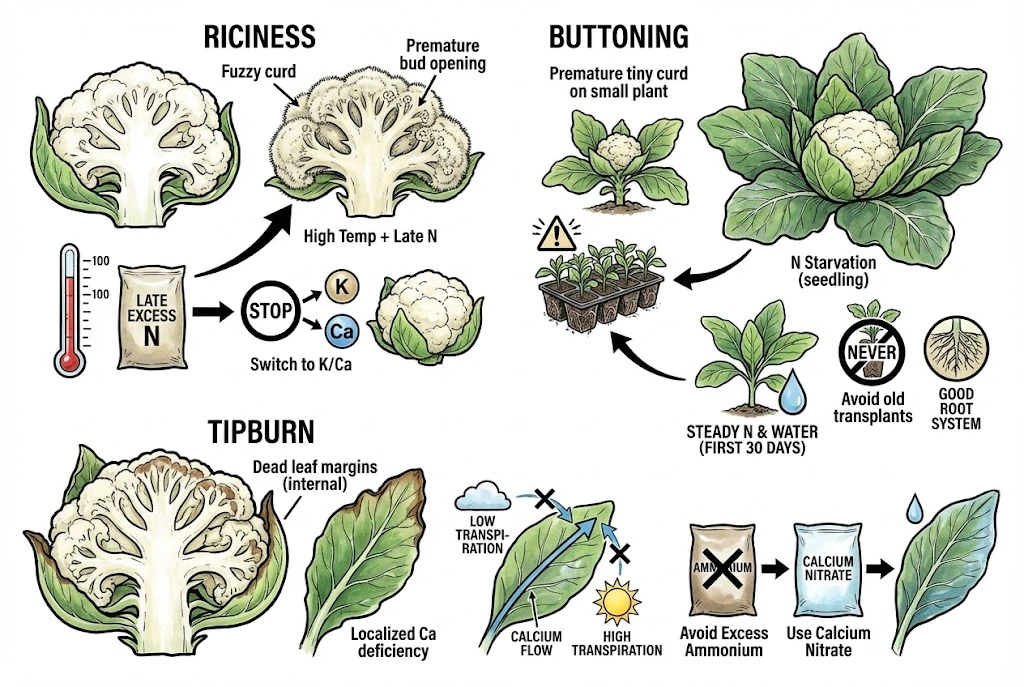
Nutritional imbalances in cauliflower can produce recognizable symptoms, but these overlap with pest, disease, and environmental stress, so they are rarely diagnostic on their own.
Riciness
This disorder appears as a velvet-like or fuzzy texture on the curd surface.
Cause
The curd is made of floral tissue that has not yet fully differentiated. Riciness occurs when those floral structures begin to elongate and differentiate prematurely.
Triggers
Temperature and cultivar are major factors, and excess nitrogen with rapid growth can contribute. High temperature is not always the single primary cause. Maturity group and planting window matter too.
Management
Match nitrogen to soil or tissue status and the crop's remaining demand rather than cutting it at a fixed curd size. There is no supporting trial for a tennis-ball cutoff or for using potassium or calcium to stabilize tissue against riciness.
Buttoning
Buttoning is the premature formation of small curds on underdeveloped plants.
This occurs when the plant shifts to a reproductive stage before achieving sufficient vegetative biomass.
Causes
Nutrient stress in old or root-bound transplants is one factor, but buttoning also follows cold or frost, wet or dry stress, insects, disease, weeds, and depends on cultivar and planting date. Nitrogen deficiency is not the only cause.
Management
Avoid over-mature or root-bound transplants and keep young plants unstressed. Any early nitrogen should be set from actual soil nitrate and starter need, since excess is also harmful. A fixed first-30-days rate is not a reliable prescription.
Tipburn
Tipburn is necrosis of leaf margins, which can also occur on leaves inside the head. Rule out pathogen or chemical injury when it looks similar.
Cause
Tipburn is a localized calcium disorder in rapidly expanding tissue, where calcium transport does not keep up. It can occur even when soil calcium is adequate, because environmental factors that disrupt transpiration, high humidity or heat, limit calcium delivery to the growing margins.
Management
Keep soil moisture steady and avoid excessive ammonium, which can compete with calcium uptake. Calcium nitrate can be a reasonable nitrogen source, but because tipburn is a transport problem rather than a soil-calcium shortage, it is not a guaranteed cure and extra nitrogen or salts can do harm.
Economic and Environmental Implications
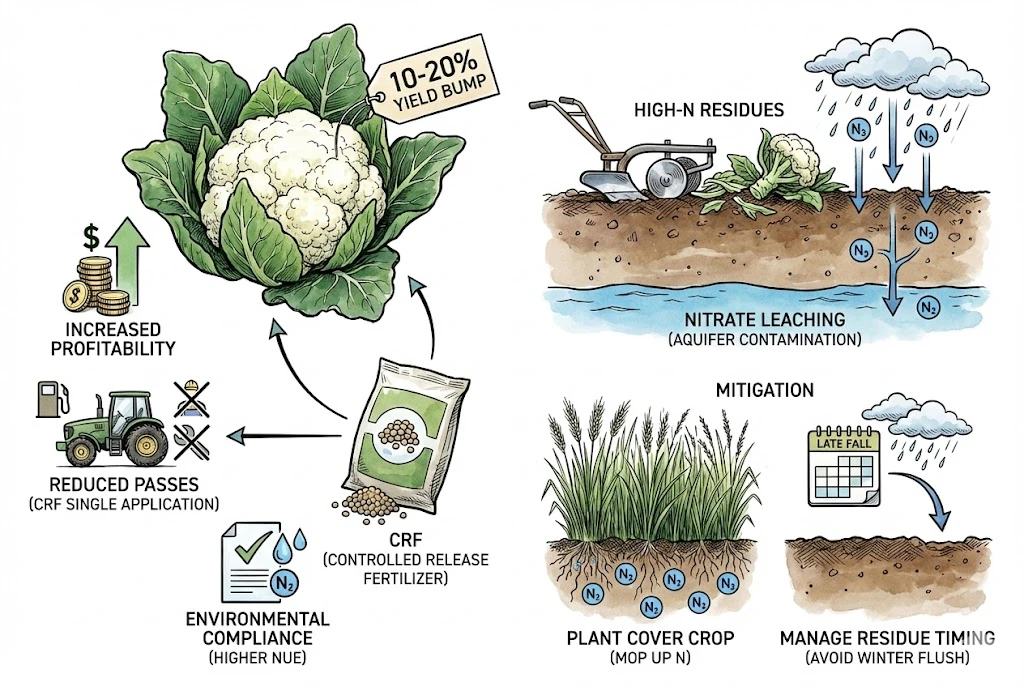
Effective fertilization is both a financial necessity and an environmental responsibility.
The Cost-Benefit of Controlled Release Fertilizer
CRF products cost more per ton than urea, so the comparison should be made on total application cost using a partial budget that includes fertilizer price, application, yield response, and risk.
Reduced Passes
A single pre-plant application can reduce the passes needed for sidedressing. It does not necessarily eliminate them, since a release mismatch may still require a rescue application.
Yield Versus Cost
Whether a yield gain offsets the higher fertilizer cost is not automatic. The cited cauliflower response was a small, often non-significant trend, and the Nepal figures used different prices, nitrogen rates, and comparators, so this needs a current, site-specific cost calculation.
Environmental Compliance
CRF may help improve nitrogen-use efficiency, but California-style compliance is judged by an overall nitrogen budget, applied nitrogen, soil and water credits, yield removal, irrigation, and records against the applicable regulation, not by using a particular product.
The Leaching Liability
Cauliflower takes up a lot of nitrogen and leaves nitrogen-rich residues in the field. This reflects its high biomass and relatively low harvest index rather than an inefficient uptake system as such.
Under warm, moist conditions these residues mineralize, and if that coincides with heavy drainage the released nitrate can leach toward groundwater. How much depends on timing, temperature, and the soil profile.
Mitigation
A non-legume cover crop such as rye or triticale after harvest can help capture residual nitrogen, and managing when residues are incorporated helps too. Success depends on establishment, water, the planting and termination window, and local nitrate rules, so follow local recommendations.
Practical Recommendations
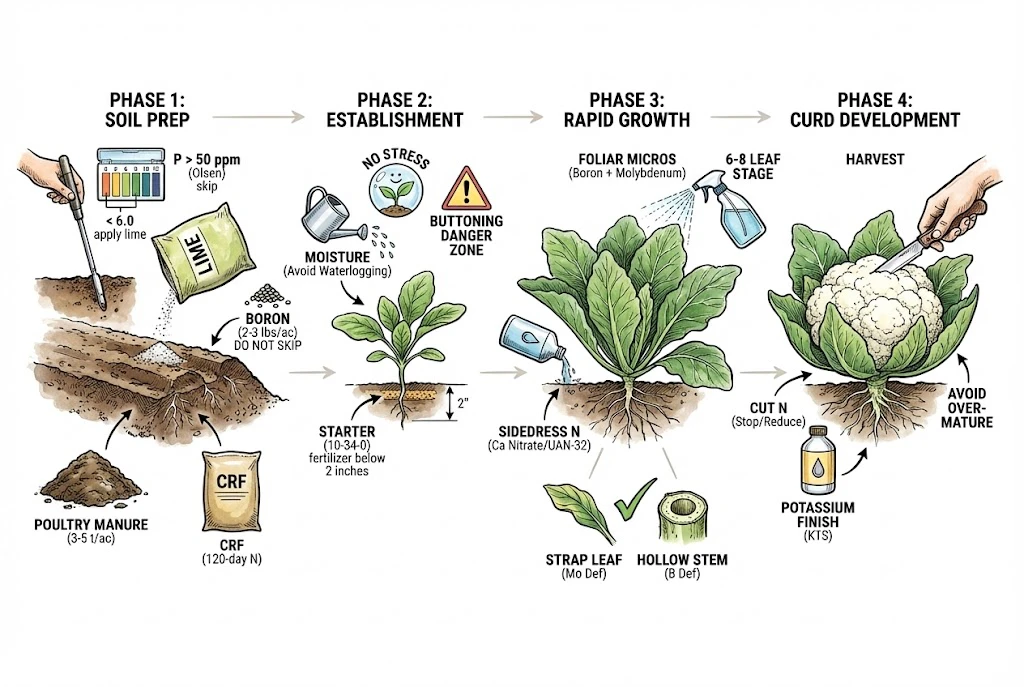
The steps below are a decision framework, not a fixed recipe. Set the actual inputs and rates from your own soil and tissue tests, cultivar and crop duration, irrigation-water nitrogen, a seasonal nitrogen budget, and product labels, and follow local extension guidance.
Phase 1. Soil Preparation and Pre-Plant
1. Soil Test
Measure pH, phosphorus, potassium, and soil nitrate. On acidic, lime-responsive soils, base any lime on a buffer-pH or lime-requirement test rather than a fixed pH target. Interpret phosphorus and potassium against your test's own thresholds such as California Olsen P above about 50 ppm and ammonium-acetate K above about 150 ppm, which suggest a response is unlikely.
2. Base Nitrogen
Choose a nitrogen source that fits the crop length, for example, well-analyzed manure or a controlled-release product whose release duration matches your crop and soil temperature. Do not treat a 120-day product as automatically correct. For short crops of about 110 days it may release past harvest.
3. Micronutrients
Do not apply boron routinely. Add boron only where a soil or tissue test confirms a shortage, at the elemental rate on the product label for your soil test category. Keep in mind boron's narrow deficiency-to-toxicity margin and following-crop risk.
Phase 2. Establishment (0-30 Days)
1. Starter Fertilizer
On low-phosphorus soils, a banded ammonium-phosphate starter can help. Offset it to the side of and below the seed to avoid salt injury, and keep combined nitrogen and potassium salt near the seed within safe limits.
2. Moisture Management
Keep soil moisture steady and avoid saturation to limit denitrification, setting irrigation targets from soil texture, rooting, and weather.
3. Stress Prevention
Reduce transplant and environmental stress from temperature, transplant age, moisture, pests, and nutrition to lower the risk of early buttoning.
Phase 3. Rapid Growth (30-60 Days)
1. Sidedress
If not using CRF, split nitrogen to match uptake. Base the amount and timing on a pre-sidedress soil nitrate test, crop stage, irrigation-water nitrogen, and a seasonal cap rather than a fixed two-week schedule.
2. Micronutrients
Scout for leaf deformation or stem cracking, but do not spray boron or molybdenum prophylactically. Treat only a confirmed deficiency, using the labeled salts and rates, tank compatibility, and boron-toxicity precautions.
3. Monitor
Continue scouting. Symptoms alone are not a diagnosis, so confirm with a soil or tissue test before treating.
Phase 4. Curd Development (60+ Days)
1. Adjust Nitrogen
Adjust nitrogen to the remaining crop demand and soil or tissue status rather than cutting it at a fixed curd stage.
2. Potassium
If soil potassium is genuinely low, apply the needed K2O from a source suited to your soil, salinity, and irrigation. There is no cited cauliflower trial supporting potassium thiosulfate specifically as a quality finish.
3. Harvest
Harvest at the marketable stage for your cultivar and market before curds become over-mature.
The Precision Mindset
Consistent cauliflower quality depends on timing and on matching inputs to the crop's changing demand.
Management works best when it supports the plant's development, aligning nutrient supply with uptake, rather than pushing against it.
Integrated Nutrient Management and controlled-release fertilizers are worth evaluating as ways to improve efficiency, but their cost and benefit depend on the site and product.
For commercial growers, controlled-release nitrogen and micronutrient management can support quality when the product matches the crop and any micronutrient is applied against a confirmed test result, not as routine insurance.
Preventing disorders such as hollow stem is generally cheaper than salvaging an unmarketable crop, though the actual return depends on disorder incidence, treatment efficacy, and a partial budget.
For small-scale or home gardeners, the same principles apply. Check pH and nutrients, and note that a standard potting mix may not carry a full crop, though the right choice depends on the mix, container volume, and crop length.
A labeled slow-release fertilizer at planting can provide a steady supply. Reserve foliar micronutrients for a diagnosed deficiency rather than applying them to any leaf or stem symptom.
Overall, cauliflower rewards active management and attention to detail throughout the growth cycle, with fertilizer decisions grounded in soil and tissue tests rather than a fixed recipe.
From the same numbered plant, I photograph the newest leaf, a fully expanded middle leaf, the curd, and the cut stem before diagnosing boron, molybdenum, or nitrogen. The position where a symptom begins is often more informative than a single close-up of the worst damage.
When a corrective input is justified and safe to compare, one plant from the same bed stays untreated. I do not stack a micronutrient spray with extra nitrogen on the same date. Otherwise, an improvement would not show which change mattered, and the margin between boron deficiency and excess is narrow.