
Carrot Fertilizer Guide: The Science of Sweet, Straight Roots
A soil-test-based carrot fertilizer guide: the soil and pH that reduce forking, why excess nitrogen hurts root quality, how to use potassium and micronutrients wisely, and how to tell nematode damage from a nutrient problem.
Marcus Hale · Published 2026-01-04 · 27 min read
Key Takeaways
- Fix the soil before the fertilizer. Carrots do best in deep, loose soil at roughly pH 6.0–6.8. Rocks, clods, and hardpan can bend and fork roots that no nutrient will correct.
- Base nitrogen on a soil test, not a fixed rate. Excess N is linked to cracking and culls, and fresh manure applied just before sowing is a known cause of forking. Use well-composted or aged manure, and split N to match crop demand rather than dumping it at planting.
- Phosphorus moves slowly, so place it in the root zone before planting. High-P ‘bloom booster’ products add little if a soil test shows your P is already adequate.
- Potassium matters for turgor and sugar transport, and carrots take up a lot of it. If a test shows K is low, a chloride-free sulfate of potash (or low-N tomato feed) is one reasonable option, but more K past sufficiency does not keep raising sweetness.
- Rule out pests before blaming fertilizer. Forked or hairy roots are often root-knot nematodes, not a nutrient problem. Diagnose micronutrient issues by soil or tissue test before adding boron, calcium, or zinc, all of which have a narrow safe range.
Introduction
Start With Soil, Not Fertilizer
Carrots reward attention to the soil. Scatter-seed into rough, compacted ground and you often get bent, forked, or hairy roots. Problems that fertilizer alone can’t fix.
Better results come from understanding the soil. Why fresh manure just before sowing tends to cause forking, why high-phosphorus ‘bloom booster’ products add little when your soil P is already adequate, and how to match nutrients to what a soil test shows.
For sweet, straight carrots, the packaging on the fertilizer bag matters less than the condition of the bed and what your soil actually needs.
Soil Mechanics (The Foundation of Your Carrot Fertilizer Guide)
Why Soil Structure Comes First
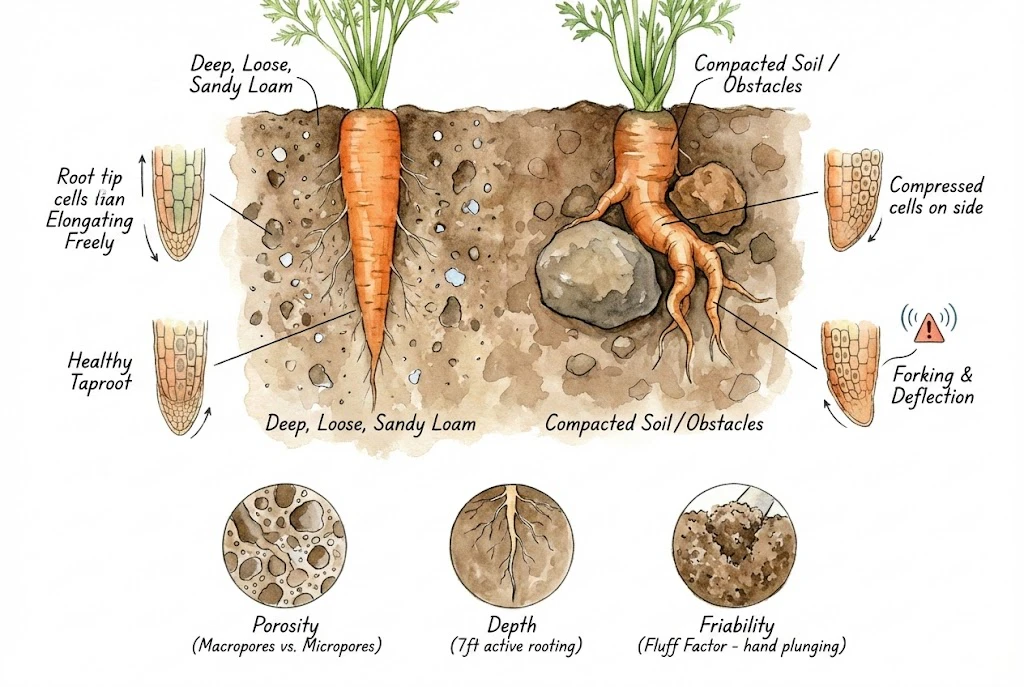
Before opening a bag of fertilizer, it helps to look at the soil itself. Even a well-balanced nutrient program does little in dense, compacted ground where the root cannot expand freely.
A carrot has to physically push its taproot down through the soil, so the soil’s physical condition shapes the root as much as its chemistry does.
The Texture Trap and Root Physics
The carrot is a taproot, and early on it drives downward in search of moisture and stable soil.
Extension guidance from several regions points the same way. Deep, loose, well-worked soil produces straighter roots, and heavier or crustier soils tend to cause more defects.
When a carrot root tip encounters a physical barrier, a rock, a clod of heavy clay, or a hardpan pan left by tillage, it tends to deflect around it rather than push straight through, and the root turns.
Repeated obstacles or injury to the growing tip can lead to forking, where the root divides into two or more legs.
Rocks and clods are one cause. Nematodes, root-tip injury, compaction, and disease can produce similar branching, so a forked root does not point to a single culprit.
Forked roots are still edible and fine for home use, though they are harder to peel and are downgraded as culls in the fresh market.
Three soil traits decide whether this happens.
- Porosity. Macropores, the air gaps between soil particles, let oxygen reach the roots, which need it to take up nutrients. Poorly drained or waterlogged clay can hold water so tightly that oxygen is limited, which stresses roots and favors root rots. Good structure and drainage matter as much as texture.
- Depth. A carrot’s finer active roots can reach well below the storage root, which itself sits mostly in the top 12 inches. A shallow bed over a hard barrier limits how deep the roots explore, though the workable depth also depends on cultivar length, bed width, and watering.
- Friability. A loose, crumbly seedbed helps the taproot expand. As a rough field check, the soil should be easy to work by hand to a good depth. This is a feel test, not a measured standard, and overly fluffed soil can also settle or crust after watering.
The pH Gatekeeper
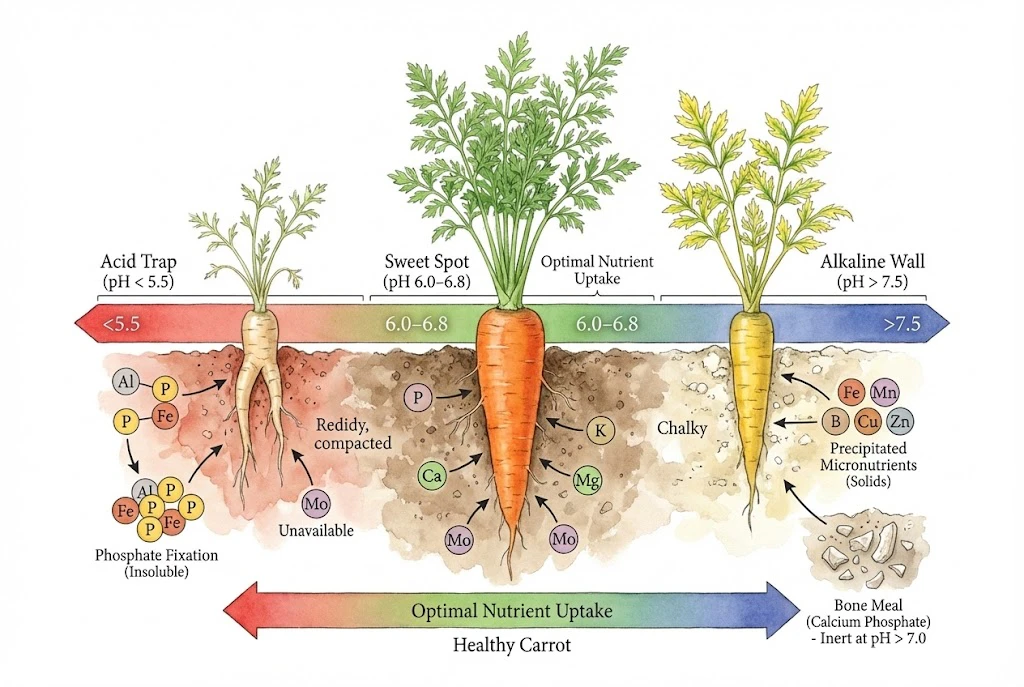
Soil pH strongly affects how available many nutrients are, alongside factors like organic matter, cation exchange capacity, moisture, and microbial activity.
If the pH is far off, added fertilizer is less available to the plant. Carrots generally do well between about 6.0 and 6.8.
In acidic soils, aluminum and iron become more soluble and can bind phosphorus into less-available iron or aluminum phosphates (‘phosphorus fixation).’ In that setting, phosphorus from bone meal releases slowly and much of it may stay tied up.
Molybdenum availability also drops as pH falls.
At high pH the balance shifts the other way. Iron, manganese, boron, copper, and zinc become less available.
High-pH (calcareous) soils often show interveinal chlorosis on young leaves when the plant cannot take up enough iron to make chlorophyll.
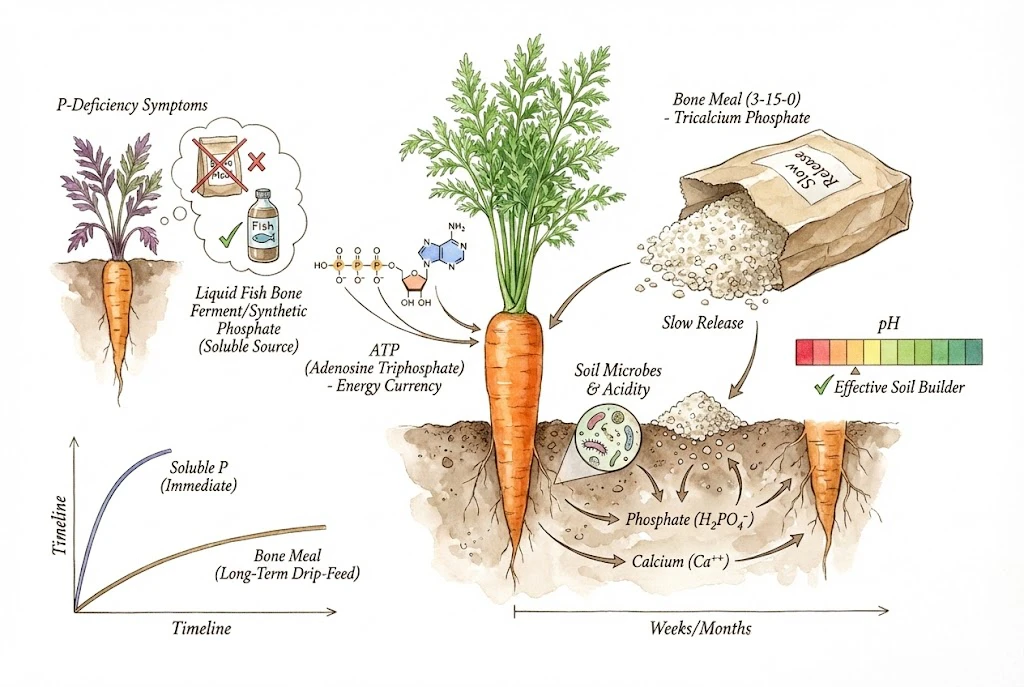
A note on bone meal, a common organic phosphorus source. It is largely calcium phosphate and depends on soil acidity, microbes, and weathering to release phosphorus.
In alkaline or calcareous soil its phosphorus becomes much less available, so it is a poor choice for a quick fix there, but there is no sharp pH threshold at which it turns completely inert.
If a soil test shows low phosphorus on high-pH soil, address it with a source and placement suited to that soil rather than assuming bone meal will work.
Nitrogen (Matching Supply to Demand)
Match Nitrogen to Demand
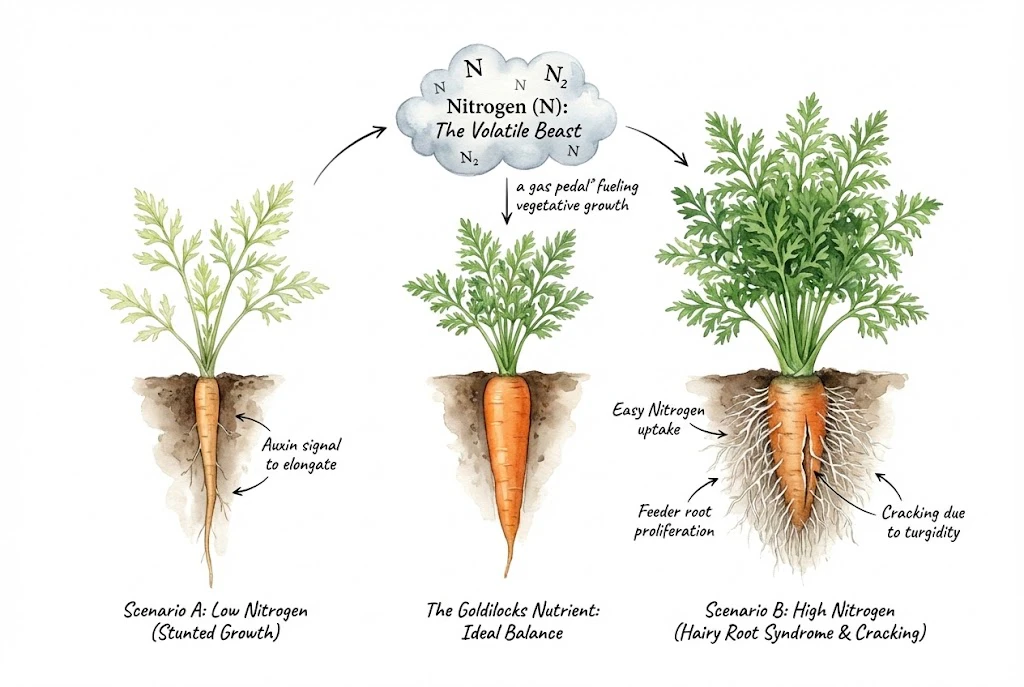
Plants take up nitrogen (N) from the soil as nitrate and ammonium. It drives leafy top growth, which powers photosynthesis and the sugars that end up in the root, so too little N stunts the crop.
Excess nitrogen, though, is linked to quality problems in carrots. The goal is to match supply to the crop’s demand rather than to over- or under-apply.
The ‘Hairy Root’ Syndrome
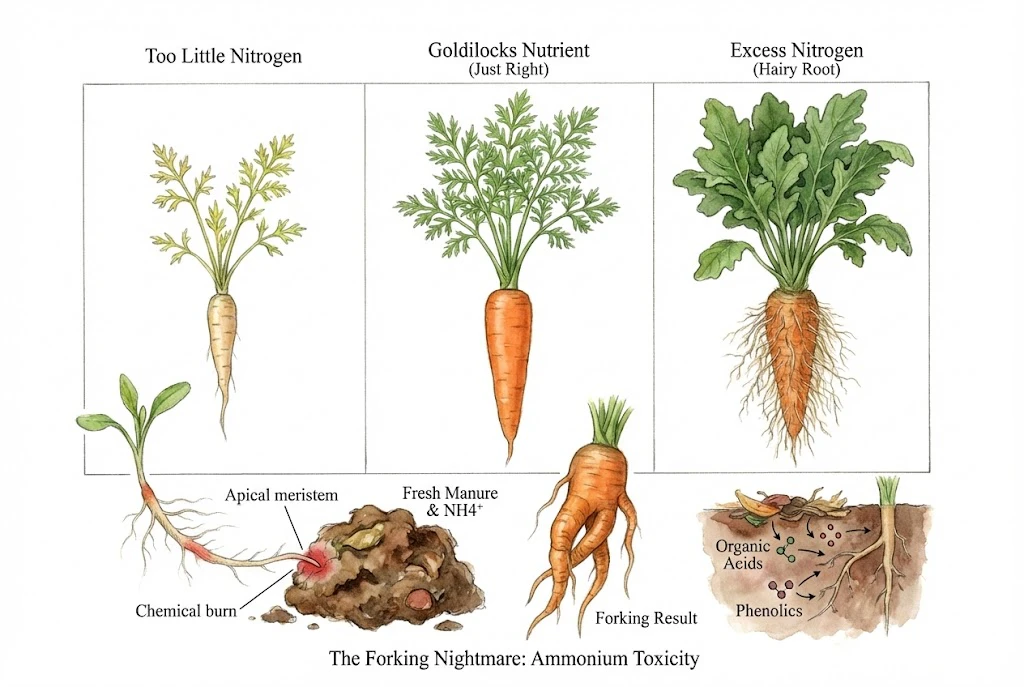
Sometimes a root comes up covered in a dense mat of fine white feeder roots, as if it needs a shave.
Excess nitrogen is one possible driver, but it is not the only one. Nematodes, water stress, root-tip injury, disease, and soil conditions can produce similar hairy roots, so this symptom is a prompt to investigate rather than a diagnosis of N excess.
Nitrogen availability can influence how the plant allocates growth.
- Ample nitrogen in the topsoil may shift some allocation toward lateral feeder roots. Very high N is associated with hairier, more branched roots that can hold soil and store less well.
- Severe nitrogen shortage, on the other hand, does not simply produce a perfect long taproot. It stunts the canopy and reduces yield.
California guidance links excess N, especially applied pre-plant, with reduced stands, more culls, and cracking.
Reserving a full quality breakdown for measured trials, the practical point stands. Over-applying nitrogen tends to hurt carrot quality more than it helps.
Fresh Manure and Forking
The long-standing advice not to put fresh manure on a carrot bed is well founded. Part of it is food-safety and weed-seed risk, and part is that decomposing manure releases ammonium (NH₄⁺) along with salts and partially broken-down organic matter, all of which can stress germinating seedlings.
One proposed explanation for manure-linked forking is that a local pocket of ammonium injures the growing root tip. Salts, undecomposed material, physical obstruction, and soil-borne pathogens are also plausible contributors.
The precise mechanism in carrots has not been pinned down, so it is better treated as a likely factor than a settled cause.
What is reliable is the management rule. Apply manure to a preceding crop, or use well-composted or aged manure, and let fresh material break down before planting roots.
When you do add composted manure, knowing its maturity and nutrient content, and observing food-safety intervals, makes it easier to use safely.
Quantifying the Need (How Much N?)
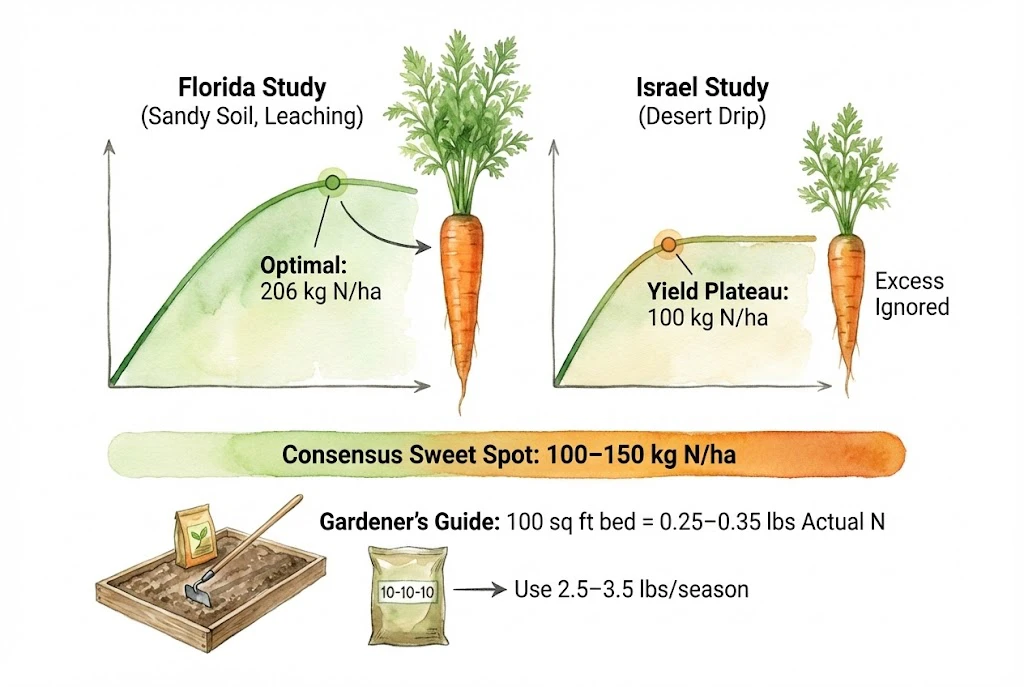
There is no single correct rate (published optima come from specific soils and systems, not a universal number). Two trials illustrate the range.
A North Florida study on deep sandy soil tested N rates from 56 to 448 kg/ha across cultivars and seasons and found a ‘quadratic plateau,’ with yield leveling off near 206 kg/ha. Rates above about 168 kg/ha gave similar yields.
That high plateau reflects the leaching-prone sandy site, though the trial did not directly measure how much N was lost to leaching.
A drip-fertigation study on mineral loam in the Negev (Israel) saw yield respond up to about 100 kg N/ha, with little further gain beyond that (a no-response result rather than proof the plant ‘ignored’ the excess).
These numbers are starting points, not a target to average together. California’s carrot guidelines set N from a soil test. Subtract residual soil nitrate and nitrogen in the irrigation water, then match the rest to your expected yield, keeping pre-plant N modest (on the order of 40–50 lb/acre or less) and avoiding N close to harvest.
As a rough conversion for context, 100–150 kg N/ha is about 0.20–0.31 lb of actual N per 100 sq ft, but use your soil test rather than a fixed area rate.
Yield and Quality of Carrot Cultivars with Eight Nitrogen Rates and Best Management Practices
The Timing (Split Applications or Bust)
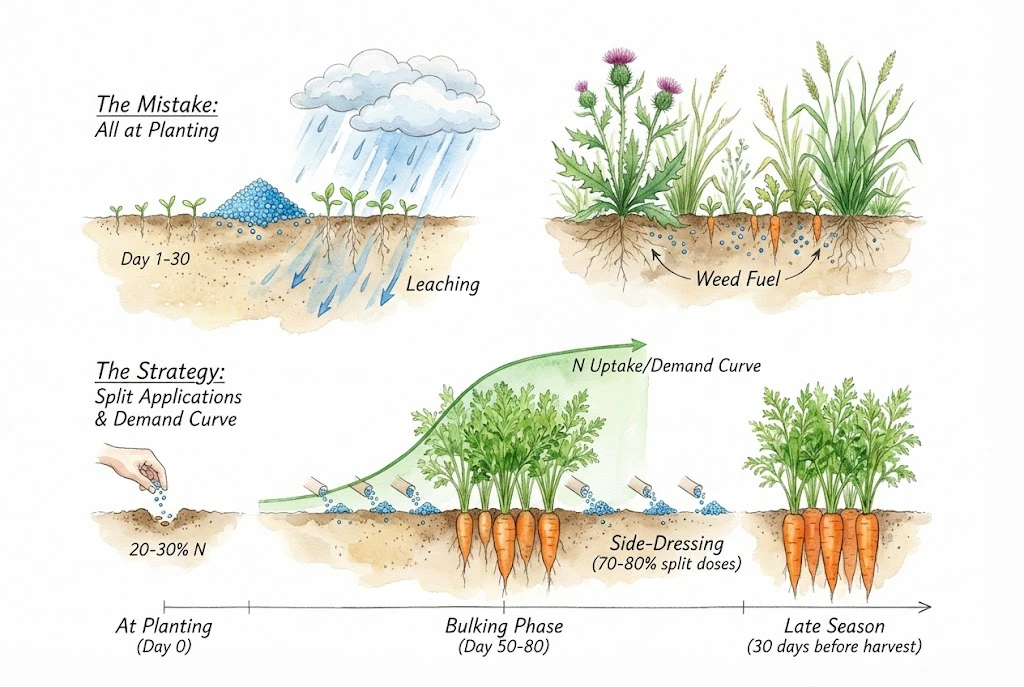
Carrots take up nitrogen slowly early on, so applying all of it at planting is inefficient, especially on sandy soil, where rain can leach nitrate below the root zone before seedlings reach it, and where early N also feeds competing weeds.
Uptake rises through the bulking phase, so splitting nitrogen generally works better than a single dose. Apply a modest amount early and side-dress the rest as the crop grows, easing off well before harvest (California guidance avoids N in roughly the last 40 days).
Treat any specific day counts or percentages as examples to adjust for your cultivar, harvest date, soil, and irrigation rather than fixed rules.
Environmental Impact (The Nitrous Oxide Factor)
Nitrogen management also has an environmental dimension. Nitrous oxide (N₂O) is a potent greenhouse gas.
In the Israeli drip-fertigation trial on mineral loam, N₂O and NO emissions did not differ significantly across nitrogen rates from 0 to 400 kg/ha, and were low overall.
Because that trial found no significant rate effect, it does not support a specific ‘stay under X’ threshold for emissions.
The more general point is separate. Splitting nitrogen and matching it to demand improves nitrogen-use efficiency and reduces leaching, which is worth doing on its own terms.
Foliar Nitrogen?
| Nitrogen Source | Pros | Cons | Verdict |
|---|---|---|---|
| Fresh Manure | Cheap, adds organic matter. | High Ammonium (forking), Weed seeds, Pathogens. | AVOID directly. Use on previous crop. |
| Composted Manure | Lower food-safety and burn risk than fresh. Adds organic matter. | Variable, low N. Check maturity and analysis. | Good base soil builder. |
| Calcium Nitrate | Nitrate form, adds calcium, low volatilization. | Synthetic, adds to salt load, cost. | Useful synthetic side-dress. Watch rate and salinity. |
| Blood Meal | High N (12%), Organic. | Can be ‘hot,’ attracts pests. | GOOD organic side-dress, use sparingly. |
| Urea (46-0-0) | High concentration, cheap. | High volatilization, burn risk. | RISKY for hobbyists. |
Foliar nitrogen is sometimes suggested as a quick fix, but the evidence in carrots is thin.
California’s guidelines note there is very little research on carrot foliar N, and cite a trial where a 2% urea plus 1% multielement spray actually lowered yield slightly.
Concentrated urea sprays can also burn foliage.
Pale tops are not automatically a nitrogen shortage, either. Waterlogging, disease, pH, or magnesium or iron issues can look similar, so it is worth checking those before spraying.
If you do try a foliar feed, treat it as an experiment on a small area rather than a reliable rescue.
The table above compares common nitrogen sources. The verdicts are general tendencies. The right choice still depends on your rate, placement, soil salinity, cost, and whether you need an organic-certified input, so pair it with a soil test.
Phosphorus (Placement Matters More Than Quantity)
Place Phosphorus Where Roots Can Reach
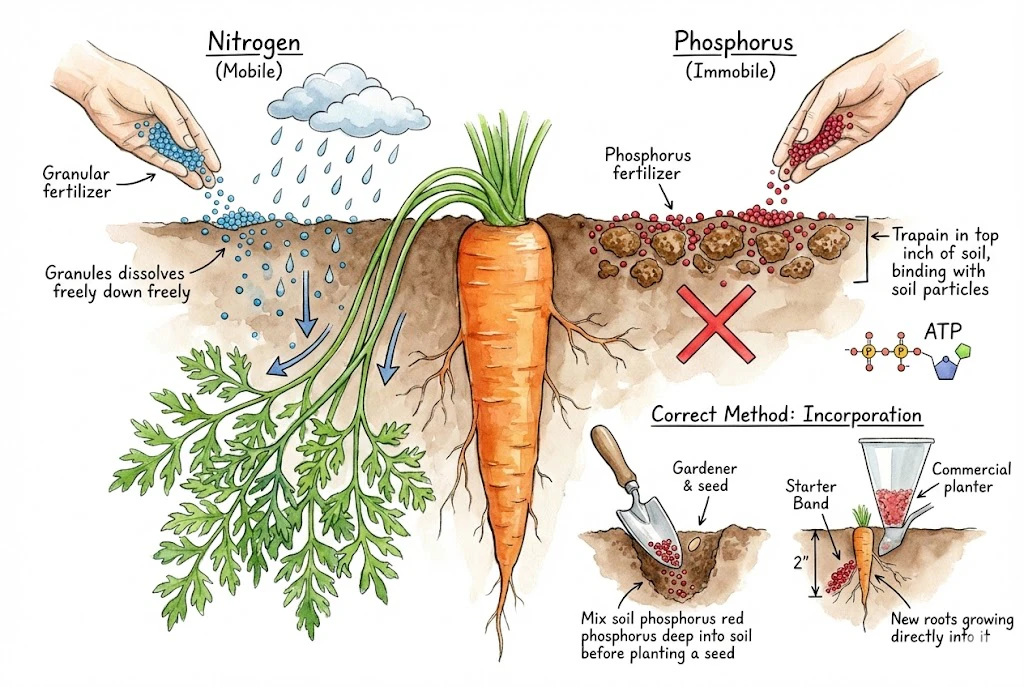
Phosphorus (P) is the middle number on the bag, and its phosphate groups are central to ATP and cellular energy transfer.
It is often marketed as a ‘root builder,’ but the picture is more nuanced.
The Immobility Trap
Nitrogen moves readily with soil water, whereas phosphorus is relatively immobile, binding to soil particles and moving only slowly.
Because of this, surface-applied P reaches the root zone poorly in the short term, so it is far less effective than incorporating it, though over longer periods, tillage, root growth, and irrigation can still move some of it down.
The practical rule is to incorporate phosphorus into the root zone during bed preparation.
Growers often band ‘starter’ fertilizer a couple of inches below and to the side of the seed.
With carrots this placement matters for a second reason. Carrots are quite salt-sensitive, so keep starter off the seed and limit the rate to avoid injuring germinating seedlings.
The ‘Bloom Booster’ Myth
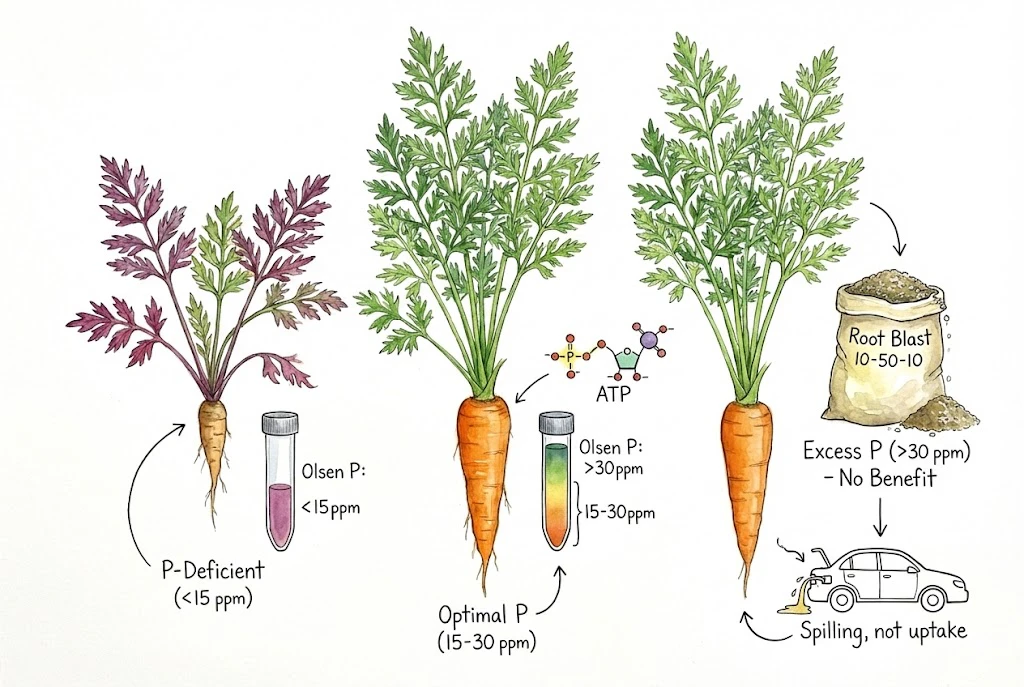
Garden centers sell high-phosphorus ‘bloom booster’-style products with ratios like 10-50-10, implying that more P means more roots.
What the soil test says
If a soil test already shows adequate phosphorus, adding more generally does not increase rooting and can raise the risk of phosphorus running off into waterways.
California guidelines (using the Olsen soil test) treat a phosphorus response as unlikely above about 30 ppm and likely below about 15 ppm.
Those thresholds are specific to the Olsen method and California conditions (other tests (Bray, Mehlich) use different numbers) so read them against your own test method, soil pH, and yield target.
Genuinely P-deficient carrots are stunted, and older leaves can turn purple, though purple leaves alone are not proof of P deficiency.
Bone Meal (The Organic Standard?)
Bone meal is roughly 3-15-0. Ground bone, largely calcium phosphate that is fairly insoluble.
It depends on soil microbes, acidity, and weathering to release phosphate and calcium, so it acts as a slow-release amendment, with actual release rate varying by source, particle size, pH, and microbial activity.
On acidic to neutral soils with low phosphorus, it can be a reasonable long-term source of P and Ca. But it will not quickly correct an acute deficiency, and adding it where soil P is already adequate just builds up unnecessary phosphorus, so let a soil test, not the label, decide.
Mycorrhizae and Phosphorus
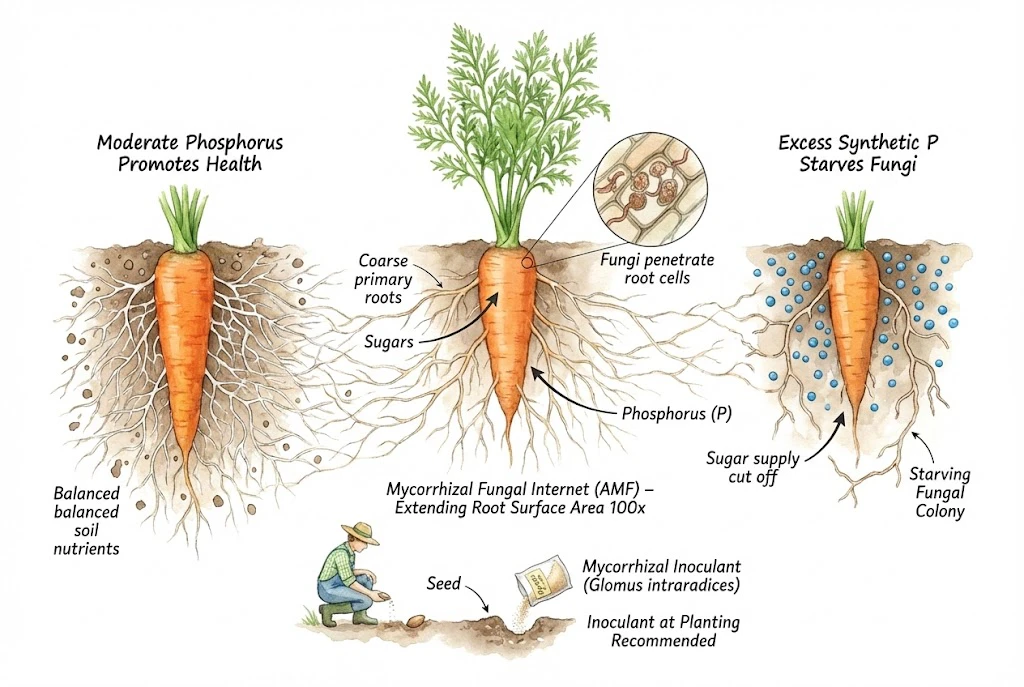
Carrots can form associations with arbuscular mycorrhizal fungi (AMF), whose hyphae extend into the soil and can help scavenge phosphorus in exchange for sugars.
How much a given carrot crop benefits depends on the soil, the fungal species, and existing P levels. Carrot active roots themselves also explore soil fairly effectively, so carrots are not wholly dependent on these fungi.
High available phosphorus tends to reduce mycorrhizal colonization and the benefit plants get from it, but the outcome depends on the host, the fungal species, and the P form and dose. It is not a simple case of excess P always killing the fungi.
A mycorrhizal inoculant may help most in sterilized or new potting media with few native propagules.
If you use one, check the species, viable propagule count, and any crop compatibility notes, since product quality varies.
Potassium (Turgor, Transport, and Quality)
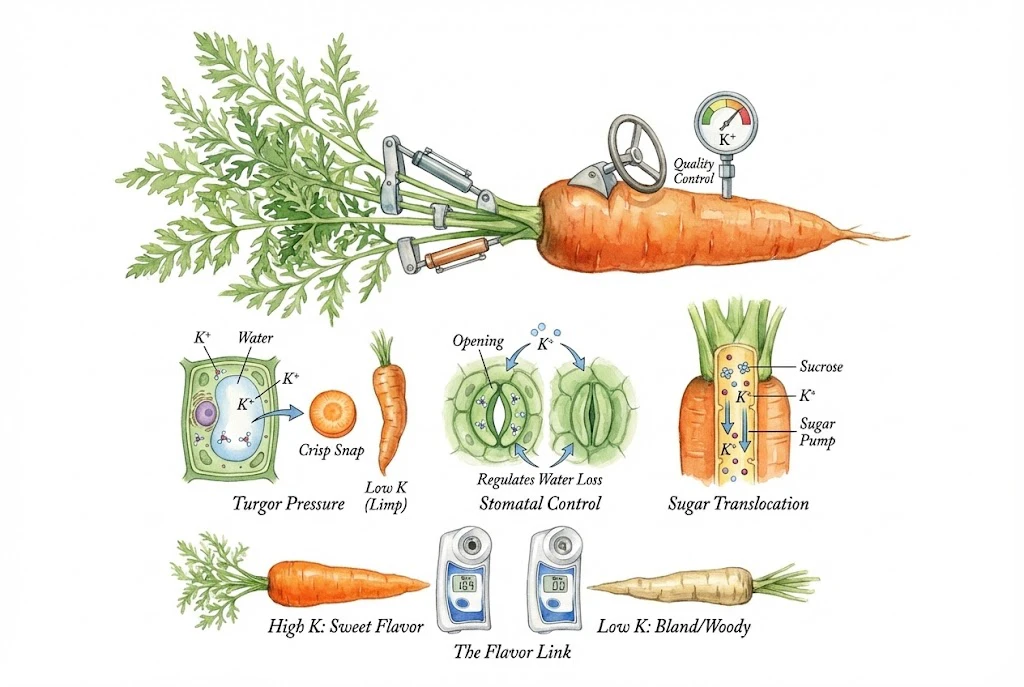
Potassium (K) plays a big role in water relations and transport. Carrots take up a lot of it. Potassium removal is proportional to yield (California figures are on the order of 30–50 lb K₂O per 100 hundredweight of roots), so a high-yielding crop can remove a large amount, but the requirement is not a fixed number independent of yield.
The Physiological Role of K
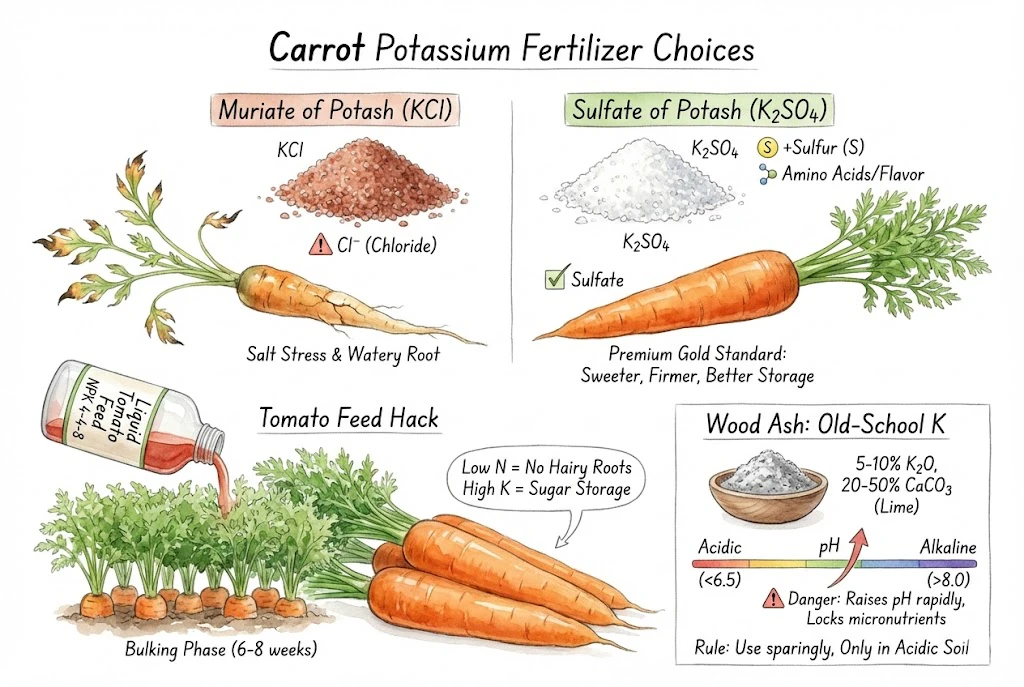
Potassium moves in the cell sap as an ion (K⁺) and is involved in turgor pressure (the ‘snap’ of a crisp carrot), stomatal control (low-K plants wilt faster in heat), and the movement of sugars through the phloem.
That transport role matters. Sucrose made in the leaves moves down to the root, and potassium helps drive that flow. Where potassium is deficient, correcting it can improve quality.
But once K is sufficient, adding more does not keep raising sweetness (Brix and flavor depend on cultivar, maturity, temperature, water, and storage, not on K alone).
Bland or woody roots can come from any of those, so treat K as one thing to check with a soil test, not the automatic answer.
The Chemical Showdown (Chloride vs. Sulfate)
Two common potassium fertilizers are muriate of potash (KCl) and sulfate of potash (K₂SO₄).
Muriate is cheap and roughly 60% K₂O, but it carries chloride, and because carrots are moderately salt-sensitive, chloride and salt load are worth watching, especially near the seed.
Sulfate of potash is about 50% K₂O plus roughly 17.5–18% sulfur, with a lower salt index. California’s guidance is that fertilizer type usually has little effect on carrot yield or quality, but that sulfate of potash can be the better choice where salinity is a concern.
There is no published carrot evidence that it makes roots sweeter, firmer, or better-storing on its own. Treat it as a salinity-driven choice, not a quality upgrade.
A chloride-free, water-soluble potassium sulfate with a solution-grade analysis of 0-0-50 and about 17.5% sulfur dissolves for fertigation and fits that job.
Use it only if a soil or tissue test shows that potassium is needed. Follow the label rate and apply it according to the soil analysis.
On cost, sulfate of potash is more expensive than muriate. For a few rows the difference is small. At field scale, weigh it against your salinity risk, irrigation, and drainage rather than assuming chloride will simply leach away.
The ‘Tomato Feed’ Hack
Home growers often ask whether tomato feed works on carrots. Some tomato feeds are relatively low-N and high-K, which is broadly the direction a bulking carrot favors, but formulations vary a lot, and some (for example a 5-10-15) are fairly high in phosphorus, so check the actual N-P-K and micronutrients on the label.
If a test shows your soil potassium is low, a soluble low-N feed can help during bulking. Rather than a fixed ‘every two weeks’ schedule, base timing and frequency on your soil K, the product label, and how the crop looks, so you do not over-apply potassium or salts.
Wood Ash (The Old-School K Source)
Wood ash supplies some potash and has a liming (pH-raising) effect, but the amounts vary widely with the feedstock and burn temperature, so published ranges are only rough guides.
Ash also carries salts and can contain contaminants, so test your pH and, ideally, the ash before using much of it.
Reserve ash for acidic soil, apply it sparingly and mix it in, and treat it as a caustic, alkaline material.
Never use ash from treated, painted, or manufactured wood on a food bed, and keep application rates low.
Micronutrients (Diagnose Before You Add)
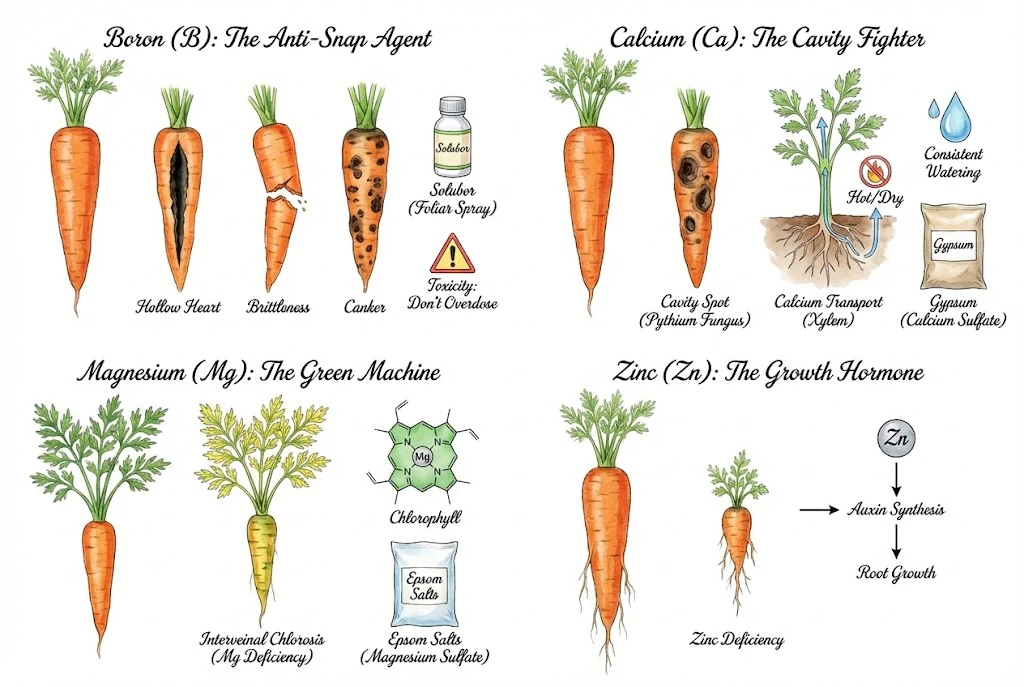
Micronutrients are needed only in tiny amounts, and deficiencies can cause real disorders, but so can excesses.
The margin between too little and too much is narrow for several of these, so the safe approach is to confirm a problem by soil or tissue test, use a registered food-crop product at the labeled rate, and check local extension advice before adding any.
Boron (B)
Boron contributes to cell-wall integrity, and boron deficiency is one possible cause of disorders such as hollow or brown center, cracking, and corky canker.
Those same symptoms can also come from disease or other physiological disorders, so they need to be differentiated rather than assumed to be boron.
A foliar boron trial in the Trans-Himalayan region reported improved root diameter and yield, but that is a single region-and-cultivar result and depends on the baseline boron, rate, and formulation.
Boron does leach from sandy soils, yet its deficiency-to-toxicity margin is very narrow, so do not apply boron as routine ‘insurance’. Test first, and only add it if a deficiency is confirmed.
Calcium (Ca) and Cavity Spot
Cavity spot is caused by Pythium species (water molds (oomycetes), not true fungi) and is favored by cool, wet, poorly drained soils.
It is often blamed on calcium deficiency, but a 54-field study found cavity spot incidence was not correlated with total or exchangeable calcium, so calcium shortage should not be treated as the main cause.
Manage it mainly through drainage, irrigation, rotation, field history, and locally registered controls.
Calcium is poorly mobile in the phloem and depends largely on the xylem and transpiration stream, so it can be under-supplied to fast-growing or low-transpiration tissues.
It is an over-simplification to say the leaves take all of it and the root gets none (root pressure, soil calcium, and water uptake all play a part).
Consistent moisture supports steady growth and can help with some calcium-related disorders.
Gypsum (calcium sulfate) can add calcium without raising pH much, but base its use on a soil test for calcium and sulfur needs and on salinity, and do not treat it as a cavity-spot cure.
Magnesium (Mg)
Magnesium is the central atom of chlorophyll, and deficiency can show as interveinal yellowing of older leaves.
However, similar chlorosis can come from pH, root injury, potassium/calcium imbalance, or disease, so confirm it before treating.
Epsom salt (magnesium sulfate) can correct a confirmed magnesium deficiency, but it is not a general fix for every yellowing leaf.
Adding it where magnesium is already sufficient only risks imbalance and extra salinity, so check soil or tissue magnesium first.
Zinc (Zn)
Zinc is involved in auxin metabolism and growth. The same Himalayan work reported that a boron-plus-zinc combination gave the highest yields in that trial, but that is a context-specific result. It is not a general recipe, and zinc should likewise be added only when a test indicates a deficiency.
Carrot Flavor and Growing Conditions
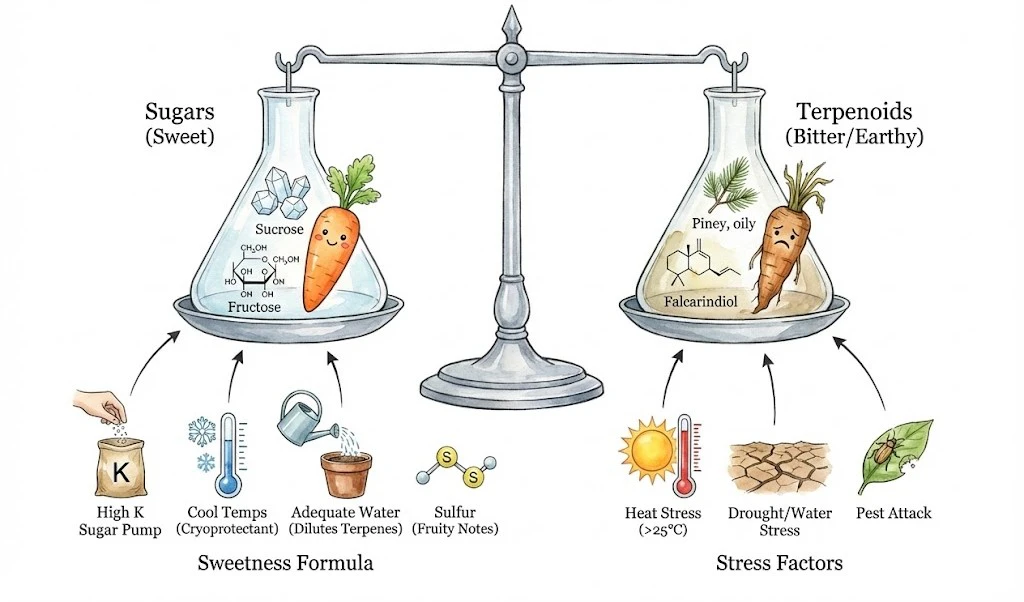
Carrot flavor comes from a balance of sugars (sucrose, glucose, fructose) and a range of aroma and taste compounds, including volatile terpenes and non-terpene compounds.
Texture, organic acids, and genotype all matter too, so it is not a simple ratio of two components.
The Chemistry of ‘Carroty’
Terpenes contribute to carrot aroma. A separate group of compounds, the C17 polyacetylenes such as falcarinol and falcarindiol (falcarindiol is a polyacetylene, not a terpene), along with the isocoumarin 6-methoxymellein, are linked with bitterness and off-flavor in some studies.
These are different chemical families and should not be lumped together, and their relationship to taste varies by cultivar.
Does stress make carrots bitter?
Drought, heat, and pest pressure can shift a carrot’s secondary metabolites and change its sensory quality, but ‘stressed always means bitter’ is not a reliable rule.
In a USDA sensory study, falcarinol was not correlated with bitterness, while falcarindiol and its acetate were more strongly linked (a reminder that specific metabolites, genotype, maturity, and storage interact).
Warm growing conditions and inconsistent water and nitrogen can all affect quality, but there is no single temperature threshold that flips a carrot to bitter, so treat any specific number as approximate.
Growing sweeter carrots
For sweeter roots, the reliable levers are steady moisture, avoiding excess nitrogen, choosing a good cultivar, and harvesting at maturity (often in cool fall weather, when soluble sugars tend to be higher).
Keep potassium sufficient (not excessive) based on a soil test. Cool conditions can raise sugars, but do not count on a ‘candy carrot’ formula from any one input, and note that hard freezes can damage roots and reduce quality rather than sweeten them.
Biostimulants (What the Evidence Supports)
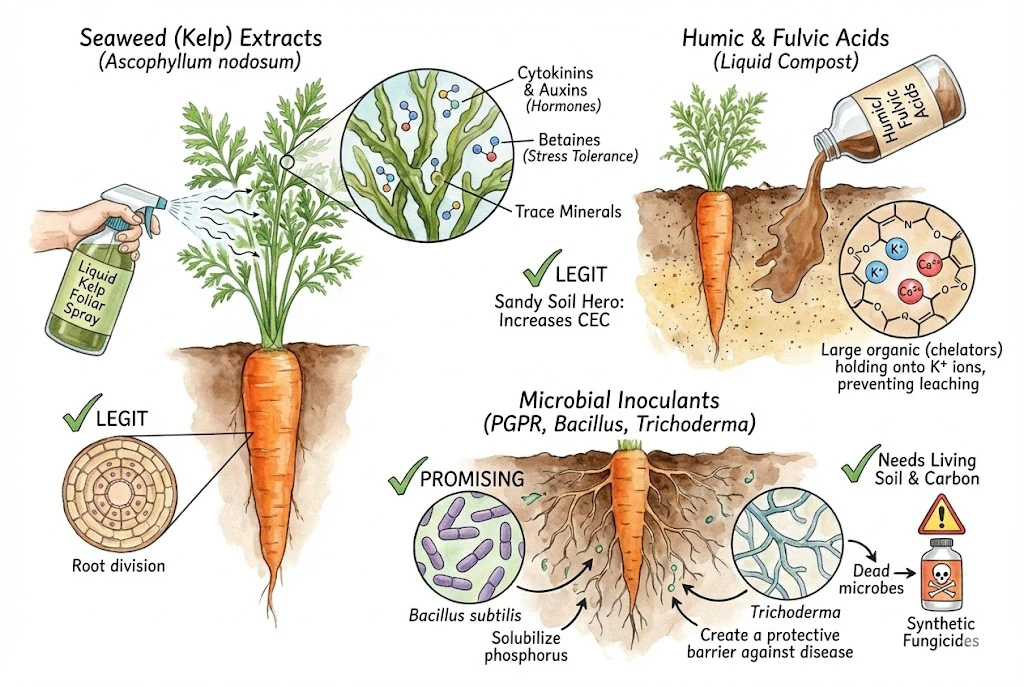
Store shelves carry many ‘biostimulants’. Products that are not fertilizers but claim to help growth.
The evidence varies a lot by product, so it is worth asking what is actually supported for carrots.
Seaweed (Kelp) Extracts
Ascophyllum nodosum extracts are weak fertilizers (around 0-0-1) that may modulate plant responses to stress. Older analyses of some products detected plant hormones such as auxins and cytokinins.
But composition and effect vary with extraction, batch, dose, and crop, so specific benefits for carrot root elongation or drought tolerance are not guaranteed by any one product.
Because these products are low in N-P-K, fertilizer-burn risk is low, but that is not the same as a well-proven root-development benefit in carrots.
Single-ingredient liquid seaweed products differ in guaranteed analysis, extraction, additives, and labeled crops. Watch for an important caveat. Marketing may promote foliar and soak use on vegetables while the product’s own safety data sheet states it is ‘not intended for agriculture use on any food crop.’ Where that conflict exists, do not use it on edible carrots unless the current label and regulator guidance clearly permit that use.
Either way, kelp is a biostimulant, not a feed. It will not supply meaningful N-P-K. And not every carrot needs a separate potassium program. Base that on a soil test.
Humic & Fulvic Acids
Humic and fulvic acids are specific fractions of organic matter, not ‘liquid compost.’ They can act as chelators and influence nutrient availability, and on sandy soils some products may help raise cation exchange capacity and retain nutrients.
How much they help depends on the product source, the fraction and dose, and your soil’s baseline organic matter, so results are variable rather than assured.
Microbial Inoculants
Some plant growth-promoting rhizobacteria, including certain Bacillus strains, and fungi such as Trichoderma can help mobilize nutrients or suppress specific diseases. The effects depend on the strain and product. Generic Bacillus and Trichoderma products do not all behave the same, and they do not suppress every disease.
The referenced carrot study used a specific three-strain consortium and reported a field yield increase of about 12.5%. That result does not extend to generic inoculants.
Whether a synthetic fungicide harms these organisms depends on the product, so check compatibility rather than assuming.
Enhancing carrot (Daucus carota) plant productivity with a combined rhizosphere microbial consortium
Effect of basal fertilizer types and fertigation ratio on yield and nitrogen use efficiency of carrot in upland cultivation
Pest Mimics – When It’s Not the Fertilizer
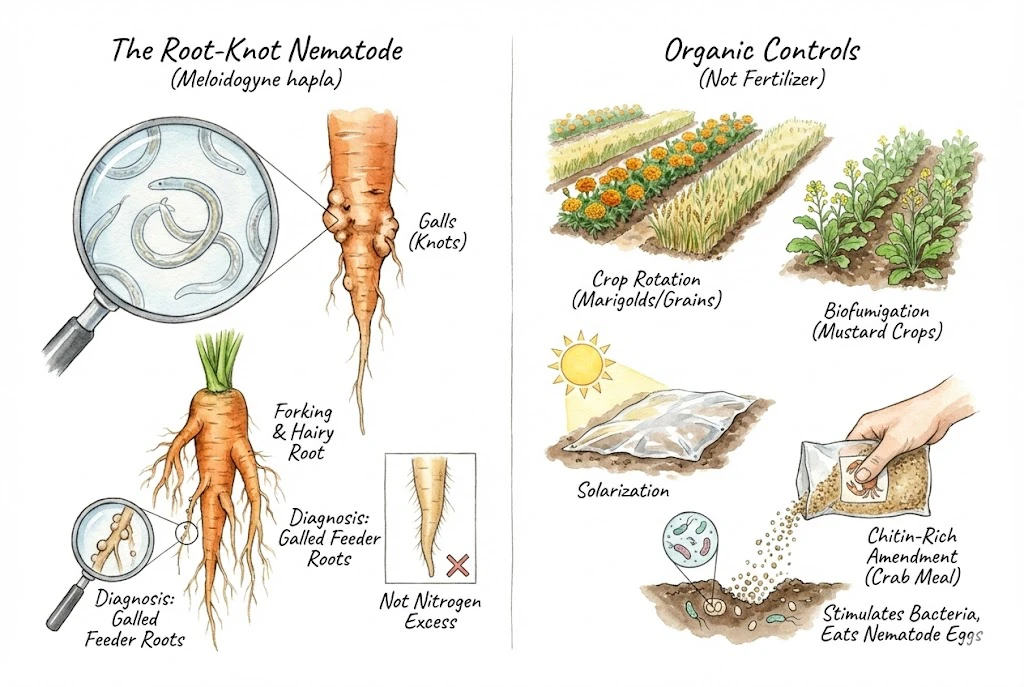
Sometimes malformed roots are not a fertilizer problem at all. They are caused by plant-parasitic nematodes, of which carrots host several kinds.
Root-Knot and Other Nematodes
Root-knot nematodes (including Meloidogyne hapla, among others) enter the root and cause galls, and can produce forking and hairy symptoms that resemble nitrogen excess or manure injury.
Carrots are also attacked by needle and stubby-root nematodes, so ‘the nematode’ is really a group.
The one reliable diagnostic is firm, bead-like galls on the feeder roots. But the absence of galls does not confirm nitrogen. Smooth or hairy roots without galls can still be needle or stubby-root nematodes, disease, or injury, so a lab soil and root sample is the way to be sure.
Fertilizer will not fix nematodes. Depending on the species, options include crop rotation, mustard biofumigation, or solarization, but their effectiveness varies with the target species, temperature, and duration, so follow local IPM guidance and confirm the species first.
Chitin-rich amendments such as crab meal may shift soil microbial communities, but replicated carrot efficacy, rates, and safety are not well established, so treat them as experimental rather than a proven control.
A Season-Long Framework
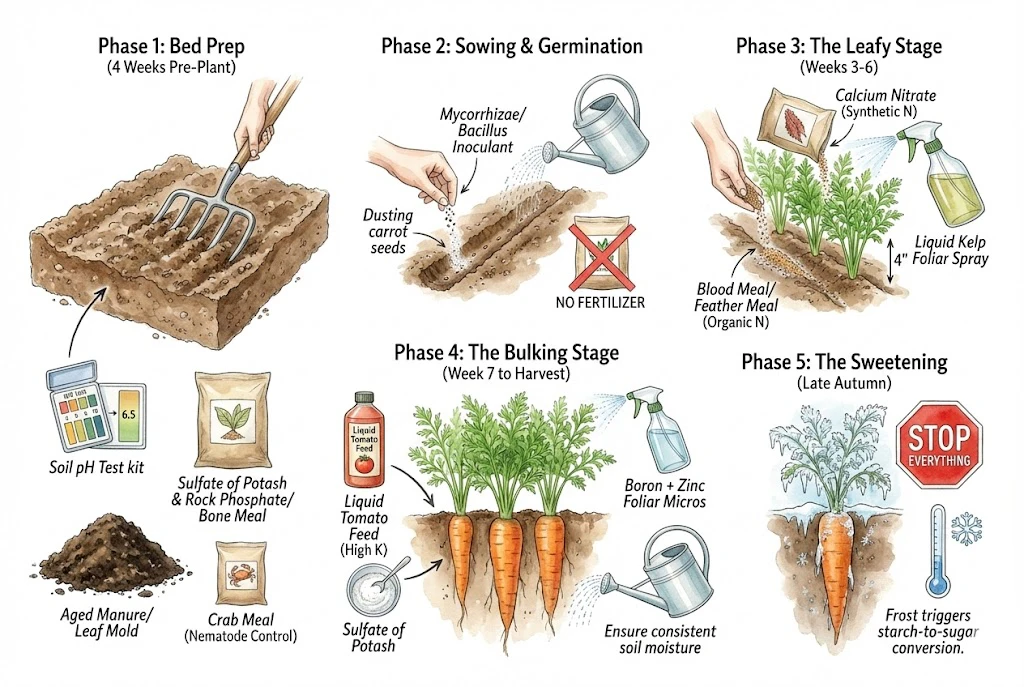
The stages below are a framework, not a fixed recipe. Rates and timing should come from a soil test, your irrigation-water nitrogen, expected yield, and your cultivar and harvest date, so read the numbers here as examples to adjust, not prescriptions.
Phase 1. Bed Prep (about 4 Weeks Pre-Plant)
Test the soil, adjust pH toward the 6.0–6.8 range if needed, and loosen the bed deeply to suit your soil and rooting depth.
Add phosphorus and potassium only if the soil test shows they are low, and choose rates from the test rather than a fixed amount. Remember that fertilizer grades are given as P₂O₅ and K₂O equivalents, not elemental nutrient.
If phosphorus and potassium already test adequate, skip the extra bone meal, rock phosphate, and sulfate of potash.
Mix in fully composted organic matter. Only consider crab meal if you have confirmed a nematode problem by lab sample, and even then treat it as unproven and check registered options and rotation first.
Phase 2. Sowing & Germination
Keep concentrated fertilizer and salts away from the seed, since carrots are salt-sensitive, but a small, correctly placed starter can be appropriate if the soil is genuinely low in fertility.
If you use a mycorrhizae or Bacillus seed dust, check the strain, viability, and crop compatibility first. Keep the surface consistently moist until germination.
Phase 3. The Leafy Stage (Weeks 3–6)
The goal is to establish healthy tops. Side-dress a modest amount of nitrogen based on your soil and water N and the crop’s appearance. A slow-release organic source (such as blood or feather meal) or calcium nitrate can both work.
Base the rate on the test, not on plant height alone.
Phase 4. The Bulking Stage (Week 7 to Harvest)
Ease off nitrogen as the crop bulks, but do not cut it to zero. The canopy and roots still need some.
The aim is to avoid excess, not to eliminate N, and potassium does not substitute for nitrogen.
Add potassium only if a test shows it is low, and if you do, follow the label rate rather than a fixed drench schedule.
Phase 5. Late-Season Harvest
Cool fall weather often raises soluble sugars, so many growers time the last harvest for after cooler temperatures set in. This is helpful within limits. A hard freeze can injure roots and lower quality, so consider cultivar hardiness, soil cover, and harvest timing rather than assuming frost simply sweetens the crop.
Test First, Then Feed
Test Before You Feed
The table below summarizes the nutrients and possible symptoms. Read it as a prompt to investigate, not a one-to-one diagnosis. Most of these symptoms have several possible causes, and disorders like cavity spot and hollow heart are not simply nutrient deficiencies.
Confirm the cause by soil or tissue test, and note that the best source depends on your soil pH, salinity, and whether you need an organic-certified input.
| Nutrient | Role | Possible deficiency sign | Excess / caution | Common sources |
|---|---|---|---|---|
| Nitrogen (N) | Top growth | Pale, stunted tops (also check water, pH, disease) | Excess linked to hairier roots, cracking, more culls | Calcium nitrate, blood meal |
| Phosphorus (P) | Energy transfer | Purple older leaves, poor rooting (not definitive) | Excess wastes money and can run off. May reduce mycorrhizae | Bone meal, rock phosphate |
| Potassium (K) | Turgor, sugar transport | Limp, poor quality when deficient | Extra K past sufficiency does not add sweetness. Salt load | Sulfate of potash |
| Calcium (Ca) | Cell walls | Some disorders, not the main cause of cavity spot | Base gypsum use on a test | Gypsum, lime (lime also raises pH) |
| Boron (B) | Cell structure | Hollow/brown center possible, but differentiate | Narrow safe range. Toxicity is easy | Borax, Solubor (test first) |
| Magnesium (Mg) | Chlorophyll | Interveinal chlorosis on older leaves | Only add if a test shows a shortfall | Epsom salt |
Growing carrots is a balancing act between the leafy top and the storage root. Too much nitrogen and water can hurt root quality, while too little leaves the crop stunted.
Match inputs to the crop’s needs rather than over- or under-feeding.
If you remember only a few things. Soil texture and structure are the foundation, pH shapes nutrient availability, and potassium matters for quality when it is deficient.
Avoid fresh manure just before sowing, skip bloom boosters when your soil already tests adequate, keep moisture consistent, and let a soil test guide the rest.
I pull five carrots, taking one at the bed center and one halfway from the center toward each corner, and keep every root beside its own foliage. At later checks, I take the nearest intact carrot in the same row beside each marker. Five interior stations expose a bed-wide pattern without letting unusual edge plants or one convenient clump decide the diagnosis.
Before adding fertilizer, I photograph each pair beside the bed map and repeat the same sampling points later. If only one end of the bed changes, I investigate soil texture and irrigation there before treating the result as a whole-bed nutrient shortage.